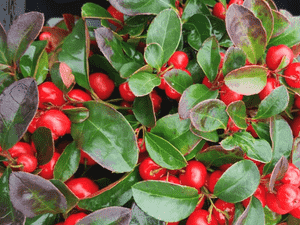
Wintergreen(Gaultheria procumbens)

Wintergreen (Gaultheria procumbens)

Also known as: Checkerberry, Boxberry

American wintergreen, scientifically known as *Gaultheria procumbens*, is also commonly called wintergreen.

Attributes of Wintergreen

Lifespan
Perennial
Plant Type
Shrub
Plant Height
10 cm to 15 cm
Spread
15 cm to 30 cm
Leaf Color
Green Red
Flower Size
8 mm to 1 cm
Flower Color
Pink White

PlantJoy - Identify plants with a snap

Identify and diagnose plants, get toxicity alerts, and explore safety guides for all types of fungi.

Try for Free

Images of Wintergreen

Wintergreen(Gaultheria procumbens)

Quickly Identify Wintergreen

1
Low-growing evergreen shrub, forming dense ground cover up to 6 inches (15 cm) high.
2
Oval leaves around 2 inches (5 cm) long with a distinct wintergreen scent when crushed.
3
Small bell-shaped flowers, white or pinkish, leading to bright scarlet berries about 0.5 inches (1.27 cm) in diameter.
4
Simple elliptic leaves, 2-5 centimeters (0.8-2 inches) long, dark green turning rich purple in fall.
5
Fruit appears as striking red capsule with edible fleshy part, enclosed in vibrant 3/8 inch (0.95 cm) calyx.

Scientific Classification of Wintergreen

Phylum
Vascular plants
Class
Dicotyledons
Order
Ericales
Family
Heath
Genus
Snowberries
Species
Wintergreen

Planting and Growing of Wintergreen

Care Difficulty
Easy
Watering Schedule
Every 2 days
Sunlight Requirements
Partial sun
Sunshine Duration
4-8 hours
Ideal Temperature
60-75℉
Soil Type
Potting Mix, Peat Mix
Soil pH
4.5-6.2
Fertilizer Type
Balanced
Pruning Season
Spring, Summer
Pruning Area
Branches, Leaves
Pruning Frequency
2 times a year
Repotting Season
Spring
Pot Type
Ceramic, Plastic

water icon How to Water Wintergreen?

For Gaultheria procumbens, the key is to ensure the soil remains consistently moist but not waterlogged. About 400 milliliters per session is ideal, allowing water to seep through the soil but ensuring no excess water remains in the saucer. This amount should saturate the soil to a depth of about 2 inches, promoting root growth without suffocating the plant.
What are the symptoms of an underwatered Wintergreen?
What should I do if my Wintergreen is not getting enough water?
What are the symptoms of an overwatered Wintergreen?
How to save an overwatered Wintergreen?

sunlight icon What Are the Sunlight Requirements for Wintergreen?

Sunlight Requirements: Partial sun
Duration of light: 3 to 6 hours
Partial sun, which offers dappled light, is ideal. The plant benefits from this setup by developing healthy foliage and ample berry production while avoiding stress from overexposure.
Question: What kind of light is best for Gaultheria procumbens?
Question: How can Gaultheria procumbens get optimal light indoors?
Question: How much light does Gaultheria procumbens need throughout the year?

temperature icon What Is the Ideal Temperature Range for Wintergreen?

Ideal Temperature: 60 ~ 75℉
Gaultheria procumbens thrives best in a temperature range where the minimum is 60°F and the maximum is 75°F. Within this range, the plant is able to conduct essential physiological processes such as photosynthesis and respiration efficiently. 60°F provides enough warmth for active growth without causing heat stress, and 75°F maximizes growth opportunities without overheating, making it ideal for sustaining its delicate balance.

soil icon What Soil is Best for Wintergreen?

Soil type: Acidic soil, Sandy loam, Peat soil
Soil PH: 4.5 ~ 6.2
Gaultheria procumbens thrives in well-drained soils that prevent root rot by allowing water to percolate effectively. This type of soil ensures the roots have the necessary air spaces, supporting healthy root development and improving nutrient uptake. While Gaultheria procumbens prefers well-drained soils, it also benefits from soils that can retain adequate moisture. This balance helps prevent the plant from drying out during warmer periods, which is crucial for healthy foliage and vibrant growth. A soil rich in organic matter is ideal for Gaultheria procumbens, providing essential nutrients required for its optimal growth and overall health. Organic matter enhances soil fertility and structure, thereby supporting lush foliage.

fertilize icon How to Fertilize Wintergreen?

Fertilizer type: Balanced
For Gaultheria procumbens, the ideal fertilizer amount depends on the type of fertilizer. For liquid fertilizers, aim for a dilution of about half the recommended concentration stated on the package. For slow-release fertilizers, use about one tablespoon per plant to ensure gradual nutrition without overwhelming the roots.

prune icon How to Prune Wintergreen?

Pruning Time: Spring, Summer, Autumn, Winter
Start by examining your Gaultheria procumbens for any dead or damaged branches, which should be removed first to maintain plant health and aesthetics. Use clean, sharp pruning shears to cut these branches back to the point where they originate. Next, focus on shaping the plant by cutting back leggy growth to encourage a bushier appearance. Be sure not to trim more than one-third of the plant’s overall size in a single pruning session to avoid shocking the plant. Finally, thin out overcrowded areas to improve air circulation, which can help prevent disease. Regularly inspect the plant for any developing issues throughout the growing season.

propagate icon How to Propagate Wintergreen plant?

Propagate Time: Spring, Early Spring
1
For seed propagation, begin by scarifying the seeds. This means gently scratching the seed coat to allow moisture to penetrate, which is necessary for germination. Then soak the seeds in warm water overnight to soften them further.
2
Select a healthy, non-flowering stem about 4-6 inches long for cutting propagation. Ensure the cut is made just below a node, and remove the leaves from the lower half to minimize water loss.
3
In division propagation, gently lift a well-established plant and carefully divide the root ball into smaller sections. Each section should have its own roots and shoots to ensure successful re-establishment.

repot icon How to Repot Wintergreen plant?

Repotting frequency: Every 2-3 years
1
Gaultheria procumbens should be repotted when you notice its roots starting to peek through the drainage holes of the pot, indicating that it has outgrown its current home. Another signal is stunted growth, showing it needs more space. Repotting in early spring or autumn ensures less stress due to dormancy periods.
2
Select a pot that is only slightly larger than the current one; a pot too large can lead to water retention issues. The new pot should have good drainage holes to prevent root rot. Ideally, choose a ceramic or terracotta pot that also aids moisture regulation abilities, promoting healthier growth.
3
Use an acidic, well-draining soil mix, such as one formulated for azaleas or rhododendrons. This soil mix retains enough moisture for the plant's needs while allowing excess water to drain efficiently, preventing root rot and encouraging the plant's natural growth and vitality.

PlantJoy - Identify plants with a snap

Find the best spots for them to optimize their health, simply using your phone.

Try for Free

Toxicity of Wintergreen

Is Wintergreen toxic to humans?

Wintergreen is known to contain methyl salicylate, particularly in its berries. When ingested, this compound is converted into salicylic acid, which is the active metabolite of aspirin. Salicylic acid may lead to a condition termed metabolic acidosis, which results in rapid breathing, potential organ damage, and ultimately organ failure. Consuming lesser quantities of wintergreen berries can trigger nausea, stomach discomfort, and vomiting, primarily due to the methyl salicylate content. It is advisable to keep children or individuals with cognitive impairments away from this plant.

Is Wintergreen toxic to cat?

Wintergreen carries a mild toxicity risk for cats. Ingesting high quantities of the entire plant may result in various symptoms of discomfort or illness in felines. Cat owners should remain vigilant and prevent their pets from consuming any parts of the wintergreen, as even minor toxic reactions necessitate swift action. Should a cat exhibit any signs of distress after exposure to wintergreen, it is essential to seek immediate veterinary attention to safeguard their health and avert possible complications.

Is Wintergreen toxic to dog?

Wintergreen presents a low-level toxicity risk for dogs. If canines consume this plant in large quantities, they can experience poisoning. All parts of the wintergreen plant are deemed toxic and may result in harmful reactions in dogs. Symptoms of toxicity can include gastrointestinal distress like vomiting and diarrhea, decreased energy, or more serious effects depending on the amount ingested. It is essential for dog guardians to keep a close eye on their pets and ensure they do not eat wintergreen. Should a dog ingest wintergreen, it is vital to seek immediate veterinary assistance to secure the best possible outcome for the animal.

Identify toxic plants for your safety

Learn which plants are harmful to you and your pets, and make informed choices for a safer home!

Try for Free
WARNING
The judgment on toxicity and danger is for reference only. We DO NOT GUARANTEE any accuracy of such judgment. Therefore, you SHALL NOT rely on such judgment. It is IMPORTANT TO SEEK PROFESSIONAL ADVICE in advance when necessary.