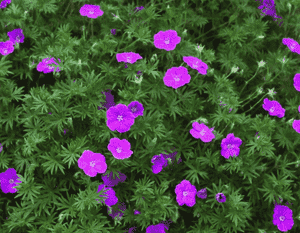
Bloody cranesbill (Geranium sanguineum)
Also known as: Blood-red geranium
Bloody cranesbill, known scientifically as **Geranium sanguineum**, is a perennial herb indigenous to Europe and Asia. This plant is commonly grown in gardens for its attractive star-shaped flowers that bloom in spring and its striking blood-red foliage in autumn. The Latin term 'sanguineum' highlights the red coloration of its leaves.
In This Article
Attributes of Bloody cranesbill
Lifespan
Perennial, Annual
Plant Type
Herb
Plant Height
30 cm to 50 cm
Spread
30 cm to 60 cm
Leaf Color
Green Red
Flower Size
2.5 cm to 4 cm
Flower Color
Pink Purple Red White Violet
Images of Bloody cranesbill
Quickly Identify Bloody cranesbill
1
Dense clusters reaching 1-1.5 feet (30-45 cm) in height
2
Vivid fuchsia flowers blooming profusely from late spring to summer
3
Magenta flowers with cup-shaped petals and darker veins
4
Distinctive leaf shape with deep lobes, 5-7 segments divided into 3 parts
5
Basal leaves with vibrant green color, 5-lobed, covered in fine hairs
Scientific Classification of Bloody cranesbill
Phylum
Vascular plants
Class
Dicotyledons
Order
Geraniales
Family
Geranium
Genus
Geraniums
Species
Bloody cranesbill
Planting and Growing of Bloody cranesbill
Care Difficulty
Easy
Watering Schedule
Every 3 days
Sunlight Requirements
Full sun
Sunshine Duration
4-8 hours
Ideal Temperature
60-75℉
Soil Type
Potting Mix, Peat Mix
Soil pH
6.5-7.5
Fertilizer Type
Balanced
Pruning Season
Spring, Summer
Pruning Area
Branches, Leaves
Pruning Frequency
2 times a year
Repotting Season
Spring
Pot Type
Plastic, Ceramic
 How to Water Bloody cranesbill?
When watering Geranium sanguineum, aim to give about 250ml of water per session. The key is to ensure the soil remains consistently moist but not waterlogged. Overwatering can lead to root rot, so let the top inch of soil dry out before the next watering.
More About Watering Techniques→
What are the symptoms of an underwatered Bloody cranesbill?
›
What should I do if my Bloody cranesbill is not getting enough water?
›
What are the symptoms of an overwatered Bloody cranesbill?
›
How to save an overwatered Bloody cranesbill?
›
 What Are the Sunlight Requirements for Bloody cranesbill?
Geranium sanguineum thrives in full to partial sun, benefitting from 6 to 8 hours of sunlight daily. This light range supports active blooming and rich foliage coloration.
More About Sunlight Requirements Techniques→
Optimal Growth Environment
›
Adaptability Solutions
›
Benefits of Ideal Lighting
›
 What Is the Ideal Temperature Range for Bloody cranesbill?
Geranium sanguineum thrives best within an ideal temperature range of 60 to 75 degrees Fahrenheit. This range supports healthy growth and flowering, ensuring that the plant can maximize photosynthesis and metabolic activities. Other factors like light, humidity, and soil conditions also interact with temperature to influence the overall health of the plant.
 What Soil is Best for Bloody cranesbill?
Geranium sanguineum thrives in well-drained soil that prevents root rot by allowing excess water to escape. This ensures healthy root development and lush foliage. A moderately fertile soil provides the necessary nutrients without overwhelming the plant. This balance supports robust flowering and continuous growth. A chunky soil structure aids in aeration, promoting root oxygenation and microbial activity. This fosters a symbiotic environment for steady plant health.
More About Soil→
 How to Fertilize Bloody cranesbill?
Geranium sanguineum should be fertilized with care. Use about one tablespoon of balanced 10-10-10 fertilizer per gallon of water for liquid fertilizers. For slow-release or granular forms, apply approximately one tablespoon per square foot. Too much can harm the plant, so measure carefully.
More About Fertilizing Techniques→
 How to Prune Bloody cranesbill?
To prune Geranium sanguineum, begin by removing any dead or damaged stems at the base. Trim back flowered stems to encourage new blooms. Maintain a tidy shape by cutting back any overgrown areas, ensuring you cut just above a leaf node. Use clean, sharp pruning shears to ensure precise cuts and avoid damaging the plant.
More About Pruning Techniques→
 How to Propagate Bloody cranesbill plant?
1
Select healthy, non-flowering stems about 10 cm long for cuttings. Remove any leaves from the lower half and ensure the cuttings are free from disease. Allow the cut end to callous over for a few hours before planting.
2
Geranium sanguineum can be propagated by dividing mature clumps. Carefully lift the plant from the ground and separate it into smaller sections, ensuring each section has roots attached. Replant the divisions at the same depth they were growing before.
3
Sow the seeds in a tray filled with seed compost, covering them lightly. Water gently and maintain a temperature of around 18-22°C. Germination usually takes about 2-3 weeks under optimal conditions.
 How to Repot Bloody cranesbill plant?
1
Repotting is needed when the plant outgrows its current pot and you see roots through drainage holes. Spring is ideal because Geranium sanguineum can settle well as the growing season starts.
2
Choose a pot slightly larger than the current one with good drainage. A pot too large can lead to excessive soil moisture, promoting rot. Proper size ensures balanced root growth and moisture control.
3
Use a well-draining, sandy loam soil. This type of soil aids in preventing waterlogging, ensuring roots have ample oxygen and can spread out easily, thereby strengthening the plant's foundation.
Learn More About Bloody cranesbill Diseases
Anthracnose
Bacterial Leaf Spot
Bacterial Soft Rot
Bacterial Wilt
Black Spot
Chemical Injury
Crown Gall
Cyst Nematode
Damping-off
Downy Mildew
Drought Stress
Fusarium Wilt
Gray Mold
Leaf Curl
Leaf Spot
Mosaic
Nutrient Deficiency
Nutrient Toxicity
Powdery Mildew
Root Rot
Root-knot Nematode
Rusts
Sooty Mold
Spider Mites
Temperature Stress
Thrips Damage
White Mold



