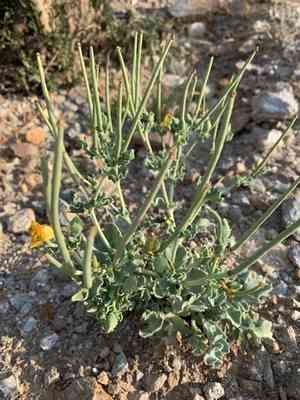
Yellow horned poppy (Glaucium flavum)
Also known as: Beach poppy, Yellow hornpoppy
Beach Sunflower (Helianthus debilis) is a hardy perennial wildflower reaching heights of 30 to 60 cm. It produces vibrant golden-yellow flowers from mid-spring to early summer, each about 5 cm in diameter. This plant thrives in full sun, withstands drought, and is well-suited to seaside environments. Commonly seen flourishing among sand dunes on beaches.
In This Article
Attributes of Yellow horned poppy
Lifespan
Perennial, Biennial, Annual
Plant Type
Herb
Plant Height
90 cm
Spread
60 cm
Leaf Color
Green Blue Gray
Flower Size
5 cm to 8 cm
Flower Color
Yellow Orange
Images of Yellow horned poppy
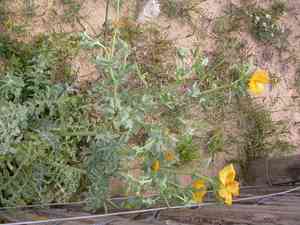
Quickly Identify Yellow horned poppy
1
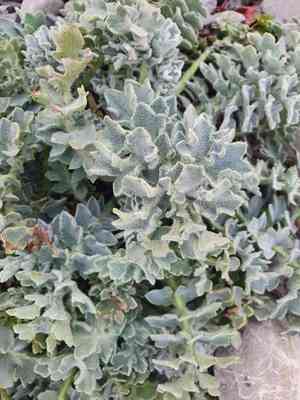
Mounded rosettes of fuzzy gray-green leaves with wavy edges, up to 2 feet (60 cm) tall.
2
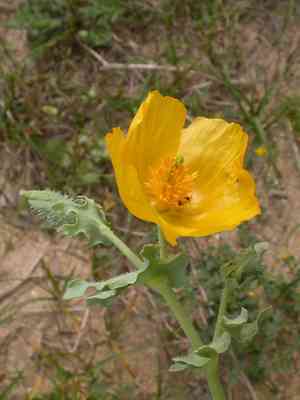
Vivid golden-yellow flowers with orange stamens and four silky petals, each around 1 inch (2.5 cm) long.
3
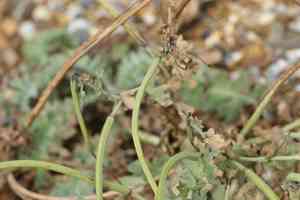
Unusually long, narrow seed pods with thorn-like protrusions, over 6 inches (15 cm) in length.
Scientific Classification of Yellow horned poppy
Phylum
Vascular plants
Class
Dicotyledons
Order
Ranunculales
Family
Poppy
Genus
Horned poppies
Species
Yellow horned poppy
Planting and Growing of Yellow horned poppy
Care Difficulty
Easy
Watering Schedule
Every 2 days
Sunlight Requirements
Full sun
Sunshine Duration
6-8 hours
Ideal Temperature
60-75℉
Soil Type
Potting Mix, Peat Mix
Soil pH
6.5-7.5
Fertilizer Type
Balanced
Pruning Season
Spring, Summer
Pruning Area
Branches, Leaves
Pruning Frequency
Once a year
Repotting Season
Spring
Pot Type
Plastic, Ceramic
 How to Water Yellow horned poppy?
When watering Glaucium flavum, it's crucial to ensure the soil is evenly moist without becoming waterlogged. This plant prefers well-draining soil, and it's best to water until you see a slight runoff. Aim for about 250 mL per session to keep the soil lightly moist but not saturated.
What are the symptoms of an underwatered Yellow horned poppy?
›
What should I do if my Yellow horned poppy is not getting enough water?
›
What are the symptoms of an overwatered Yellow horned poppy?
›
How to save an overwatered Yellow horned poppy?
›
 What Are the Sunlight Requirements for Yellow horned poppy?
Full sun is ideal, with benefits including healthy, bushy growth and copious flowering. Partial sun can suffice but may result in slightly fewer blooms.
More About Sunlight Requirements Techniques→
Optimal Sunlight Exposure
›
Solution for Proper Lighting
›
Benefits of Ideal Lighting
›
 What Is the Ideal Temperature Range for Yellow horned poppy?
The ideal temperature range for cultivating Glaucium flavum is between 60°F and 75°F. At this temperature range, the plant experiences optimal growth, with efficient photosynthesis and healthy development. This range supports the plant's metabolic processes and encourages vibrant foliage and blooming.
 What Soil is Best for Yellow horned poppy?
Glaucium flavum thrives in well-draining soil that prevents waterlogging, essential for its growth. This type of soil helps avoid root rot and encourages healthy root development, enabling the plant to flourish even in coastal conditions. This plant is well-adapted to nutrient-poor soils, often found in sandy environments. It benefits from minimal nutrient competition, allowing it to focus its energy on flower and foliage production, which enhances its ornamental appeal. Preferring slightly alkaline conditions, Glaucium flavum is competent in calcareous soils where other plants might struggle. Such soil pH fosters optimal nutrient absorption for carotenoid pigments, resulting in vibrant yellow blooms.
 How to Fertilize Yellow horned poppy?
For Glaucium flavum, use a balanced liquid fertilizer diluted to half strength. Apply approximately 5-10 ml of the diluted solution around the base of the plant, making sure to avoid direct contact with leaves or stems to prevent burning.
 How to Prune Yellow horned poppy?
Begin by inspecting your Glaucium flavum for any spent blooms or damaged branches. Use your shears to cut back these parts to the base of the stem, ensuring you leave healthy foliage to support the plant's growth. Always cut at a slight angle to allow for water drainage and prevent rot. During the pruning process, take time to thin out overcrowded areas to enhance air circulation within the plant. This helps to reduce humidity within the foliage and minimizes the risk of fungal infections, particularly in humid environments. Proper pruning encourages robust growth and generally contributes to a healthier plant.
 How to Propagate Yellow horned poppy plant?
1
Gather ripe seed pods from a mature Glaucium flavum plant. Allow pods to dry in a cool, arid place until they naturally split open. Collect the seeds for storage or immediate sowing.
2
Use a well-draining soil mix, consisting of sand and loam, to fill seed trays or pots. Good drainage is critical for preventing root rot and providing the seeds or cuttings with optimal conditions for growth.
3
Select a healthy, non-flowering stem from an established plant. Cut a 4-6 inch section using sharp pruning shears, making sure to trim just below a leaf node to encourage rooting.
 How to Repot Yellow horned poppy plant?
1
Look for signs like roots protruding from drainage holes, slower growth, or soil that's constantly dry. These are indicators that Glaucium flavum needs a new pot. Ideal repotting times are in spring or early summer, aligning with its growth cycle.
2
Select a pot slightly larger than the current one with drainage holes. A terracotta pot is excellent because it allows for moisture evaporation, preventing root rot. The extra space and drainage ensure healthier roots and growth.
3
Opt for a well-draining sandy mix to mimic its natural coastal habitat. A mix like cacti soil with additional sand is beneficial. This type of soil prevents waterlogging, ensuring roots receive adequate air and moisture.
Toxicity
Ingestion, Skin contact
WARNING
The judgment on toxicity and danger is for reference only. We DO NOT GUARANTEE any accuracy of such judgment. Therefore, you SHALL NOT rely on such judgment. It is IMPORTANT TO SEEK PROFESSIONAL ADVICE in advance when necessary.
Learn More About Yellow horned poppy Diseases
Anthracnose
Bacterial Leaf Spot
Bacterial Soft Rot
Bacterial Wilt
Chemical Injury
Crown Gall
Cyst Nematode
Damping-off
Downy Mildew
Drought Stress
Fusarium Wilt
Gray Mold
Leaf Spot
Mosaic
Nutrient Deficiency
Nutrient Toxicity
Powdery Mildew
Root Rot
Root-knot Nematode
Rusts
Sooty Mold
Spider Mites
Temperature Stress
Thrips Damage
White Mold



