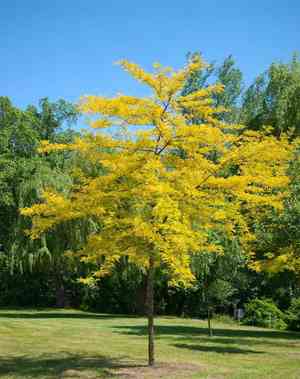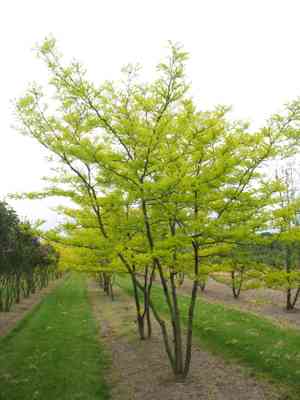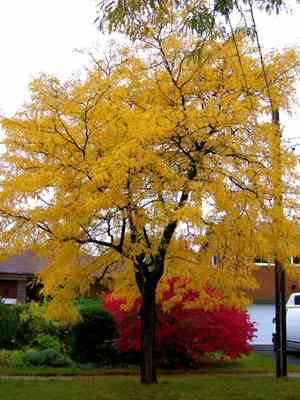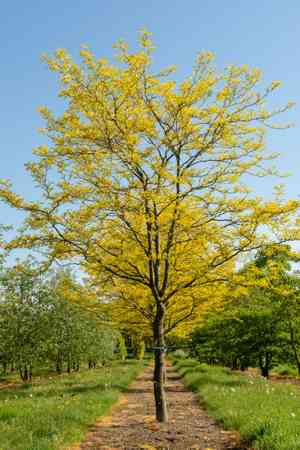
Honey locust(Gleditsia triacanthos)

Honey locust (Gleditsia triacanthos)

Also known as: Thornless Honey-Locust, Common Honey Locust, Thorny locust

The Honey Locust (Gleditsia triacanthos) is a deciduous tree indigenous to central North America. Its trunk is notable for being adorned with thorns, which start off soft and green but become hard and brittle as they mature. These thorns can grow quite large, reaching lengths of up to 20 cm.

Attributes of Honey locust

Lifespan
Perennial
Plant Type
Tree
Plant Height
15 m to 40 m
Spread
15 m
Leaf Color
Green Yellow
Flower Size
6 mm to 7 mm
Flower Color
Green Yellow White

PlantJoy - Identify plants with a snap

Identify and diagnose plants, get toxicity alerts, and explore safety guides for all types of fungi.

Try for Free

Images of Honey locust

Honey locust(Gleditsia triacanthos)

Quickly Identify Honey locust

1
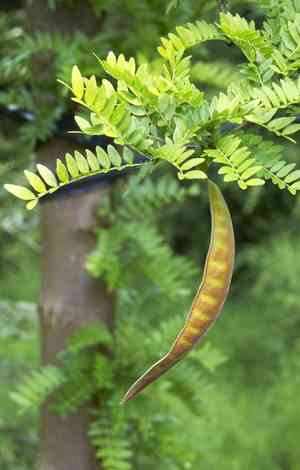
Distinctive twisted pods, 12-18 inches (30-46 cm), change from reddish-brown to dark black when ripe.
2
Compound leaves with shiny dark green upper surface and yellow-green underside, 5-8 inches (12.7-20.3 cm) long.
3
Clusters of small greenish-yellow flowers in hanging clusters, 2-3 inches (5-8 cm) long, emit sweet fragrance.
4
Stout three-forked spines, 2-3 inches (5-7.5 cm) long, on stems and trunk, with rough, grayish-brown surface.
5
Mature tree displays flat-topped crown for dappled shade, reaching 80 feet (24 meters) tall.

Scientific Classification of Honey locust

Phylum
Vascular plants
Class
Dicotyledons
Order
Fabales
Family
Legume
Genus
Honey locusts
Species
Honey locust

Planting and Growing of Honey locust

Care Difficulty
Easy
Watering Schedule
Every 4 days
Sunlight Requirements
Full sun
Sunshine Duration
4-8 hours
Ideal Temperature
68-86℉
Soil Type
Potting Mix, Peat Mix
Soil pH
6.5-7.5
Fertilizer Type
Balanced
Pruning Season
Spring, Summer
Pruning Area
Branches, Leaves
Pruning Frequency
2 times a year
Repotting Season
Spring
Pot Type
Plastic, Ceramic

water icon How to Water Honey locust?

Gleditsia triacanthos requires a moderate amount of water, approximately 1000 milliliters per session. The key principle is to ensure the soil is thoroughly moistened, but not waterlogged. Allow the topsoil to dry out slightly before the next watering to maintain optimal root health.
What are the symptoms of an underwatered Honey locust?
What should I do if my Honey locust is not getting enough water?
What are the symptoms of an overwatered Honey locust?
How to save an overwatered Honey locust?

sunlight icon What Are the Sunlight Requirements for Honey locust?

Sunlight Requirements: Full sun
Duration of light: 6 to 8 hours
Gleditsia triacanthos thrives in full sun, requiring 6 to 8 hours of sunlight daily. Access to optimal light ensures robust growth, promotes lush foliage, and supports flowering, ultimately enhancing its decorative and ecological benefits in gardens.
What is the best light condition for growth?
How can I provide ideal light conditions?
What benefits come from ideal light exposure?

temperature icon What Is the Ideal Temperature Range for Honey locust?

Ideal Temperature: 68 ~ 86℉
Gleditsia triacanthos thrives best when the temperature is between 68°F and 86°F. This range allows the plant to undergo optimal photosynthesis, ensuring strong growth and foliage development. Consistent exposure to these temperatures will contribute to the overall health and aesthetic appearance of the plant.

soil icon What Soil is Best for Honey locust?

Soil type: Loam, Sandy loam, Clay soil
Soil PH: 6.5 ~ 7.5
Gleditsia triacanthos thrives in well-drained soil conditions. Adequate drainage prevents waterlogging, which can lead to root rot and other diseases, ensuring healthy growth and survival of the plant. Moderate soil fertility is optimal for this plant. It benefits from soils that provide just enough nutrients without excessive richness which can lead to weak growth and poor structural integrity. The plant adapts well to a variety of soil textures, from sandy loams to clays. This flexibility makes it a versatile choice for varying landscapes, capable of adjusting to different soil environments without loss of vitality.

fertilize icon How to Fertilize Honey locust?

Fertilizer type: Balanced
Gleditsia triacanthos, commonly known as the honey locust, typically requires moderate fertilization. Apply around 1 to 1.5 pounds of complete fertilizer per 100 square feet. Ensure that the NPK ratio is balanced, such as 10-10-10, to support overall growth, root development, and foliage health. Overapplication can lead to nutrient runoff and environmental harm.

prune icon How to Prune Honey locust?

Pruning Time: Spring, Summer
Begin pruning in late winter or early spring before new growth appears. Use sharp, clean pruning shears to remove any dead, diseased, or damaged branches. Focus on shaping the tree by cutting back long or awkwardly placed branches to a lateral bud or branch. Ensure each cut is made at a slight angle, sloping away from the bud to prevent water accumulation and potential rot. For larger branches, utilize the three-cut method to avoid stripping bark from the trunk. Always work from the base of the tree upwards, and step back periodically to assess your progress and maintain symmetry.

propagate icon How to Propagate Honey locust plant?

Propagate Time: Spring, Early spring
1
Begin by collecting healthy seeds from mature Gleditsia triacanthos pods. Ensure the seeds are fully matured and dry before storing them in a cool, dry place until sowing.
2
Prepare a well-draining potting mix, rich in organic matter. Fill seed trays or pots with the mix and slightly compact the soil to create an even surface for the seeds.
3
Sow the seeds on the surface of the prepared soil, covering them lightly with a thin layer of soil. Water gently to keep the soil moist but not soggy, promoting faster germination.

repot icon How to Repot Honey locust plant?

Repotting frequency: Every 2-3 years
1
Gleditsia triacanthos signals it's time for repotting when roots start to emerge from the pot's drainage holes, indicating they are outgrowing their current space. Also, if the plant shows signs of stunted growth or needs frequent watering, these are telltale signs. Ideally, repot during spring or autumn when the plant is naturally more resilient to changes.
2
Selecting an appropriate pot is crucial for the healthy growth of honey locust. Choose a pot that is 1-2 inches larger than the current one to allow enough space for root expansion. A pot with good drainage holes prevents water accumulation, reducing the risk of root rot and promoting healthy root systems.
3
Utilize a rich, well-draining soil mix suitable for Gleditsia triacanthos, which provides essential nutrients and ensures efficient drainage. A mix with peat, perlite, and organic matter keeps the soil aerated and promotes root health, supporting optimal growth and a more robust plant.

PlantJoy - Identify plants with a snap

Find the best spots for them to optimize their health, simply using your phone.

Try for Free

Toxicity of Honey locust

Is Honey locust toxic to cat?

Honey locust presents a risk to the health of felines and is categorized among the plants known for their toxic properties. Felines may inadvertently consume different parts of the honey locust, with its seeds being especially dangerous. If ingested, cats could experience significant distress and may show symptoms that are associated with poisoning, which can vary from mild to severe. To reduce the potential hazards and prevent the worsening of symptoms, it is crucial for cat owners to keep a vigilant eye on their pets and to seek prompt veterinary assistance if poisoning is suspected. Timely intervention at a veterinary facility is essential to safeguard the health and recovery of the affected cat.

Is Honey locust toxic to dog?

Honey locust is recognized as a harmful plant for canines. If dogs accidentally consume parts of this plant, they can experience poisoning, particularly from the seeds, which are notably toxic. After ingesting honey locust, a dog may show a range of symptoms that indicate poisoning. It is vital for dog owners to keep a close watch on their pets and restrict access to the seeds of honey locust. In the event that a dog ingests any portion of honey locust, especially the seeds, it is imperative to seek prompt veterinary assistance to ensure the best outcome for the affected pet.

Identify toxic plants for your safety

Learn which plants are harmful to you and your pets, and make informed choices for a safer home!

Try for Free
WARNING
The judgment on toxicity and danger is for reference only. We DO NOT GUARANTEE any accuracy of such judgment. Therefore, you SHALL NOT rely on such judgment. It is IMPORTANT TO SEEK PROFESSIONAL ADVICE in advance when necessary.