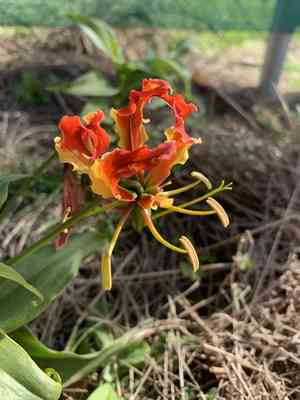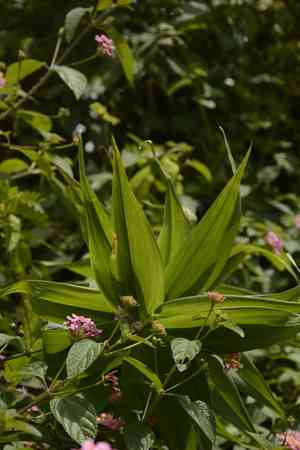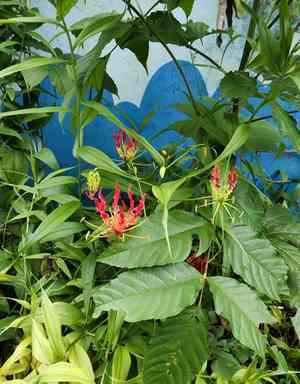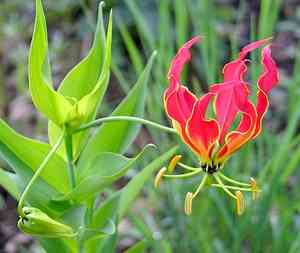
Flame lily(Gloriosa superba)

Flame lily (Gloriosa superba)

Also known as: Climbing lily, Fire lily, Glory lily, Cat's claw

The Gloriosa lily (Gloriosa superba), also called tiger claw or fire lily, is a climbing plant known for its vivid, claw-shaped flowers. It attracts sunbirds and butterflies but is highly poisonous if consumed.

Attributes of Flame lily

Lifespan
Perennial
Plant Type
Herb, Vine
Plant Height
1.5 m to 2 m
Spread
90 cm to 1.2 m
Leaf Color
Green
Flower Size
10 cm to 20 cm
Flower Color
Yellow Red

PlantJoy - Identify plants with a snap

Identify and diagnose plants, get toxicity alerts, and explore safety guides for all types of fungi.

Try for Free

Images of Flame lily

Flame lily(Gloriosa superba)

Quickly Identify Flame lily

1
Long tendril-like apex aids climbing
2
Flowers with unique 6-parted form and vibrant colors
3
Fruit is a 3-parted explosive capsule for seed dispersal
4
Sessile leaves with slender tendrils, resembling Nepenthes
5
Distinctive transition in fruit color from green to brown

Scientific Classification of Flame lily

Phylum
Vascular plants
Class
Monocotyledons
Order
Liliales
Family
Colchicum
Genus
Flame lilies
Species
Flame lily

Planting and Growing of Flame lily

Care Difficulty
Hard
Watering Schedule
Every 4 days
Sunlight Requirements
Full sun
Sunshine Duration
6-10 hours
Ideal Temperature
68-77℉
Soil Type
Potting Mix, Peat Mix
Soil pH
6.5-7.5
Fertilizer Type
Balanced
Pruning Season
Spring, Summer
Pruning Area
Branches, Leaves
Pruning Frequency
2 times a year
Repotting Season
Spring
Pot Type
Plastic, Ceramic

water icon How to Water Flame lily?

For Gloriosa superba, the watering quantity should be approximately 500 milliliters per session. This plant thrives in moist but not waterlogged soil, so it's crucial to water thoroughly and allow excess moisture to drain away. The soil should feel damp to the touch but never soggy, mimicking the natural rainfall it would experience in its native environment.
What are the symptoms of an underwatered Flame lily?
What should I do if my Flame lily is not getting enough water?
What are the symptoms of an overwatered Flame lily?
How to save an overwatered Flame lily?

sunlight icon What Are the Sunlight Requirements for Flame lily?

Sunlight Requirements: Full sun, Partial sun
Duration of light: 6 to 8 hours daily
Prefers partial to full sunlight, which helps in producing vibrant colors and robust growth, critical for Gloriosa superba's dynamic flowering display.
Optimal Sunlight Requirement
Strategies for Ideal Light
Benefits of Proper Light Exposure

temperature icon What Is the Ideal Temperature Range for Flame lily?

Ideal Temperature: 68 ~ 77℉
The ideal temperature range for growing Gloriosa superba is between 68°F to 77°F. This range ensures optimal metabolic activities and photosynthesis rate, providing the best environment for blooming. The plant efficiently utilizes water and nutrients at these temperatures, promoting healthy growth and development.

soil icon What Soil is Best for Flame lily?

Soil type: Loam, Sandy loam
Soil PH: 6.5 ~ 7.5
Gloriosa superba thrives in well-drained soils that prevent waterlogging. Sufficient drainage is crucial as it helps avoid root rot, ensuring the plant's roots receive enough oxygen and nutrients for robust growth. A soil enriched with organic matter supports Gloriosa superba's nutrient needs, promoting healthier foliage and more vibrant blooms. This plant benefits from the additional minerals and improved soil structure provided by the organic matter. Gloriosa superba prefers soil that retains just the right amount of moisture. A balance is important; overly dry conditions may lead to stunted growth, while excessive moisture can cause root damage. Consistent moisture supports sustained and healthy development.

fertilize icon How to Fertilize Flame lily?

Fertilizer type: Balanced
For Gloriosa superba, a moderate amount of fertilizer is essential. When using liquid fertilizer, follow the package instructions but typically use half the recommended rate to prevent over-fertilization. For solid fertilizers, a handful of slow-release pellets around the base every four months per plant suffices.

prune icon How to Prune Flame lily?

Pruning Time: Spring, Summer
Over-pruning can weaken Gloriosa superba, making it susceptible to stress and diseases. Always begin with minor trims and monitor the plant's response. Extensive pruning should be avoided unless it's for removing dead wood or disease management. Always sterilize pruning equipment before and after use to prevent the spread of diseases. Dirty tools can introduce pathogens leading to infections, which can severely affect the health of the plant. Ensure that pruning is done when the plant is not actively flowering or in extreme conditions like drought or excessive cold. Pruning should be scheduled when the plant is in a stable growth phase to minimize shock and encourage robust recovery.

propagate icon How to Propagate Flame lily plant?

Propagate Time: Early spring, Late spring
1
Begin by filling a seed tray with a well-draining seed compost mix. Sow the seeds evenly and cover lightly with soil. Water gently but thoroughly, ensuring the soil is consistently moist until germination occurs.
2
Carefully dig up the plant tubers in early spring. Use a sterile knife to separate sections, ensuring each has at least one growth bud. Replant these divisions in suitable soil, with tips barely covered.
3
Once seedlings have developed several leaves and are strong enough to handle, transplant them into individual pots. Ensure the new containers have adequate drainage to avoid waterlogging.

repot icon How to Repot Flame lily plant?

Repotting frequency: Every 2-3 years
1
The ideal time to repot Gloriosa superba is during its dormant phase, typically in early spring or late autumn. Look for signs such as crowded roots, slow growth, or wilting despite adequate watering. These signals indicate that the plant requires more space to continue thriving.
2
Select a pot that is about 2 inches larger in diameter than the current one, ideally with drainage holes. A terracotta pot is excellent because it allows excess moisture to evaporate, preventing root rot. The larger size offers more room for root expansion, facilitating healthier growth.
3
Opt for a well-draining, sandy loam soil mix. This type of soil ensures proper water drainage while retaining enough moisture and nutrients. It helps in preventing root rot, allows sufficient aeration, and provides a stable environment for the plant's tubers.

PlantJoy - Identify plants with a snap

Find the best spots for them to optimize their health, simply using your phone.

Try for Free

Toxicity of Flame lily

Is Flame lily toxic to humans?

Exercise caution around the flame lily; the entirety of this plant is highly toxic if ingested or even touched. Initial symptoms of poisoning from consumption may manifest as vomiting, diarrhea, abdominal discomfort, and a burning sensation within the digestive tract. Severe diarrhea can lead to dehydration, significant body acid imbalance, a sharp drop in blood pressure, and potential shock. In cases of acute flame lily poisoning, there can be serious repercussions including extensive damage to blood vessels, nerves, and kidneys, as well as convulsions, muscle weakness, delirium, and possible paralysis. There have been instances of death following ingestion due to failures in respiratory and cardiovascular functions. Additionally, flame lily can induce dermatitis upon direct contact, therefore it is advisable to completely avoid this plant whenever possible.

Is Flame lily toxic to cat?

The Flame lily (Gloriosa superba) is highly toxic to felines and can be deadly. Even minuscule quantities of pollen ingested by a cat can lead to severe health issues! The symptoms of flame lily poisoning are diverse and can include loss of appetite, bad breath, diarrhea, vomiting, lethargy, unusual hiding behavior, redness around the eyes, tongue, and/or mouth, seizures, and dehydration. Should you suspect that your cat has consumed any part of a flame lily plant, prompt veterinary attention is crucial.

Is Flame lily toxic to dog?

Flame lily is highly poisonous to dogs; if you believe your dog has ingested this plant, consult a veterinarian immediately. Each part of the plant contains dangerous alkaloids, with the highest concentrations found in the seeds and tubers (the large, bulbous roots). Even a small quantity can result in significant gastrointestinal distress, typically manifested as diarrhea and/or vomiting. Ingesting larger amounts of flame lily can result in extreme fatigue, seizures, organ failure, or even death.

Identify toxic plants for your safety

Learn which plants are harmful to you and your pets, and make informed choices for a safer home!

Try for Free
WARNING
The judgment on toxicity and danger is for reference only. We DO NOT GUARANTEE any accuracy of such judgment. Therefore, you SHALL NOT rely on such judgment. It is IMPORTANT TO SEEK PROFESSIONAL ADVICE in advance when necessary.