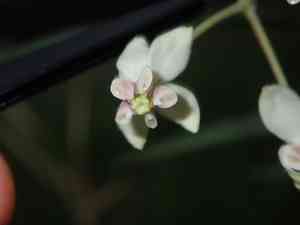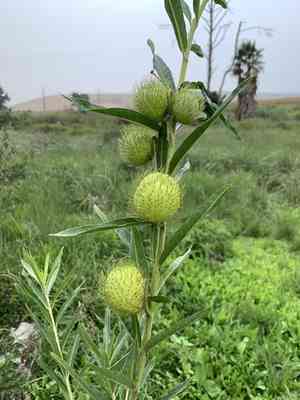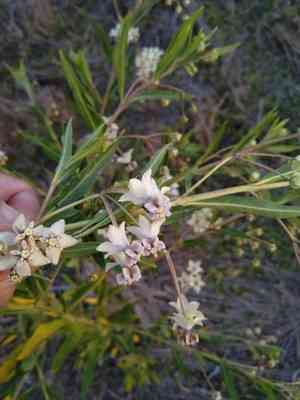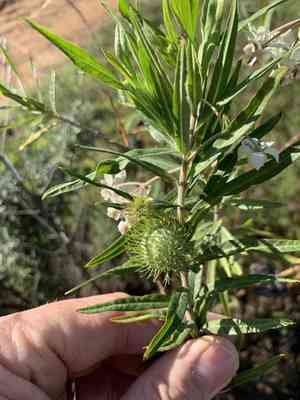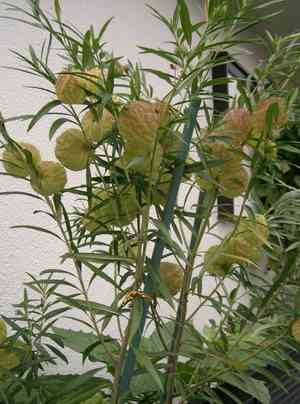
Balloon plant(Gomphocarpus physocarpus)

Balloon plant (Gomphocarpus physocarpus)

Also known as: Swan plant, Bishop's balls, Bladderbush, Goose plant, Narrow-leaf cottonbush, Swanplant, Oscar

The Balloon Plant (Gomphocarpus physocarpus), also known as Swan Plant, is cultivated for its distinctive white flowers and unique, air-filled follicles that resemble balloons and are covered in spiny hairs. These follicles eventually split open to release seeds and are often used in floral arrangements. Additionally, this plant is a vital food source for Monarch butterfly caterpillars.

Attributes of Balloon plant

Lifespan
Perennial, Annual
Plant Type
Herb
Plant Height
1.2 m to 1.8 m
Spread
1.5 m
Leaf Color
Green
Flower Size
2.5 cm
Flower Color
White

PlantJoy - Identify plants with a snap

Identify and diagnose plants, get toxicity alerts, and explore safety guides for all types of fungi.

Try for Free

Images of Balloon plant

Balloon plant(Gomphocarpus physocarpus)

Quickly Identify Balloon plant

1
Stout, upright trunk exceeds 6 feet (183 cm) in height.
2
Smooth, light green leaves measuring 3 to 4 inches (7.6 to 10.2 cm) long.
3
Creamy to white pendulous flower clusters emit light vanilla scent.
4
Distinctive 3-inch (7.6 cm) diameter, inflated, sphere-shaped fruits.
5
Pale green and fuzzy fruits darken before seed release with fluffy hairs for wind dispersion.

Scientific Classification of Balloon plant

Phylum
Vascular plants
Class
Dicotyledons
Order
Gentianales
Family
Dogbane
Genus
Gomphocarpus
Species
Balloon plant

Planting and Growing of Balloon plant

Care Difficulty
Easy
Watering Schedule
Every 5 days
Sunlight Requirements
Full sun
Sunshine Duration
4-8 hours
Ideal Temperature
65-75℉
Soil Type
Potting Mix, Peat Mix
Soil pH
6.5-7.5
Fertilizer Type
Balanced
Pruning Season
Spring, Summer
Pruning Area
Branches, Leaves
Pruning Frequency
2 times a year
Repotting Season
Spring
Pot Type
Plastic, Ceramic

water icon How to Water Balloon plant?

For Gomphocarpus physocarpus, it is essential to ensure that the soil remains slightly moist but not soggy; watering should thoroughly moisten the soil to a depth of 4-6 inches. Aim to use approximately 250 ml per session, allowing it to soak through evenly.
What are the symptoms of an underwatered Balloon plant?
What should I do if my Balloon plant is not getting enough water?
What are the symptoms of an overwatered Balloon plant?
How to save an overwatered Balloon plant?

sunlight icon What Are the Sunlight Requirements for Balloon plant?

Sunlight Requirements: Full sun, Partial sun
Duration of light: 6 to 8 hours
Gomphocarpus physocarpus thrives in full to partial sun. Sufficient light exposure enhances photosynthetic efficiency, leading to healthier growth, vibrant leaf color, and abundant flowering.
How much sunlight does Gomphocarpus physocarpus need?
What are solutions for providing optimal light conditions?
What are the benefits of adequate light for this plant?
More About Sunlight Requirements Techniques

temperature icon What Is the Ideal Temperature Range for Balloon plant?

Ideal Temperature: 65 ~ 75℉
Gomphocarpus physocarpus thrives best in temperatures ranging from 65°F to 75°F. This range facilitates optimal growth, ensuring robust foliage and prolific flowering. Maintaining this temperature range mimics its native subtropical environment, promoting healthy development.

soil icon What Soil is Best for Balloon plant?

Soil type: Sandy soil, Loam, Sandy loam
Soil PH: 6.5 ~ 7.5
The soil should have excellent drainage to prevent root rot, allowing Gomphocarpus physocarpus to thrive by ensuring its roots remain aerated. This plant benefits from soil with moderate fertility, providing essential nutrients without overwhelming the roots, ensuring balanced growth. Soil should be lightly compacted to allow root penetration and gas exchange, promoting healthy plant growth and development.

fertilize icon How to Fertilize Balloon plant?

Fertilizer type: Balanced
For Gomphocarpus physocarpus, use a balanced 10-10-10 NPK liquid fertilizer at half the recommended strength. Mix 1/2 teaspoon of liquid fertilizer per gallon of water for every application. With solid fertilizers, distribute granules evenly around the base and avoid contact with the plant stem. Use about 1 tablespoon per plant annually.

prune icon How to Prune Balloon plant?

Pruning Time: Spring, Summer
Start by pinpointing any dead or diseased branches. Carefully trim these back to healthy wood to prevent the spread of disease and to maintain the plant's overall vigor. Gomphocarpus physocarpus benefits from shaping. Trim back overgrown or leggy stems to maintain a compact form. This not only enhances aesthetic appeal but also encourages more prolific flowering and healthier foliage. Thin out densely packed areas of the plant. Allowing more light and air to penetrate the canopy reduces the risk of fungal infections and supports robust growth across all parts of the plant. More About Pruning Techniques

propagate icon How to Propagate Balloon plant plant?

Propagate Time: Spring, Early summer
1
Gomphocarpus physocarpus produces unique seed pods. Allow these to dry on the plant before harvesting the seeds. Once dried, open the pods carefully to collect the seeds.
2
Use a well-draining potting mix for both seeds and cuttings. It can be a mixture of perlite, sand, and peat moss, which helps to prevent root rot and promotes healthy growth.
3
Sow seeds in the prepared seed tray, covering them lightly with the potting mix. For cuttings, take a 4-6 inch long stem, dip in rooting hormone, and place in the potting mix.
More About Propagating Techniques

repot icon How to Repot Balloon plant plant?

Repotting frequency: Once a year
1
Repot Gomphocarpus physocarpus when you notice roots protruding from the drainage holes, or the plant's growth has visibly stunted. Spring and summer are ideal seasons as the plant is most actively growing and can recover more quickly.
2
Select a pot that is one size larger than the current one. Ensure it has good drainage holes to prevent waterlogging, which can lead to root rot. A well-chosen pot not only supports the plant structurally but also enhances aeration and root health.
3
Opt for a well-draining potting mix rich in organic matter. This type of soil allows excess water to pass through, reducing the risk of root rot and providing necessary nutrients for healthy growth.

PlantJoy - Identify plants with a snap

Find the best spots for them to optimize their health, simply using your phone.

Try for Free

Toxicity of Balloon plant

Is Balloon plant toxic to humans?

The balloon plant releases a milky white latex that is harmful if consumed. This toxic latex is present in all parts of the plant and can be released when the plant is injured or broken. Handling the balloon plant is generally safe; however, coming into contact with this latex might lead to some adverse reactions. A common effect for those who ingest the latex is an upset stomach. It is advisable to exercise caution when dealing with this plant, as some individuals have reported experiencing rashes and itching following skin exposure to the latex. To prevent accidental ingestion, it is important to keep children away from this plant.

Is Balloon plant toxic to cat?

The balloon plant has been recognized as possessing a moderate level of toxicity for cats. Felines can experience poisoning if they consume any portion of this plant. Upon ingestion, the balloon plant may lead to symptoms that suggest physical distress or illness, although the specific symptoms are not thoroughly described. It is essential for cat owners to understand that every part of the balloon plant carries an inherent risk, and they should take proactive steps to prevent their cats from coming into contact with it. If a cat does consume any part of the balloon plant, seeking immediate veterinary attention is critical to secure the best possible outcome for the affected cat.

Is Balloon plant toxic to dog?

The balloon plant is regarded as having a moderate degree of toxicity for dogs. When any part of this plant is ingested by dogs, as all components are harmful, they are potentially at risk for poisoning. Symptoms that may occur following the ingestion of the balloon plant by a dog can include vomiting, diarrhea, lethargy, and in more severe situations, the symptoms may escalate to an irregular heart rate or trouble breathing. It is crucial for dog owners to remain alert and prevent their pets from nibbling on or consuming the plant. If there's a suspicion that a dog has ingested the balloon plant and experienced poisoning, it is vital to seek prompt veterinary assistance to ensure the best possible outcome for the animal.

Identify toxic plants for your safety

Learn which plants are harmful to you and your pets, and make informed choices for a safer home!

Try for Free
WARNING
The judgment on toxicity and danger is for reference only. We DO NOT GUARANTEE any accuracy of such judgment. Therefore, you SHALL NOT rely on such judgment. It is IMPORTANT TO SEEK PROFESSIONAL ADVICE in advance when necessary.
More About Toxic Techniques