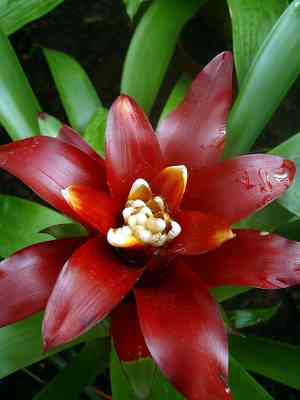
Scarlet-star (Guzmania lingulata)
Also known as: Bromeliad
The droophead tufted airplant, scientifically known as Guzmania lingulata, is a flowering plant native to the rainforests of South America and Central America. It is often grown as an ornamental houseplant due to its distinctive appearance.
In This Article
Attributes of Scarlet-star
Lifespan
Perennial
Plant Type
Herb
Plant Height
30 cm to 61 cm
Spread
50 cm
Leaf Color
Green
Flower Size
8 cm to 15 cm
Flower Color
Red Yellow White Orange
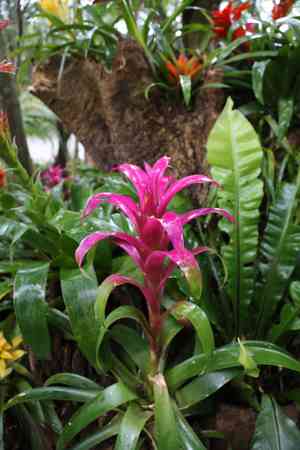
Images of Scarlet-star



Quickly Identify Scarlet-star
1
Distinctive inflorescence with red or orange bracts and white flowers.
2
Leathery, strap-shaped leaves forming a basal rosette with funnel-like central 'vase'.
3
Vibrant red bracts subtending up to 50 white, creamy yellow blossoms.
4
Long-lasting bracts measuring up to 3 inches (7.6 cm) enhance overall aesthetic.
5
Basal rosette base with long, green, tongue-shaped leaves.
Scientific Classification of Scarlet-star
Phylum
Vascular plants
Class
Monocotyledons
Order
Grasses, sedges and allies
Family
Bromeliad
Genus
Tufted airplant
Species
Scarlet-star
Planting and Growing of Scarlet-star
Care Difficulty
Easy
Watering Schedule
Every 3 days
Sunlight Requirements
Partial sun
Sunshine Duration
4-6 hours
Ideal Temperature
65-80℉
Soil Type
Potting Mix, Peat Mix
Soil pH
5.5-7
Fertilizer Type
Balanced
Pruning Season
Spring, Summer
Pruning Area
Branches, Leaves
Pruning Frequency
2 times a year
Repotting Season
Spring
Pot Type
Plastic, Ceramic
 How to Water Scarlet-star?
Guzmania lingulata prefers to have its central rosette filled with about 250ml of water. This plant is native to rainforests, so it thrives in a humid environment. The goal is to replicate its native moisture levels by ensuring the rosette is always slightly filled, yet not overflowing, allowing natural evaporation and preventing root rot.
More About Watering Techniques→
What are the symptoms of an underwatered Scarlet-star?
›
What should I do if my Scarlet-star is not getting enough water?
›
What are the symptoms of an overwatered Scarlet-star?
›
How to save an overwatered Scarlet-star?
›
 What Are the Sunlight Requirements for Scarlet-star?
Partial sun optimally benefits Guzmania lingulata. This lighting range promotes brilliant leaf coloration and robust growth. Exposure to well-balanced light simulates its natural habitat, supporting a thriving and aesthetically pleasing plant.
More About Sunlight Requirements Techniques→
Solution for Ideal Lighting
›
How to Achieve Ideal Light
›
Benefits of Ideal Lighting
›
 What Is the Ideal Temperature Range for Scarlet-star?
For optimal growth, Guzmania lingulata thrives best in temperatures ranging from 65°F to 80°F. This range closely resembles the warm, humid environments of its native tropical habitats. Ensuring stable temperatures within this range can promote vigorous growth and vibrant flowers.
 What Soil is Best for Scarlet-star?
Guzmania lingulata thrives in well-draining soil to prevent root rot. This need stems from the plant's epiphytic nature, mimicking its natural habitat. A well-draining medium ensures optimal air circulation and moisture balance, reducing waterlogged conditions and promoting healthy root growth. A nutrient-rich substrate is essential for Guzmania lingulata to support its vibrant growth and flowering. Enriched with organic matter, this type of soil provides important nutrients that the plant constantly draws upon, supporting its lush foliage and colorful bracts. The light and aerated composition of the soil is crucial for Guzmania lingulata, enhancing root respiration and preventing suffocation. Such characteristics help mimic the loose, airy substrate found in its natural environments, promoting robust growth and resilience against compacted conditions.
More About Soil→
 How to Fertilize Scarlet-star?
For Guzmania lingulata, it is recommended to use a diluted liquid fertilizer. A quarter to half strength of the normal recommended dose for houseplants is ideal. Over-fertilization can lead to salt buildup, so moderation is key.
More About Fertilizing Techniques→
 How to Prune Scarlet-star?
Always use clean and sharp gardening scissors or shears when pruning Guzmania lingulata. This prevents the tearing of plant tissue and minimizes the risk of introducing infections to fresh cuts. Take care not to cut too much foliage at once. Over-pruning can stress the plant, reducing its ability to photosynthesize efficiently, and may lead to poor health or stunted growth.
More About Pruning Techniques→
 How to Propagate Scarlet-star plant?
1
Look for healthy offshoots or 'pups' at the base of the parent plant. These should be at least one-third the size of the mature plant to ensure they have developed sufficiently for division.
2
Carefully cut the pups away from the parent plant using your sterilized knife or shears, ensuring that each has its own root system intact to ensure successful establishment.
3
Place each separated pup into a pot with sterile potting mix, ensuring good contact with the medium but not burying it too deep, as Guzmania prefers good air circulation around its base.
 How to Repot Scarlet-star plant?
1
Guzmania lingulata shows signs of needing repotting when its roots fill the container, or when its growth slows significantly. Repotting is best done during active growth periods, primarily in spring or summer, to minimize stress. Observing for yellowing leaves or poor drainage can also indicate that it's time to give your plant more room to grow.
2
Select a pot just one size larger than the current one to avoid waterlogging and ensure the roots can breathe. The new pot should have adequate drainage holes to prevent water from pooling at the bottom, which is essential for the health of your Guzmania lingulata. Using a suitable pot maintains optimum moisture and reduces overwatering risk.
3
The ideal soil for Guzmania lingulata is a light, fast-draining mix with good aeration. A blend of orchid bark, peat, and perlite works excellently. This combination allows the roots to access air and moisture efficiently, which is crucial for the plant's survival and thriving in its habitat. Proper soil selection mitigates root rot risks.



