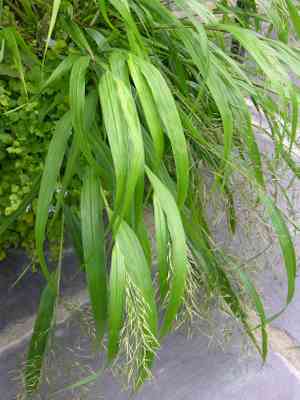
Hakone grass (Hakonechloa macra)
Also known as: Hakone Grass, Japanese Forest Grass
Japanese Forest Grass, scientifically known as Hakonechloa macra, is an ornamental grass that prefers moist, shaded environments. Forming dense mounds, it can reach up to 61 cm in height and serves as an effective ground cover for shaded areas.
In This Article
Attributes of Hakone grass
Lifespan
Perennial, Annual
Plant Type
Grass
Plant Height
60 cm
Spread
60 cm
Leaf Color
Green Yellow Red White Variegated Gold Orange Brown
Flower Size
5 cm to 7 cm
Flower Color
Green
Images of Hakone grass
Quickly Identify Hakone grass
1
Gracefully arching foliage forms spreading mounds
2
Linear to lanceolate leaves, vibrant bright green, 10 inches (25 cm) long
3
Reddish-to-pinkish blush on foliage in autumn
4
Wiry, slender stems, 0.12 inches (3 mm) diameter, 1-2 feet (30-60 cm) long
5
Delicate greenish-yellow wispy panicles, 4-6 inches (10-15 cm) long
Scientific Classification of Hakone grass
Phylum
Vascular plants
Class
Monocotyledons
Order
Poales
Family
Grass
Genus
Hakone grass
Species
Hakone grass
Planting and Growing of Hakone grass
Care Difficulty
Easy
Watering Schedule
Every 8 days
Sunlight Requirements
Partial sun
Sunshine Duration
6-10 hours
Ideal Temperature
60-75℉
Soil Type
Potting Mix, Peat Mix
Soil pH
5.5-7
Fertilizer Type
Balanced
Pruning Season
Spring, Summer
Pruning Area
Branches, Leaves
Pruning Frequency
2 times a year
Repotting Season
Spring
Pot Type
Plastic, Ceramic
 How to Water Hakone grass?
Hakonechloa macra, commonly known as Japanese forest grass, requires consistent moisture levels in its soil. The plant should be watered until the top 2 inches of soil are damp but not soggy, typically needing around 500 milliliters per watering session.
What are the symptoms of an underwatered Hakone grass?
›
What should I do if my Hakone grass is not getting enough water?
›
What are the symptoms of an overwatered Hakone grass?
›
How to save an overwatered Hakone grass?
›
 What Are the Sunlight Requirements for Hakone grass?
Partial sun exposure for 2 to 6 hours allows for vibrant foliage coloration while maintaining foliage health by preventing leaf burn.
More About Sunlight Requirements Techniques→
What is the best light condition for Hakonechloa macra?
›
How can you achieve the ideal lighting for this plant?
›
What benefits does the plant gain from ideal lighting?
›
 What Is the Ideal Temperature Range for Hakone grass?
The ideal temperature range for Hakonechloa macra falls between 60°F and 75°F. In this range, the plant thrives and exhibits optimal growth. Maintaining these temperatures ensures robust development and vibrant foliage. Such conditions mimic the plant's natural habitat and provide a stable environment for it to flourish.
 What Soil is Best for Hakone grass?
Hakonechloa macra thrives in well-drained soil that allows excess water to escape, preventing root rot. It benefits from having its roots in a loose structure where air can circulate, ensuring strong growth and vibrant foliage. While well-drained, the soil should also retain some moisture to keep the plant hydrated. A balance between drainage and moisture retention prevents the grass from drying out during hot spells, contributing to lush and healthy growth. Soil rich in organic matter provides essential nutrients for Hakonechloa macra. This enhances the soil's structure and fertility, boosting the grass's growth and helping it develop a lush, vibrant appearance.
 How to Fertilize Hakone grass?
When fertilizing Hakonechloa macra, it is important to follow the manufacturer's label instructions on the fertilizer product. Generally, apply a balanced liquid fertilizer at a diluted strength of about half the recommended amount. This grass does not require heavy feeding, and excessive feeding can lead to lush growth, which is not desirable.
 How to Prune Hakone grass?
Begin by assessing your Hakonechloa macra for any damaged or dead stems leftover from winter. Remove these to allow fresh growth space and improve air circulation. As the growing season ends, trim back the grass to just above ground level. This helps to remove any unsightly dead foliage and prepares the plant for the winter rest phase. During the growing season, lightly trim back any stray or excessively long stems to maintain the plant's neat, mound-like shape and ensure uniform appearance.
More About Pruning Techniques→
 How to Propagate Hakone grass plant?
1
Dig around the base of the Hakonechloa macra to lift the entire clump out of the ground. Use a sharp spade to carefully separate the roots into smaller sections, ensuring each section has healthy roots and foliage.
2
Select healthy plant material and use a sterile scalpel to cut small tissue samples. These samples should then be placed in a sterile nutrient medium suitable for grass tissue culture.
3
After division, replant the sections into well-prepared soil. Ensure that the soil is rich in organic matter and that there is adequate space between each new plant to allow for growth.
 How to Repot Hakone grass plant?
1
A tell-tale sign to repot Hakonechloa macra is when you see roots poking out of the drainage holes. Another indication is slowed growth despite proper care. The ideal time for repotting is during the spring or autumn, ensuring the plant has ample time to adjust before peak growing seasons. These times are optimal as they reduce the risk of stress from temperature extremes.
2
When choosing a pot, ensure it is only slightly larger than the existing one, ideally by 2-3 inches in diameter. This allows room for root growth without causing water to collect and possibly rot the roots. Opt for containers with ample drainage to avoid waterlogging; ceramic or terracotta pots are excellent at minimizing excess moisture retention.
3
The best soil for repotting is one that maintains moisture yet drains well, such as a well-draining loam. The balance of moisture retention and drainage helps prevent root rot and allows for sufficient aeration. This soil type typically contains humus, which provides necessary nutrients, supporting the grass's lush and vibrant growth.



