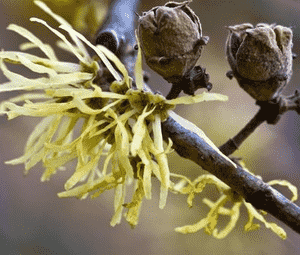
Witch hazel (Hamamelis virginiana)
Also known as: Tobacco-wood, Water-witch, Winterbloom
In the 20th century, witch hazel was frequently used for finding water sources through a practice known as dowsing or water witching, which is still sometimes practiced today. During dowsing, a forked witch hazel stick is held parallel to the ground and moved slowly over an area. It is believed that when the stick is above a water source, it will bend or move downward.
In This Article
Attributes of Witch hazel
Lifespan
Perennial
Plant Type
Shrub
Plant Height
6 m to 10 m
Spread
4.5 m to 6 m
Leaf Color
Green Yellow Gold Orange
Flower Size
1 cm to 2 cm
Flower Color
Yellow
Images of Witch hazel
Quickly Identify Witch hazel
1
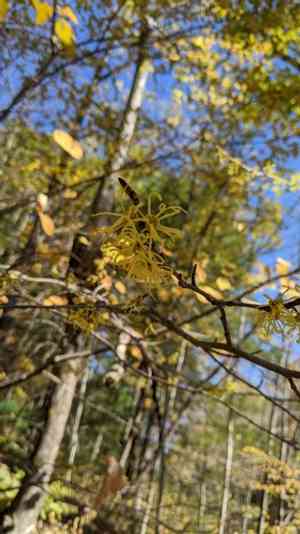
Bright yellow, spidery blossoms with four crinkly petals.
2
Distinctive zig-zag pattern on stems transitioning from pubescent to glabrous.
3
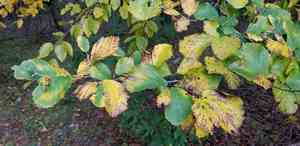
Alternate leaves with ovate to obovate shape, wavy margin, and pubescent leaf buds.
4
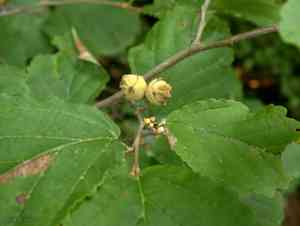
Two-valved dihiscent capsule maturing from green to woody brown.
5
Deciduous growth as shrub or small tree with axillary clusters of strap-shaped petals.
Scientific Classification of Witch hazel
Phylum
Vascular plants
Class
Dicotyledons
Order
Saxifragales
Family
Witch-hazel
Genus
Witch hazels
Species
Witch hazel
Planting and Growing of Witch hazel
Care Difficulty
Easy
Watering Schedule
Every 3 days
Sunlight Requirements
Partial sun
Sunshine Duration
6-10 hours
Ideal Temperature
50-77℉
Soil Type
Potting Mix, Peat Mix
Soil pH
6-7.5
Fertilizer Type
Balanced
Pruning Season
Spring, Summer
Pruning Area
Branches, Leaves
Pruning Frequency
2 times a year
Repotting Season
Spring
Pot Type
Plastic, Ceramic
 How to Water Witch hazel?
Hamamelis virginiana prefers consistently moist soil but not waterlogged conditions. The goal is to keep the soil evenly damp. Aim to water until the soil around the roots is fully saturated. Typically, this would mean applying approximately 500 milliliters of water per watering session, allowing the water to seep deeply into the soil without stagnating.
More About Watering Techniques→
What are the symptoms of an underwatered Witch hazel?
›
What should I do if my Witch hazel is not getting enough water?
›
What are the symptoms of an overwatered Witch hazel?
›
How to save an overwatered Witch hazel?
›
 What Are the Sunlight Requirements for Witch hazel?
Partial sun to full shade is ideal, allowing Hamamelis virginiana to develop well-rounded leaves and produce ample blooms, contributing to its overall health and appearance.
More About Sunlight Requirements Techniques→
What environment best suits Hamamelis virginiana?
›
How can I ensure optimal light?
›
What are the benefits of ideal lighting?
›
 What Is the Ideal Temperature Range for Witch hazel?
The ideal temperature range for cultivating Hamamelis virginiana is between 50°F and 77°F. This range allows the plant to maintain optimal growth and development without experiencing stress from temperature extremes. Maintaining temperatures within this range can ensure better blooming and overall plant health.
 What Soil is Best for Witch hazel?
Hamamelis virginiana thrives in well-draining soil that prevents water from pooling around its roots. This kind of soil ensures that the plant's roots access the right amount of moisture and that they are not at risk of rot, especially in areas with frequent rainfall. The plant prefers soil rich in organic matter, which provides nutrients essential for growth. This richness in nutrients supports vibrant leaf production and helps the plant withstand disease and stress. The Virginian Witch Hazel requires soil that maintains moisture without becoming waterlogged. This balance promotes healthy root growth and supports the plant’s development over time, particularly during its bloom period.
More About Soil→
 How to Fertilize Witch hazel?
When fertilizing Hamamelis virginiana, it is crucial to avoid heavy feeding. Generally, applying a balanced fertilizer diluted to half-strength is adequate. Use approximately 1 tablespoon per gallon of water for liquid fertilizers, or for slow-release types, follow the product's instructions but consider using slightly less than recommended to prevent nutrient overload.
More About Fertilizing Techniques→
 How to Prune Witch hazel?
Begin by identifying the healthiest branches. Selective pruning focuses on removing crossed or damaged branches, which can improve air circulation and reduce disease risk. Always use clean, sharp pruning shears to make your cuts at a 45-degree angle just above a bud or branch node to encourage new growth. Hamamelis virginiana can grow quite large, so maintaining the desired shape is essential. Prune back any shoots that spoil the plant's form to encourage a bushy, compact growth pattern. This is particularly important if the plant is used for ornamental purposes, as it keeps the appearance tidy and picturesque.
More About Pruning Techniques→
 How to Propagate Witch hazel plant?
1
Collect seeds from mature Hamamelis virginiana plants in late autumn when the seed pods are dry. Ensure the seeds are thoroughly dried before storing them, as moisture can lead to mold development.
2
In early summer, take semi-hardwood cuttings from healthy branches. Cuttings should be approximately 6 inches long and be taken early in the day when the plant is fully hydrated.
3
Divisions can be made in early autumn by carefully lifting and separating a clump of the plant. Ensure each division has a good balance of roots and shoots to promote successful re-establishment.
 How to Repot Witch hazel plant?
1
Look for signs such as roots beginning to protrude from the drainage holes or the plant appearing stunted. Repotting is best done in spring or autumn to avoid the stress of extreme temperatures.
2
Select a pot that is at least a couple of inches larger in diameter than the current one. Preferably, the pot should be made from breathable materials like terra cotta. This helps with moisture regulation and keeps the roots healthy.
3
The right soil is a well-drained, acidic mix that can ensure optimal growth. Such a soil blend will help with proper drainage and provide the necessary acidity that Hamamelis virginiana prefers.



