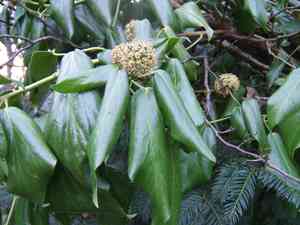
Persian ivy (Hedera colchica)
Also known as: Fragrant ivy
Persian Ivy (Hedera colchica) serves as an adaptable groundcover, thriving especially in shaded locations. It is effective for erosion control on slopes, can climb walls and trellises, and is suitable for creating topiary art. Named after the region near the Black Sea where it originates, Persian Ivy is a versatile and hardy plant.
In This Article
Attributes of Persian ivy
Lifespan
Perennial
Plant Type
Vine
Plant Height
9 m to 15 m
Spread
3 m to 6 m
Leaf Color
Green
Flower Size
Small, about 0.3 to 0.5 cm
Flower Color
Green White
Images of Persian ivy
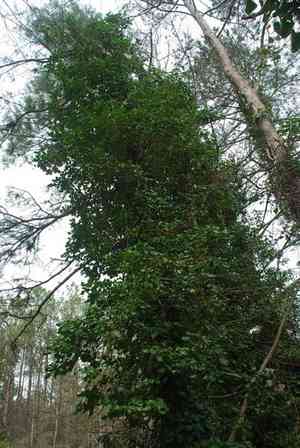
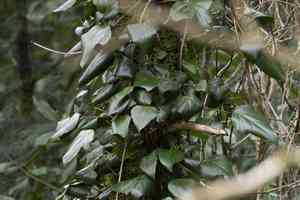
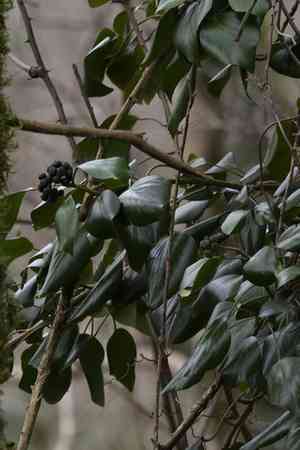
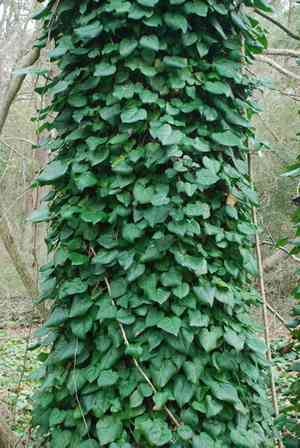
Quickly Identify Persian ivy
1
Large, glossy leaves with heart-shaped base and pointed tip, reaching 6-8 inches (15-20 cm).
2
Umbrella-shaped clusters of small greenish flowers, blooming late summer to fall.
3
Small, round berries with deep black color, clustered visibly in winter.
4
Dual leaf morphology: juvenile palmately five-lobed, adult unlobed and cordate.
5
Brown woody stems with aerial rootlets, over 0.4 inches (1 cm) in diameter.
Scientific Classification of Persian ivy
Phylum
Vascular plants
Class
Dicotyledons
Order
Apiales
Family
Ivy
Genus
Ivy
Species
Persian ivy
Planting and Growing of Persian ivy
Care Difficulty
Easy
Watering Schedule
Every 3 days
Sunlight Requirements
Partial sun
Sunshine Duration
4-8 hours
Ideal Temperature
65-77℉
Soil Type
Potting Mix, Peat Mix
Soil pH
6.5-7.5
Fertilizer Type
Balanced
Pruning Season
Spring, Summer
Pruning Area
Branches, Leaves
Pruning Frequency
2 times a year
Repotting Season
Spring
Pot Type
Plastic, Ceramic
 How to Water Persian ivy?
When it comes to watering Hedera colchica, aim to maintain an even level of moisture. You want the soil to be damp but not soggy. Ensuring water drainage is key, so that the roots do not sit in standing water which can lead to root rot.
What are the symptoms of an underwatered Persian ivy?
›
What should I do if my Persian ivy is not getting enough water?
›
What are the symptoms of an overwatered Persian ivy?
›
How to save an overwatered Persian ivy?
›
 What Are the Sunlight Requirements for Persian ivy?
Hedera colchica thrives in partial to full shade environments, where it can avoid the intensity of direct sunlight. Ideal light conditions boost photosynthetic activity, encouraging healthy, lush growth and resistance to common plant stresses.
More About Sunlight Requirements Techniques→
What is the best location for it?
›
How to improve its lighting conditions?
›
What are the benefits of ideal lighting?
›
 What Is the Ideal Temperature Range for Persian ivy?
The ideal temperature range for Hedera colchica is between 65°F and 77°F. This range provides optimal conditions for growth, ensuring the plant develops healthy foliage and remains vigorous. Maintaining this temperature allows the plant to efficiently photosynthesize and metabolize nutrients.
 What Soil is Best for Persian ivy?
Hedera colchica thrives in nutrient-rich soil, essential for its lush foliage and vigorous growth. Ensuring a healthy supply of organic matter in the soil supports the plant's development, fostering a dense and vibrant leaf structure. Proper drainage is crucial to prevent waterlogging, which can lead to root rot in Hedera colchica. Ensuring the soil drains well keeps the roots healthy and promotes robust plant growth. Maintaining the soil within a pH range of 6.5 to 7.5 is vital. This balance ensures the optimal availability of nutrients, helping Hedera colchica to absorb the necessary elements from the soil efficiently.
 How to Fertilize Persian ivy?
Hedera colchica benefits from a balanced fertilization approach. Use a liquid fertilizer with an N-P-K ratio of 10-10-10 at half the recommended strength. For solid fertilizers, opt for slow-release granules, applying around 50 grams per square meter each time.
 How to Prune Persian ivy?
Use sharp, clean pruners to cut away any dead or damaged stems, cutting back to healthy tissue. Ensure that you make cuts above a leaf node to promote new growth. Trimming back the longer vines will help you manage and shape your plant better. To shape Hedera colchica, trim vines strategically to encourage dense, bushy growth. Focus on trimming the top and sides. Always step back and assess your work frequently to ensure the desired shape is achieved and the plant remains balanced.
More About Pruning Techniques→
 How to Propagate Persian ivy plant?
1
Choose healthy stems that are free from disease or pests. The stems should be about 4 to 6 inches long and have several leaves. Avoid using stems that appear weak or damaged.
2
Using a sharp pruning shear, cut the stem at a 45-degree angle just below a node. Remove the lower leaves to reduce moisture loss and expose the stem for rooting.
3
Dip the cut end of the stem into rooting hormone and plant it in a well-draining potting mix. Firmly press the soil around the stem and water gently to settle the soil around the cutting.
 How to Repot Persian ivy plant?
1
Repot Hedera colchica when you see roots emerging from the drainage holes or the plant seems stunted despite proper care. These signs indicate the plant has outgrown its pot or the soil has become compacted, limiting its growth potential.
2
Select a pot that is 1-2 inches larger in diameter than the current one. Ensure it has good drainage holes to prevent waterlogging. A proper pot size promotes balanced growth and drainage, keeping the root system healthy and preventing rot.
3
Choose a well-draining soil mix, ideally containing perlite or sand to enhance aeration. This type of soil ensures that excess water flows away, preventing root rot and providing the necessary nutrients for robust growth of your Hedera colchica.
Toxicity
Ingestion, Skin contact
WARNING
The judgment on toxicity and danger is for reference only. We DO NOT GUARANTEE any accuracy of such judgment. Therefore, you SHALL NOT rely on such judgment. It is IMPORTANT TO SEEK PROFESSIONAL ADVICE in advance when necessary.



