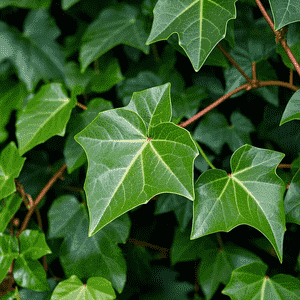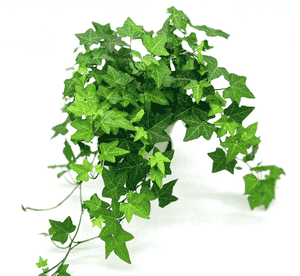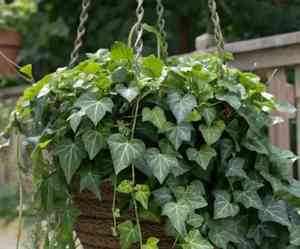
English ivy(Hedera helix)

English ivy (Hedera helix)

Also known as: European ivy, Ivy

The most prevalent climber in European forests is the English ivy (Hedera helix), a perennial vine known for its evergreen, glossy, lobed leaves. It uses strong aerial rootlets to cling to tree bark, allowing it to scale heights of over 15 meters. Besides climbing, English ivy also spreads across the forest floor and can become invasive in regions outside its native habitat.

Attributes of English ivy

Lifespan
Perennial
Plant Type
Vine
Plant Height
20 m to 30 m
Spread
90 cm to 15 m
Leaf Color
Green White Yellow Variegated
Flower Size
3 cm to 5 cm
Flower Color
Green Yellow White

PlantJoy - Identify plants with a snap

Identify and diagnose plants, get toxicity alerts, and explore safety guides for all types of fungi.

Try for Free

Images of English ivy

English ivy(Hedera helix)

Quickly Identify English ivy

1
Dark green glossy leaves with 3-5 lobes.
2
Clusters of black berry-like drupes on umbels.
3
Woody stems with adventitious roots for climbing.
4
Greenish-yellow flowers in umbels.
5
Dense, waxy texture on 2-4 inch leaves.

Scientific Classification of English ivy

Phylum
Vascular plants
Class
Dicotyledons
Order
Carrots, ivies and allies
Family
Ivy
Genus
Ivy
Species
English ivy

Planting and Growing of English ivy

Care Difficulty
Easy
Watering Schedule
Every 2 days
Sunlight Requirements
Partial sun
Sunshine Duration
4-8 hours
Ideal Temperature
60-75℉
Soil Type
Potting Mix, Peat Mix
Soil pH
6.5-7.5
Fertilizer Type
Balanced
Pruning Season
Spring, Summer
Pruning Area
Branches, Leaves
Pruning Frequency
2 times a year
Repotting Season
Spring
Pot Type
Plastic, Ceramic

water icon How to Water English ivy?

When watering Hedera helix, it's essential to ensure the soil is kept consistently moist but not soggy. Pour approximately 200 ml of water until it evenly saturates the potting mix but avoid letting it stand in excess water, as it can lead to root rot. The aim is to mimic its natural environment, where moisture is abundant without oversaturation.
What are the symptoms of an underwatered English ivy?
What should I do if my English ivy is not getting enough water?
What are the symptoms of an overwatered English ivy?
How to save an overwatered English ivy?

sunlight icon What Are the Sunlight Requirements for English ivy?

Sunlight Requirements: Partial sun, Full shade
Duration of light: 4-6 hours daily
Hedera helix thrives in partial sun to full shade. Ideal light supports robust foliage growth and vibrant coloring, ensuring energy-efficient photosynthesis and reducing stress, enhancing the plant's ornamental appeal.
What is the ideal lighting condition for Hedera helix?
How to achieve the ideal lighting for Hedera helix?
What are the benefits of ideal lighting for Hedera helix?

temperature icon What Is the Ideal Temperature Range for English ivy?

Ideal Temperature: 60 ~ 75℉
The ideal temperature range for cultivating Hedera helix, commonly known as English Ivy, is between 60°F and 75°F. This environment closely mimics the natural habitat of this plant, promoting healthy growth and leafy foliage. By maintaining this temperature range, you can ensure the plant stays in optimal condition, with strong resistance to pests and diseases.

soil icon What Soil is Best for English ivy?

Soil type: Loam, Sandy loam, Clay soil
Soil PH: 6.5 ~ 7.5
Hedera helix thrives in well-drained soils which prevent root rot and foster healthy, vigorous growth. Proper drainage ensures that the roots are not waterlogged, maintaining optimal aeration for the plant. This plant prefers soil with a moderate amount of organic matter. Organic matter provides essential nutrients that enhance growth and overall plant health, leading to lush green foliage. While it needs good drainage, the soil should retain enough moisture to keep the roots hydrated. This balance protects the plant from drying out in warm weather, ensuring steady growth.

fertilize icon How to Fertilize English ivy?

Fertilizer type: Balanced
When fertilizing Hedera helix, it is essential to remember that less is more. Use a balanced, water-soluble fertilizer diluted to half strength during the growing season. Apply it once every two weeks, and around 75-100 ml of the solution per plant is typically sufficient.

prune icon How to Prune English ivy?

Pruning Time: Spring, Summer
Begin by identifying which stems need to be removed. Look for any that are damaged, dead, or overly long. Cut these stems back to a joint, just above a node, to promote new growth. Hedera helix can quickly become unruly. Trim back excess growth from the sides to maintain a desired shape. Aim for a balanced look by cutting evenly around the plant, making sure not to miss any hidden stems that could alter the shape. Regularly pinching out the growing tips encourages the plant to grow bushier and more compact. This method is especially useful if you want to use Hedera helix as a ground cover or in hanging baskets.

propagate icon How to Propagate English ivy plant?

Propagate Time: Late spring,Early summer
1
Choose robust and disease-free vines for cuttings. Healthy vines increase the likelihood of successful rooting and growth. Ensure that each chosen cutting has multiple leaves and nodes, which are crucial for root development.
2
Use a mixture of peat and perlite to create a light and well-draining medium. Adequate drainage prevents waterlogging, which can cause root rot. Moisten the medium before planting the cuttings to provide a conducive environment for root growth.
3
Insert cuttings into the planting medium, ensuring that the nodes are buried in the soil as they are the primary sites for root development. Firm the soil around the cuttings gently to eliminate air pockets, thus promoting better contact with the medium.

repot icon How to Repot English ivy plant?

Repotting frequency: Every 1-2 years
1
Hedera helix should be repotted when you notice roots coming out of the drainage holes or when the growth of the plant has slowed down. These are indicators that the plant has outgrown its current pot and requires more space to thrive.
2
Select a pot that is one size larger than the current one, with adequate drainage holes. A slightly bigger pot prevents waterlogging and provides room for root expansion without overwhelming the ivy. Clay or ceramic pots are ideal as they allow better aeration.
3
Opt for a well-draining potting mix that retains some moisture without becoming soggy. A blend with peat, perlite, and pine bark is excellent. This composition ensures adequate aeration and facilitates healthy root growth, preventing root rot.

PlantJoy - Identify plants with a snap

Find the best spots for them to optimize their health, simply using your phone.

Try for Free

Toxicity of English ivy

Is English ivy toxic to humans?

English ivy poses a moderate level of toxicity, which can be a result of ingestion or direct contact. Every part of the plant exhibits toxic characteristics. When the sap from the leaves or stems comes into contact with the skin, it may lead to inflammation, accompanied by redness, itching, and the formation of blisters. Ingesting the berries can provoke a burning sensation in the throat. Eating the leaves may induce serious symptoms, including delirium, hallucinations, fever, convulsions, rashes, vomiting, diarrhea, abdominal pain, and excessive salivation. Additionally, English ivy contains allergens that may trigger sensitivity in some individuals. Instances of poisoning are most likely to arise from unintentional contact, as the plant is widely cultivated and regarded as an invasive weed throughout North America.

Is English ivy toxic to cat?

English ivy (Hedera helix) poses a moderate toxicity risk to cats, primarily due to the presence of triterpenoid saponins in its structure. Ingestion can lead to symptoms such as vomiting, abdominal discomfort, and diarrhea. Although both the berries and leaves contain these harmful compounds, the leaves are significantly more toxic than the berries. It is advisable to consult a veterinarian if any part of this plant is consumed.

Is English ivy toxic to dog?

English ivy poses a moderate to severe toxicity risk to dogs; consuming significant quantities may result in a medical crisis. A rash could occur if only a few leaves are ingested, while consuming an excessive quantity can potentially lead to coma or paralysis. The toxic compound, known as triterpenoid saponin, permeates the entire plant, but its highest concentration is found in the leaves. Furthermore, even contact with the plant's sap can provoke skin rashes and irritation. This species is frequently used in landscaping and as indoor decor, thus one must remain cautious.

Identify toxic plants for your safety

Learn which plants are harmful to you and your pets, and make informed choices for a safer home!

Try for Free
WARNING
The judgment on toxicity and danger is for reference only. We DO NOT GUARANTEE any accuracy of such judgment. Therefore, you SHALL NOT rely on such judgment. It is IMPORTANT TO SEEK PROFESSIONAL ADVICE in advance when necessary.