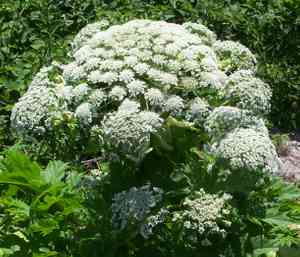
Giant hogweed(Heracleum mantegazzianum)

Giant hogweed (Heracleum mantegazzianum)

Also known as: Giant cow parsley, Hogsbane, Wild rhubarb, Mantegazzi’s Cow-Parsnip

Giant Hogweed (Heracleum mantegazzianum) is a towering perennial plant that can grow between 2 to 5 meters tall. Despite its amusing nicknames such as Giant Cow Parsley, Hogsbane, and Giant Alien, this plant is far from funny. It is an invasive species with phototoxic properties. Contact with its sap, combined with exposure to sunlight, triggers a condition known as phytophotodermatitis, leading to severe skin inflammation, blistering, and potential scarring that can persist for several days.

Attributes of Giant hogweed

Lifespan
Perennial, Biennial
Plant Type
Herb
Plant Height
2.5 m to 4.5 m
Spread
1.2 m
Leaf Color
Green
Flower Size
2.5 cm
Flower Color
White

PlantJoy - Identify plants with a snap

Identify and diagnose plants, get toxicity alerts, and explore safety guides for all types of fungi.

Try for Free

Images of Giant hogweed

Giant hogweed(Heracleum mantegazzianum)

Quickly Identify Giant hogweed

1
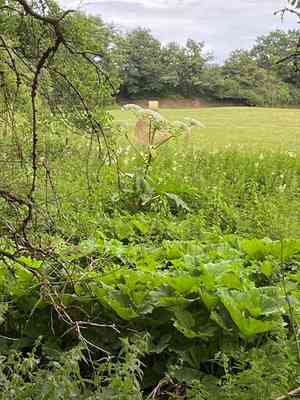
Towering height up to 20 feet (6 meters)
2
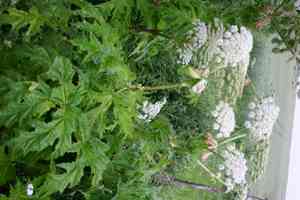
Large white flower clusters spanning 2.5 feet (0.76 meters)
3
Distinctive ellipsoidal fruit with brown teardrop markings
4
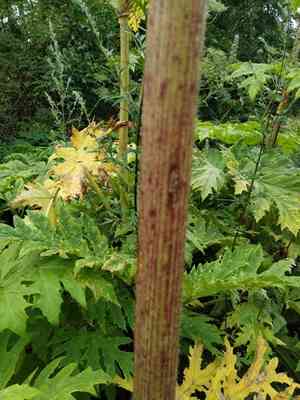
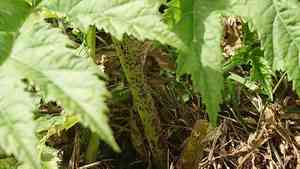
Hollow stem with reddish-purple spots and coarse white hairs
5
Remarkably large compound leaves up to 9 feet (2.7 meters) wide

Scientific Classification of Giant hogweed

Phylum
Vascular plants
Class
Dicotyledons
Order
Apiales
Family
Umbellifers
Genus
Cow parsnip
Species
Giant hogweed

Planting and Growing of Giant hogweed

Care Difficulty
Hard
Watering Schedule
Every 2 days
Sunlight Requirements
Full sun
Sunshine Duration
4-8 hours
Ideal Temperature
60-75℉
Soil Type
Potting Mix, Peat Mix
Soil pH
6.5-7.5
Fertilizer Type
Balanced
Pruning Season
Spring, Summer
Pruning Area
Branches, Leaves
Pruning Frequency
2 times a year
Repotting Season
Spring
Pot Type
Plastic, Ceramic

water icon How to Water Giant hogweed?

Heracleum mantegazzianum requires a moderate amount of water, around 500 ml per session. The soil should be kept consistently moist but not waterlogged. A key indicator is to ensure the top inch of soil feels slightly dry before re-watering.
What are the symptoms of an underwatered Giant hogweed?
What should I do if my Giant hogweed is not getting enough water?
What are the symptoms of an overwatered Giant hogweed?
How to save an overwatered Giant hogweed?

sunlight icon What Are the Sunlight Requirements for Giant hogweed?

Sunlight Requirements: Full sun, Partial sun
Duration of light: 6 to 8 hours daily
Heracleum mantegazzianum thrives in full sun to partial sun exposure, where 6-8 hours of light ensures optimal health. Adequate light helps maintain strong structural integrity, lush growth, and resistance to environmental stressors.
What is the ideal lighting condition?
How to achieve ideal lighting conditions?
Benefits of ideal lighting conditions?

temperature icon What Is the Ideal Temperature Range for Giant hogweed?

Ideal Temperature: 60 ~ 75℉
The ideal temperature range for Heracleum mantegazzianum, commonly known as giant hogweed, is between 60°F and 75°F. This range provides the optimal conditions for its growth and development, ensuring healthy foliage and successful flowering. Maintaining these temperatures helps the plant to efficiently perform physiological processes and thrive in its environment.

soil icon What Soil is Best for Giant hogweed?

Soil type: Loam, Sandy loam, Clay soil
Soil PH: 6.5 ~ 7.5
Heracleum mantegazzianum thrives in moist soils that retain moisture well. Keeping the soil consistently damp helps support its expansive foliage and ensures lush growth. While moisture is crucial, the soil must also offer good drainage to prevent root rot. Adequate drainage ensures the roots receive oxygen and reduces the risk of fungal infections. The plant prefers soils enriched with organic matter. Nutrient-rich environments provide the necessary elements for vigorous growth and improve the plant's overall health.

fertilize icon How to Fertilize Giant hogweed?

Fertilizer type: Balanced
For Heracleum mantegazzianum, it's crucial to ensure the plant receives a balanced amount of nutrients. Generally, apply about 100 grams of balanced 10-10-10 fertilizer per square meter for liquid feed. Be cautious not to overapply, as this can lead to nutrient runoff and potentially harm the environment.

prune icon How to Prune Giant hogweed?

Pruning Time: Spring, Summer, Autumn, Winter
Start by wearing protective clothing, including gloves and long sleeves, to avoid contact with the plant’s sap, which can cause severe skin reactions. Use sharp pruning shears to cut back the flower heads before they set seeds. Remove any broken or dead stems to maintain plant health. Ensure to dispose of the cuttings safely by bagging them securely for disposal, preventing seed dispersal. Always clean your tools thoroughly after use to prevent sap transfer.

propagate icon How to Propagate Giant hogweed plant?

Propagate Time: Spring, Early summer
1
Collect seeds from mature Heracleum mantegazzianum plants in late summer or early autumn. Ensure seeds are dry and store them in a cool, dry place until ready for planting.
2
Heracleum mantegazzianum seeds require stratification. Place seeds in moist sand and refrigerate for 8-10 weeks before planting to break dormancy.
3
Sow stratified seeds in seed trays filled with well-draining soil. Cover seeds lightly with soil and maintain consistent moisture. Place trays in a sunny location.

repot icon How to Repot Giant hogweed plant?

Repotting frequency: Every 2 years
1
You should repot Heracleum mantegazzianum when its roots begin outgrowing the current pot, typically indicated by roots poking out through drainage holes. Another signal is when the plant seems top-heavy or doesn't seem to be thriving despite good care. It's best to check the root ball to see if the roots are tightly bound.
2
Select a pot that is one size larger than the current one, offering ample room for root expansion. The pot should have good drainage holes to prevent waterlogging, as standing water can lead to root rot. A terracotta pot is ideal as it promotes air circulation and prevents root suffocation.
3
Use a soil mix that is rich in organic matter, ensuring good aeration and drainage. A mix comprising regular potting soil, sand, and perlite or grit suits well. This combination facilitates nutrient availability while ensuring water isn't trapped around roots, which improves plant health.

PlantJoy - Identify plants with a snap

Find the best spots for them to optimize their health, simply using your phone.

Try for Free

Toxicity of Giant hogweed

Is Giant hogweed toxic to humans?

Giant hogweed is highly toxic to humans, often resulting in serious reactions upon contact – in many instances, exposure to giant hogweed necessitates a visit to the doctor. These plants produce a poisonous sap that permeates their entire structure, with individuals being especially vulnerable during activities such as pruning or attempting to eliminate the plant when it is broken or damaged. Direct contact with giant hogweed leads to symptoms like redness, itching, and intense blistering of the skin, which can persist for days or even weeks, potentially leaving behind permanent scars. The sap can also induce photosensitivity and may even result in temporary vision loss. Individuals engaged in removing this invasive plant from gardens and landscaped areas may inadvertently come across it – it tends to thrive in disturbed regions, including vacant lots and the edges of roads.

Is Giant hogweed toxic to cat?

Giant hogweed presents a moderate toxicity threat to cats. Contact with this plant typically happens through direct interaction with its sap or inadvertent ingestion. If a cat touches or consumes parts of giant hogweed, it may exhibit signs of physical discomfort. While particular toxic compounds are not specified, the danger is associated with the plant's sap. The appearance of distress necessitates prompt veterinary care to guarantee the cat receives appropriate attention and treatment.

Is Giant hogweed toxic to dog?

Giant hogweed presents a moderate toxicity hazard to dogs. Canines can experience poisoning through skin contact with the sap of the giant hogweed or by unintentionally consuming portions of the plant. Contact with giant hogweed may lead to a variety of symptoms, such as dermatitis, photosensitivity, blistering, and potentially more serious reactions if the plant is ingested. It is imperative for dog owners to prevent their pets from having any interaction with or consuming any part of giant hogweed. Should a dog be suspected of having been poisoned by this plant, immediate veterinary attention is critical for swift treatment.

Identify toxic plants for your safety

Learn which plants are harmful to you and your pets, and make informed choices for a safer home!

Try for Free
WARNING
The judgment on toxicity and danger is for reference only. We DO NOT GUARANTEE any accuracy of such judgment. Therefore, you SHALL NOT rely on such judgment. It is IMPORTANT TO SEEK PROFESSIONAL ADVICE in advance when necessary.