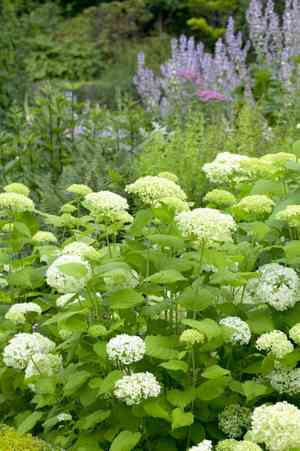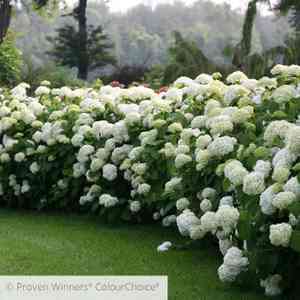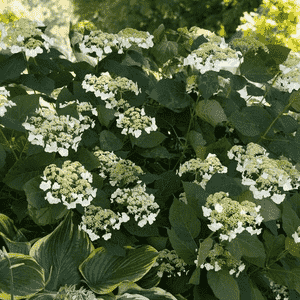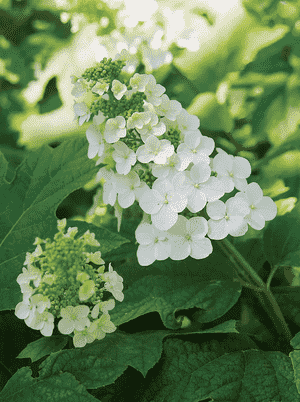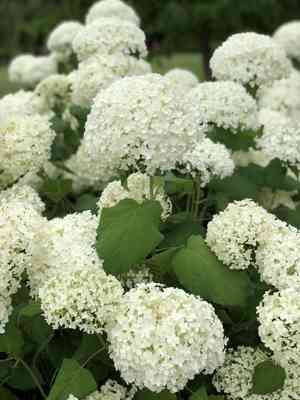
Smooth hydrangea(Hydrangea arborescens)

Smooth hydrangea (Hydrangea arborescens)

Also known as: Wild hydrangea, Tree hydrangea

The **Smooth Hydrangea (*Hydrangea arborescens*)** is a deciduous shrub native to streambanks, gorges, and wooded slopes across Northern America. Known for its large, striking white flower clusters that bloom in summer, this plant is a popular choice for ornamental use. It's particularly well-suited for borders and thrives in moist, well-drained soils commonly found near water bodies.

Attributes of Smooth hydrangea

Lifespan
Perennial
Plant Type
Shrub
Plant Height
1 m to 3 m
Spread
90 cm to 1.5 m
Leaf Color
Green
Flower Size
0.6 mm to 1.1 mm
Flower Color
White Green Cream Pink

PlantJoy - Identify plants with a snap

Identify and diagnose plants, get toxicity alerts, and explore safety guides for all types of fungi.

Try for Free

Images of Smooth hydrangea

Smooth hydrangea(Hydrangea arborescens)

Quickly Identify Smooth hydrangea

1
Large, globular flower clusters with lacecap-like appearance in summer.
2
Distinctively toothed, egg-shaped leaves measuring 2-6 inches (5-15 cm).
3
Dehiscent ribbed brown capsules with evolving color from green to brown.
4
Peeling, multi-toned bark revealing fine layers, tactile and visually unique.
5
Opposite leaf arrangement, dark green upper surface, yellow fall coloration.

Scientific Classification of Smooth hydrangea

Phylum
Vascular plants
Class
Dicotyledons
Order
Cornales
Family
Hydrangea
Genus
Hydrangeas
Species
Smooth hydrangea

Planting and Growing of Smooth hydrangea

Care Difficulty
Easy
Watering Schedule
Every 8 days
Sunlight Requirements
Partial sun
Sunshine Duration
4-8 hours
Ideal Temperature
65-75℉
Soil Type
Potting Mix, Peat Mix
Soil pH
5-7
Fertilizer Type
Balanced
Pruning Season
Spring, Summer
Pruning Area
Branches, Leaves
Pruning Frequency
2 times a year
Repotting Season
Spring
Pot Type
Ceramic, Plastic

water icon How to Water Smooth hydrangea?

When watering Hydrangea arborescens, aim for moderate soil moisture. The soil should be kept consistently damp, but not waterlogged. An indicator of proper moisture is when about 500ml of water maintains soil hydration without causing standing water. The goal is to saturate the root zone, ensuring water reaches deep enough to support the plant's expansive root system, while allowing the soil to dry slightly between waterings to prevent root rot.
What are the symptoms of an underwatered Smooth hydrangea?
What should I do if my Smooth hydrangea is not getting enough water?
What are the symptoms of an overwatered Smooth hydrangea?
How to save an overwatered Smooth hydrangea?

sunlight icon What Are the Sunlight Requirements for Smooth hydrangea?

Sunlight Requirements: Partial sun, Full shade
Duration of light: 4-6 hours daily
Partial sun to full shade is ideal, promoting healthy growth and preventing issues like leaf scorch. Adequate light also ensures vibrant blooms and robust foliage.
What is the ideal lighting environment?
How to achieve the ideal lighting for Hydrangea arborescens?
What benefits does the ideal lighting provide?

temperature icon What Is the Ideal Temperature Range for Smooth hydrangea?

Ideal Temperature: 65 ~ 75℉
The ideal temperature range for growing Hydrangea arborescens is between 65°F and 75°F. At this range, the plant can maintain optimal growth, ensuring vibrant blooms and strong foliage. This range also helps in maintaining the plant's metabolic activities efficiently, leading to robust health and resilience against diseases.

soil icon What Soil is Best for Smooth hydrangea?

Soil type: Loam, Sandy loam, Clay soil, Acidic soil
Soil PH: 5 ~ 7
Hydrangea arborescens thrives in well-drained soil, preventing waterlogging which can lead to root rot. Ensuring adequate drainage promotes robust root systems and healthier plants. This plant benefits from soil that retains some moisture without becoming waterlogged. Moist, rich soils help maintain hydration levels crucial for lush foliage and abundant flowering. Utilizing fertile soil enriched with organic matter supports the vigorous growth and vibrant blooms of Hydrangea arborescens, providing essential nutrients for growth and flowering.

fertilize icon How to Fertilize Smooth hydrangea?

Fertilizer type: Balanced
Hydrangea arborescens benefits from a balanced fertilizer application, typically around 1 to 1.5 pounds of general-purpose 10-10-10 fertilizer per 100 square feet. This ensures the plant receives adequate nutrients without the risk of over-fertilization.

prune icon How to Prune Smooth hydrangea?

Pruning Time: Spring, Autumn
Start by identifying and removing dead or weak stems from the previous year. This process not only enhances plant health but also improves air circulation, promoting healthier growth patterns. Trim each branch back to about one-third of its original size. Make your cuts just above a pair of healthy buds or a node, angling the cut away from the bud to encourage outward and upward growth. Aim to achieve a balanced and rounded shape, ensuring the plant stems are all relatively even in length. This helps the hydrangea support blooms uniformly while maintaining its aesthetic appeal.

propagate icon How to Propagate Smooth hydrangea plant?

Propagate Time: Early spring, Late spring
1
Select a healthy, non-flowering stem and cut a 6-inch piece just below a node. Remove leaves from the lower half to reduce transpiration and moisture loss.
2
Dip the cut end of the stem into rooting hormone to encourage root development. Gently tap off any excess powder or gel before planting.
3
Insert the treated cutting into a well-draining medium like perlite or a peat-based potting mix. Water thoroughly to settle the soil and maintain moisture.

repot icon How to Repot Smooth hydrangea plant?

Repotting frequency: every 2-3 years
1
Hydrangea arborescens needs repotting when you notice roots spiraling around the pot's edge, indicating it’s getting cramped. A decline in blooms or wilting despite regular watering could also signal root issues. Choose early spring to provide a smooth transition, as the plant will soon enter a period of robust growth.
2
Select a pot that is 2-3 inches larger in diameter than the current one. The additional space should promote healthy root spread without overwhelming the plant with excess soil that retains too much water. Ensure the pot has adequate drainage holes to prevent root rot and keep the plant’s roots healthy and well-aerated.
3
Use a moisture-retentive but well-draining soil mix for Hydrangea arborescens. This ensures that the plant remains hydrated without becoming waterlogged, which could lead to root rot. A good mix can include organic matter like leaf mold or compost to enrich the soil, aiding in nutrient retention and drainage.

PlantJoy - Identify plants with a snap

Find the best spots for them to optimize their health, simply using your phone.

Try for Free

Toxicity of Smooth hydrangea

Is Smooth hydrangea toxic to cat?

The smooth hydrangea (Hydrangea arborescens) poses a moderate level of toxicity to felines. The leaves and every part of the flower harbor toxins. Ingesting a substantial quantity can lead to symptoms such as nausea, diarrhea, vomiting, difficulty breathing, lethargy, and skin irritation. Young cats and kittens are particularly susceptible to severe health issues. If your cat has consumed any portion of this plant, it is advisable to consult your veterinarian.

Is Smooth hydrangea toxic to dog?

Smooth hydrangeas pose a mild toxicity risk to dogs. Their leaves, flowers, and buds contain toxic compounds, with the highest levels typically found in the flowers and immature leaves. The most frequently observed symptoms following the ingestion of smooth hydrangea include vomiting and diarrhea. Fortunately, serious poisoning incidents are uncommon, as a considerable quantity of this toxin must be ingested to result in a fatal outcome.

Identify toxic plants for your safety

Learn which plants are harmful to you and your pets, and make informed choices for a safer home!

Try for Free
WARNING
The judgment on toxicity and danger is for reference only. We DO NOT GUARANTEE any accuracy of such judgment. Therefore, you SHALL NOT rely on such judgment. It is IMPORTANT TO SEEK PROFESSIONAL ADVICE in advance when necessary.