Shrubby St. John's wort(Hypericum prolificum)

Shrubby St. John's wort (Hypericum prolificum)

Also known as: Shrubby St. John's Wort, Prolific St. John's Wort

Sweet Pepperbush (*Clethra alnifolia*) is a native flowering shrub found in the eastern United States and Canada. It thrives in woodlands, swamps, and along rivers and streams. This shrub is particularly noted for its fragrant white flowers, which have an abundance of stamens that produce pollen.

Attributes of Shrubby St. John's wort

Lifespan
Perennial
Plant Type
Shrub
Plant Height
2 m
Spread
30 cm to 1.2 m
Leaf Color
Green
Flower Size
1.5 cm to 3 cm
Flower Color
Yellow Gold

PlantJoy - Identify plants with a snap

Identify and diagnose plants, get toxicity alerts, and explore safety guides for all types of fungi.

Try for Free

Images of Shrubby St. John's wort

Shrubby St. John's wort(Hypericum prolificum)

Quickly Identify Shrubby St. John's wort

1
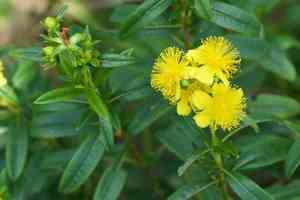
Bright yellow flowers with long, showy stamens, 1 inch (2.5 cm) in diameter.
2
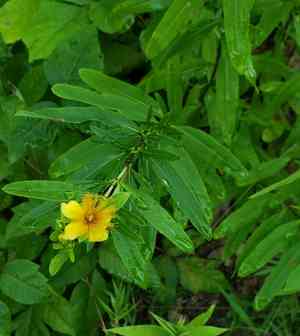
Oval dark green leaves arranged oppositely or whorled, 3 inches (7.6 cm) long.
3
Fruit is an ovoid capsule, roughly 1/2 inch (1.3 cm) in length.
4
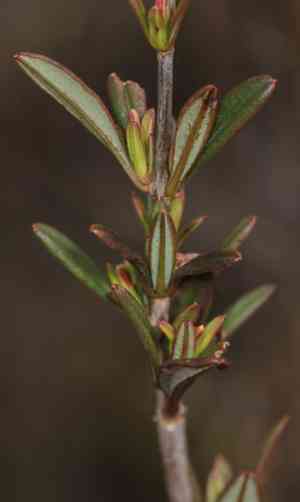
Stems feature 2-6 ridges on newer growth, becoming smooth and woody.
5
Upright trunk with exfoliating bark revealing grey-brown to silver layers, slender size.

Scientific Classification of Shrubby St. John's wort

Phylum
Vascular plants
Class
Dicotyledons
Order
Malpighiales
Family
St. John's wort
Genus
St. John's worts
Species
Shrubby St. John's wort

Planting and Growing of Shrubby St. John's wort

Care Difficulty
Easy
Watering Schedule
Every 2 days
Sunlight Requirements
Full sun
Sunshine Duration
6-10 hours
Ideal Temperature
65-75℉
Soil Type
Potting Mix, Peat Mix
Soil pH
5.5-7.5
Fertilizer Type
Balanced
Pruning Season
Spring, Summer
Pruning Area
Branches, Leaves
Pruning Frequency
2 times a year
Repotting Season
Spring
Pot Type
Ceramic, Plastic

water icon How to Water Shrubby St. John's wort?

Hypericum prolificum, also known as shrubby St. John's Wort, requires a watering approach that ensures the soil remains moderately moist but not waterlogged. Aim to water until the soil is moist a few inches down, which generally requires about 500 milliliters per session.
What are the symptoms of an underwatered Shrubby St. John's wort?
What should I do if my Shrubby St. John's wort is not getting enough water?
What are the symptoms of an overwatered Shrubby St. John's wort?
How to save an overwatered Shrubby St. John's wort?

sunlight icon What Are the Sunlight Requirements for Shrubby St. John's wort?

Sunlight Requirements: Full sun, Partial sun
Duration of light: 6 to 8 hours
Hypericum prolificum benefits from conditions of full sun to partial sun. Ideal light fosters lush growth, vibrant blooms, and robust plant health, preventing susceptibility to pest and disease.
What is the best light condition for Hypericum prolificum?
How can I ensure ideal light conditions for Hypericum prolificum?
What benefits does ideal light provide to Hypericum prolificum?

temperature icon What Is the Ideal Temperature Range for Shrubby St. John's wort?

Ideal Temperature: 65 ~ 75℉
The ideal temperature range for Hypericum prolificum is between 65 and 75 degrees Fahrenheit. This range facilitates nutrient absorption and healthy growth. Temperatures within this band ensure the plant can photosynthesize efficiently and maintain a robust growth rate, minimizing any stress from temperature fluctuations.

soil icon What Soil is Best for Shrubby St. John's wort?

Soil type: Loam, Sandy loam
Soil PH: 5.5 ~ 7.5
Hypericum prolificum thrives in well-drained soil, as poor drainage can lead to root rot, which is fatal to the plant. Offering a well-drained site ensures proper air circulation around the roots, promoting robust growth and overall plant health. While well-draining soil is essential, it should also retain some moisture. This balance helps maintain soil temperature and humidity levels that are conducive to the plant’s growth cycle, thus supporting its vibrant blooms. The plant benefits significantly from a nutrient-rich substrate that supports its growth and flowering. Compost or organic matter mixed into the soil can boost nutrient levels, giving Hypericum prolificum the energy needed for optimal development.

fertilize icon How to Fertilize Shrubby St. John's wort?

Fertilizer type: Balanced
When fertilizing Hypericum prolificum, it's important to use a balanced, all-purpose fertilizer. For liquid fertilizers, mix according to the package instructions, typically around 1 tablespoon per gallon of water. Apply evenly around the base, avoiding direct contact with stems. For solid fertilizers, scatter about 1/4 cup around the base, ensuring it covers the root zone.

prune icon How to Prune Shrubby St. John's wort?

Pruning Time: Spring, Summer, Autumn
Begin by removing any dead or diseased wood, cutting back to healthy growth. Focus on opening up the center of the shrub to allow light and air to reach inner branches. This helps reduce the risk of fungal diseases and encourages more blooms. Cutting back older branches by a third can stimulate new growth in Hypericum prolificum. This not only keeps the plant looking fresh but also promotes a more vigorous floral display the following season.

propagate icon How to Propagate Shrubby St. John's wort plant?

Propagate Time: Spring, Early summer
1
Begin by filling seed trays with a well-draining seed-starting mix. Sow the seeds uniformly across the surface, then cover them lightly with a fine layer of soil. Maintain consistent moisture until germination occurs.
2
For cutting propagation, select healthy, semi-hardwood stems and cut them just below a node. Remove any leaves on the lower half of the cutting, and dip the cut end into rooting hormone for better root establishment.
3
Once seedlings have developed a few true leaves, they are ready to be transplanted into individual pots. Handle them gently by the leaves to avoid damaging the delicate stems and roots during this process.

repot icon How to Repot Shrubby St. John's wort plant?

Repotting frequency: Every 2-3 years
1
Hypericum prolificum shows signs it's ready for repotting when you notice roots emerging from drainage holes or if the plant's growth becomes stunted. These indicators suggest that the plant has outgrown its current home and needs more room to thrive.
2
Select a pot that's only slightly larger than the current one, preferably 1-2 inches wider in diameter. This helps the plant to establish its roots quickly without the risk of excessive soil retaining water and causing root rot.
3
Choose a well-draining loamy mix for repotting Hypericum prolificum. This type of soil ensures proper water drainage while providing essential nutrients, promoting healthy root development and preventing waterlogged conditions.

PlantJoy - Identify plants with a snap

Find the best spots for them to optimize their health, simply using your phone.

Try for Free

Toxicity of Shrubby St. John's wort

Is Shrubby St. John's wort toxic to humans?

Shrubby St. John's wort poses significant handling hazards and is even more perilous when ingested. Contact with its sap can trigger a photosensitive rash on the skin; therefore, it is crucial to wash it off promptly with soap and water prior to sun exposure. Always wear protective gloves when dealing with this plant and keep it out of children's reach. The sap permeates every section of the plant and ingestion can lead to severe health issues. Individuals may experience symptoms including pain in the mouth and throat, nausea, vomiting, diarrhea, and persistent fatigue. Additionally, many individuals may suffer from an allergic reaction to the sap, presenting symptoms such as hives, vomiting, headaches, breathing difficulties, and in extreme cases, anaphylactic shock. Although the specific toxin has yet to be isolated and understood, it is suspected to be a glycoside type.

Is Shrubby St. John's wort toxic to cat?

Shrubby St. John's wort presents a toxicity concern for cats, potentially resulting in illness or discomfort upon ingestion. Cats may unintentionally consume portions of this plant, particularly the leaves and sap, both of which are recognized for their toxic properties. Following exposure, felines may exhibit vague signs of physical distress, indicating a pressing need for veterinary intervention. To reduce any risk, cat owners ought to keep shrubby St. John's wort out of reach of their pets and promptly seek veterinary assistance if they suspect poisoning.

Is Shrubby St. John's wort toxic to dog?

Shrubby St. John's wort is known to be toxic to dogs. Pets may inadvertently consume various parts of the plant, including leaves or sap, resulting in poisoning. Dog owners need to be attentive since ingestion can trigger a variety of symptoms that could jeopardize their pet's health. If a dog ingests any portion of shrubby St. John's wort, it is essential to obtain prompt veterinary attention to guarantee appropriate treatment and management for any possible poisoning.

Identify toxic plants for your safety

Learn which plants are harmful to you and your pets, and make informed choices for a safer home!

Try for Free
WARNING
The judgment on toxicity and danger is for reference only. We DO NOT GUARANTEE any accuracy of such judgment. Therefore, you SHALL NOT rely on such judgment. It is IMPORTANT TO SEEK PROFESSIONAL ADVICE in advance when necessary.