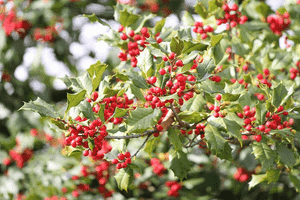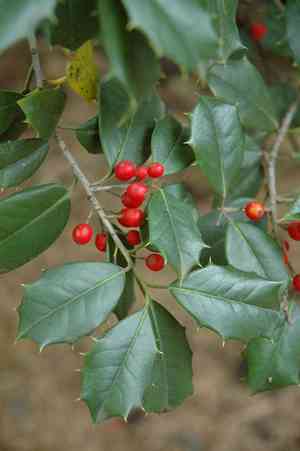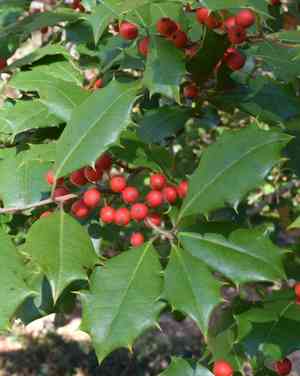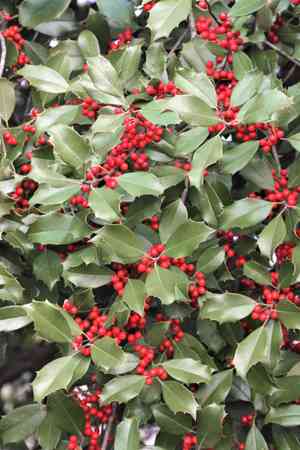
American holly(Ilex opaca)

American holly (Ilex opaca)

Also known as: American Holly, Christmas Holly

Ilex opaca, or American holly, is a medium-sized evergreen tree typically found in the southeastern regions of North America, thriving as an understory plant in moist forests. While its bright red berries are toxic to humans, they serve as a crucial food source for many bird species, particularly during the winter when other foods are limited.

Attributes of American holly

Lifespan
Perennial
Plant Type
Tree, Shrub
Plant Height
4.5 m to 30 m
Spread
3 m to 6 m
Leaf Color
Green
Flower Size
2.5 cm to 8 cm
Flower Color
White Green Yellow

PlantJoy - Identify plants with a snap

Identify and diagnose plants, get toxicity alerts, and explore safety guides for all types of fungi.

Try for Free

Images of American holly

American holly(Ilex opaca)

Quickly Identify American holly

1
Stiff, holly-like leaves with long, sharp spines
2
Greenish-white flowers in male clusters and solitary females
3
Vibrant red-orange spherical fruit persisting from fall to winter
4
Thick, leathery leaves with oblong shape and apical spine
5
Greenish-gray stem with irregular branching and small raised lenticels

Scientific Classification of American holly

Phylum
Vascular plants
Class
Dicotyledons
Order
Aquifoliales
Family
Holly
Genus
Ilex
Species
American holly

Planting and Growing of American holly

Care Difficulty
Moderate
Watering Schedule
Every 2 days
Sunlight Requirements
Partial sun
Sunshine Duration
6-10 hours
Ideal Temperature
60-75℉
Soil Type
Potting Mix, Peat Mix
Soil pH
6.5-7.5
Fertilizer Type
Balanced
Pruning Season
Spring, Summer
Pruning Area
Branches, Leaves
Pruning Frequency
2 times a year
Repotting Season
Spring
Pot Type
Plastic, Ceramic

water icon How to Water American holly?

For Ilex opaca, each watering session should involve approximately 500 milliliters of water. The key is to ensure that the soil is consistently moist but not waterlogged. It's crucial to allow the upper layer of soil to dry a bit between watering sessions to prevent root rot. Ideally, water until the soil feels evenly moist when you touch it about an inch deep.
What are the symptoms of an underwatered American holly?
What should I do if my American holly is not getting enough water?
What are the symptoms of an overwatered American holly?
How to save an overwatered American holly?

sunlight icon What Are the Sunlight Requirements for American holly?

Sunlight Requirements: Partial sun, Full sun
Duration of light: 4 to 6 hours
Ilex opaca ideally requires partial sun to full sun exposure for optimal growth. This balance enables maximum photosynthesis and energy production, resulting in healthier growth.
How much sun does Ilex opaca prefer?
What is the solution for optimal lighting?
Why is ideal lighting important for Ilex opaca?

temperature icon What Is the Ideal Temperature Range for American holly?

Ideal Temperature: 60 ~ 75℉
The ideal temperature range for growing Ilex opaca, commonly known as American Holly, is between 60°F to 75°F. This range provides optimal conditions for photosynthesis and metabolic processes. At these temperatures, the plant can efficiently absorb nutrients and water, promoting vigorous growth and healthy foliage. Maintaining this range helps prevent stress-related conditions and ensures vibrant, glossy leaves.

soil icon What Soil is Best for American holly?

Soil type: Loam, Sandy loam, Acidic soil
Soil PH: 6.5 ~ 7.5
Ilex opaca greatly benefits from well-drained soil as it helps prevent root rot by ensuring excess water moves away from the root system efficiently. This property is crucial in maintaining the plant's overall health and ensuring robust growth. This plant shows a preference for acidic environments, thriving best in soils with a lower pH. Acidic conditions enhance nutrient availability, boosting the plant's growth and foliage vigor. Rich in organic matter, nutrient-rich soils support Ilex opaca's growth, providing essential elements needed for its development. Continuous access to nutrients fosters lush, green leaves and a strong structure.

fertilize icon How to Fertilize American holly?

Fertilizer type: Balanced
For Ilex opaca, it's crucial not to over-fertilize due to its preference for less fertile conditions. Apply liquid fertilizer at half the usual strength, approximately one tablespoon per gallon of water during the growing season, ensuring even distribution.

prune icon How to Prune American holly?

Pruning Time: Spring, Summer
Start by locating any dead, diseased, or broken branches and remove these sections first. Cut back to the base of the damaged area or to a strong lateral branch to encourage healthy repair and growth. Prune the outer edges of the tree to maintain a balanced and rounded shape. Aim to have a slightly wider bottom portion to allow light to penetrate and support lower branches more effectively. Evaluate areas with dense foliage. Thinning these spots improves air circulation within the canopy and reduces the risk of fungal infections. Remove smaller, weaker branches where necessary to open up the structure.

propagate icon How to Propagate American holly plant?

Propagate Time: Late spring, Early summer
1
Prior to sowing, holly seeds require stratification to break dormancy. This involves placing them in moist sand and refrigerating for several months to mimic winter conditions.
2
Once stratified, plant the seeds in a well-draining seed-starting mix. Ensure they are covered lightly with soil and keep the environment consistently moist but not waterlogged.
3
In late spring or early summer, take semi-hardwood cuttings. Cut 4-6 inch sections from healthy plants, remove lower leaves, and plant in a perlite and peat mix.

repot icon How to Repot American holly plant?

Repotting frequency: Every 2-3 years
1
Repotting Ilex opaca, or the American holly, is necessary when roots start circling the pot or the soil drains too quickly, showing signs of root-bound stress, typically every 2-3 years. Spring or summer is the best time to repot.
2
Select a pot that is 2-4 inches larger than the current one, with ample drainage holes. A slightly larger pot prevents waterlogging and allows adequate room for root expansion, offering your holly the perfect balance between nourishment and moisture control.
3
Opt for a well-draining, acidic soil mix to mimic the shrub's natural environment. The soil should support water retention without becoming waterlogged, promoting healthy root development, and preventing conditions that encourage root rot.

PlantJoy - Identify plants with a snap

Find the best spots for them to optimize their health, simply using your phone.

Try for Free

Toxicity of American holly

Is American holly toxic to humans?

The berries of American holly pose a risk of toxicity when ingested by humans. The level of toxicity is regarded as low. Signs of American holly poisoning can manifest as vomiting, diarrhea, nausea, and depression. Typically, these symptoms are mild, unless a significant amount of berries is ingested. The risk of poisoning predominantly arises from unintentional consumption by children.

Is American holly toxic to cat?

Similar to other holly species, it is crucial to keep cats away from American holly (Ilex opaca), as ingestion can lead to moderately harmful reactions. Every part of the American holly, including its essential oil, contains toxic compounds that may trigger symptoms such as vomiting, diarrhea, lethargy, or excessive salivation in cats. Generally, the reactions to this plant are not severe due to the sharpness of its leaves, which effectively deters cats from overindulgence. However, if a cat consumes the essential oil, the symptoms experienced are likely to be much more pronounced.

Is American holly toxic to dog?

The American holly plant poses a moderate toxicity risk to dogs. Its berries contain high levels of toxic saponins, which can lead to symptoms such as stomach upset, vomiting, diarrhea, and excessive drooling. Although the leaves are less poisonous, they can still result in discomfort or physical damage to the mouth due to their sharp spines. Fortunately, the spines on the leaves serve as a deterrent, preventing most dogs from consuming sufficient quantities of the leaves or berries to trigger a severe reaction.

Identify toxic plants for your safety

Learn which plants are harmful to you and your pets, and make informed choices for a safer home!

Try for Free
WARNING
The judgment on toxicity and danger is for reference only. We DO NOT GUARANTEE any accuracy of such judgment. Therefore, you SHALL NOT rely on such judgment. It is IMPORTANT TO SEEK PROFESSIONAL ADVICE in advance when necessary.