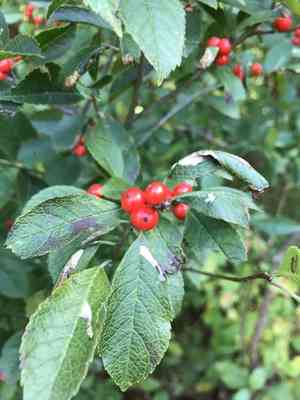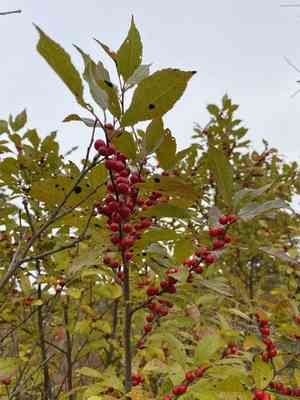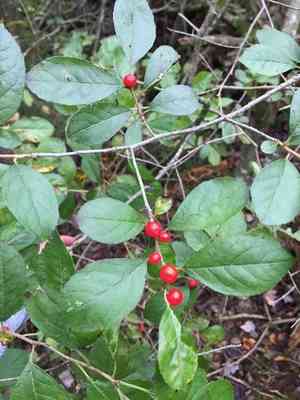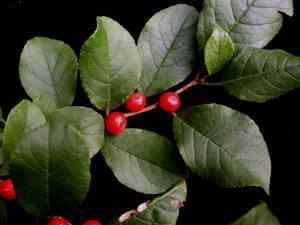
Common winterberry(Ilex verticillata)

Common winterberry (Ilex verticillata)

Also known as: Winterberry holly, Coralberry, False Alder

Winterberry (Ilex verticillata) is a berry species often cultivated in eastern U.S. gardens. Known for its adaptability to temperate climates and its ornamental value, it is also referred to as Michigan holly.

Attributes of Common winterberry

Lifespan
Perennial
Plant Type
Shrub
Plant Height
1 m to 5 m
Spread
1.8 m to 3 m
Leaf Color
Green Yellow
Flower Size
5 mm
Flower Color
White Green

PlantJoy - Identify plants with a snap

Identify and diagnose plants, get toxicity alerts, and explore safety guides for all types of fungi.

Try for Free

Images of Common winterberry

Common winterberry(Ilex verticillata)

Quickly Identify Common winterberry

1
Distinct red berries with black terminal dots.
2
Pubescent leaf veins with impressed texture.
3
Small, inconspicuous greenish-white flowers.
4
Bright red berries with black pit scar.
5
Olive to purplish-brown stem with lenticels.

Scientific Classification of Common winterberry

Phylum
Vascular plants
Class
Dicotyledons
Order
Aquifoliales
Family
Holly
Genus
Ilex
Species
Common winterberry

Planting and Growing of Common winterberry

Care Difficulty
Easy
Watering Schedule
Every 2 days
Sunlight Requirements
Full sun
Sunshine Duration
6-10 hours
Ideal Temperature
60-80℉
Soil Type
Potting Mix, Peat Mix
Soil pH
4.5-6.5
Fertilizer Type
Balanced
Pruning Season
Spring, Summer
Pruning Area
Branches, Leaves
Pruning Frequency
2 times a year
Repotting Season
Spring
Pot Type
Plastic, Ceramic

water icon How to Water Common winterberry?

The watering amount for Ilex verticillata should be around 500 milliliters per session. This quantity ensures that the soil is thoroughly moistened but not waterlogged. It's important to aim for an even distribution throughout the root zone, saturating the soil until the water begins to drain slightly from the bottom. This ensures the entire root system receives ample hydration without promoting root rot.
What are the symptoms of an underwatered Common winterberry?
What should I do if my Common winterberry is not getting enough water?
What are the symptoms of an overwatered Common winterberry?
How to save an overwatered Common winterberry?

sunlight icon What Are the Sunlight Requirements for Common winterberry?

Sunlight Requirements: Full sun, Partial sun
Duration of light: 4 to 6 hours
Ilex verticillata ideally requires a balanced exposure to full sun to partial sun. With such ideal lighting, the plant maintains lush greenery and abundant berry production, maximizing its decorative appeal.
How much sunlight does it need?
What are the solutions for ideal lighting?
What benefits does ideal lighting bring?

temperature icon What Is the Ideal Temperature Range for Common winterberry?

Ideal Temperature: 60 ~ 80℉
The ideal temperature range for Ilex verticillata is between 60°F and 80°F. These conditions ensure that the plant can perform necessary physiological processes efficiently. At these temperatures, the plant experiences optimal photosynthesis rates, encouraging robust growth and vibrant foliage. This range mimics the native conditions where the plant thrives naturally.

soil icon What Soil is Best for Common winterberry?

Soil type: Loam, Sandy loam, Acidic soil
Soil PH: 4.5 ~ 6.5
Ilex verticillata thrives in consistently moist soil conditions. Ensuring that the soil remains consistently moist helps this plant develop robust root systems and vibrant green foliage. Moisture is key in maintaining its health, especially during dry spells. Despite its love for moisture, Ilex verticillata does not favor waterlogged environments. Well-drained soil facilitates adequate water flow, preventing root rot while supporting optimal nutrient absorption for flourishing growth. The incorporation of rich organic matter in the soil provides essential nutrients for Ilex verticillata. Organic matter enhances soil fertility, promotes healthy growth, and boosts the plant's natural resilience.

fertilize icon How to Fertilize Common winterberry?

Fertilizer type: Balanced
Ilex verticillata typically requires a moderate amount of fertilizer. When using any fertilizer, be sure to apply it according to the product's instructions, as the nutrient concentration will vary. Liquid fertilizers should be diluted as per the label's guidelines, typically one tablespoon per gallon of water. Use a balanced fertilizer with equal NPK values, around 10-10-10 or 20-20-20.

prune icon How to Prune Common winterberry?

Pruning Time: Spring, Summer, Autumn
Start by removing any dead or diseased wood, which can hinder the plant's health and vigor. Use sharp, clean pruning shears to make precise cuts. Then, thin out the inner branches to allow more light and air to penetrate, stimulating growth. Focus on shaping the plant by trimming overly long branches to maintain its natural form. Ideally, you should prune Ilex verticillata in the late winter or early spring before new growth starts. This timing ensures that the plant isn't stressed by extreme conditions and you can clearly see the plant's framework, which makes it easier to shape effectively.

propagate icon How to Propagate Common winterberry plant?

Propagate Time: Spring, Early summer
1
Gather berries from the female Ilex verticillata plant in late autumn. Remove the seeds from fruits and clean them thoroughly to remove any residual pulp, as this aids germination.
2
Take semi-hardwood cuttings in late summer. Cut sections of about 6 inches and remove all lower leaves to reduce moisture loss and encourage root development.
3
Place cuttings in a prepared pot with a mix of sand and peat, covering it with plastic to retain humidity. Place the pot in indirect sunlight to prevent dehydration and encourage root growth.

repot icon How to Repot Common winterberry plant?

Repotting frequency: Every 2-3 years
1
Ilex verticillata typically requires repotting when you notice roots circling around the bottom of the pot or emerging from the drainage holes. This indicates that the plant has outgrown its current home and needs more space to continue thriving.
2
Select a pot that is about 1-2 inches larger in diameter than the current pot. Ensure the pot has good drainage holes to prevent water logging. A slightly larger pot will give the roots space to grow, supporting the plant's health and vigor.
3
Opt for a well-draining potting mix that retains some moisture yet allows excess water to escape. Ideal soil will support root health by preventing root rot and ensuring the plant receives enough nutrients without becoming waterlogged.

PlantJoy - Identify plants with a snap

Find the best spots for them to optimize their health, simply using your phone.

Try for Free

Toxicity of Common winterberry

Is Common winterberry toxic to cat?

Common winterberry presents a mild toxicity risk for felines. All parts of the plant are toxic, and cats could suffer from negative health effects if they ingest significant quantities of common winterberry. The signs of poisoning typically reflect physical distress or pain; thus, any consumption should be regarded with utmost seriousness for their well-being. It is essential for cat guardians to swiftly obtain veterinary care if they believe their cat has ingested common winterberry.

Is Common winterberry toxic to dog?

Common winterberry presents a mild toxicity hazard to dogs. Poisoning usually occurs when canines consume the plant in significant quantities. All parts of the common winterberry are deemed toxic and may result in adverse health consequences if ingested by a dog. Symptoms of toxicity can include gastrointestinal disturbances, such as vomiting and diarrhea, in addition to other possible signs of distress. It is essential for dog owners to keep a close eye on their pets and restrict access to common winterberry, especially during periods when the plant's berries or leaves could be more reachable. If a dog ingests common winterberry, it is crucial to seek immediate veterinary attention to ensure the best possible outcome for the affected animal.

Identify toxic plants for your safety

Learn which plants are harmful to you and your pets, and make informed choices for a safer home!

Try for Free
WARNING
The judgment on toxicity and danger is for reference only. We DO NOT GUARANTEE any accuracy of such judgment. Therefore, you SHALL NOT rely on such judgment. It is IMPORTANT TO SEEK PROFESSIONAL ADVICE in advance when necessary.