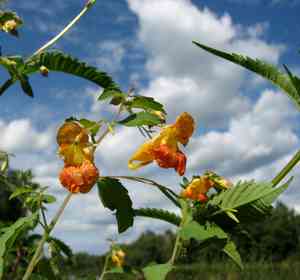
Spotted touch-me-not (Impatiens capensis)
Also known as: Orange balsam, Common jewelweed
The spotted touch-me-not, native to North America, features bright orange flowers adorned with darker spots. Its common name, "touch-me-not," stems from its unique seed dispersal method. When the seed pods mature, even a gentle touch triggers them to burst open, flinging seeds away from the plant. This process, known as explosive dehiscence, aids in spreading the seeds to new locations.
In This Article
Attributes of Spotted touch-me-not
Lifespan
Annual
Plant Type
Herb
Plant Height
91 cm to 1.5 m
Spread
30 cm to 90 cm
Leaf Color
Green Blue
Flower Size
2.5 cm
Flower Color
Orange Yellow
Images of Spotted touch-me-not
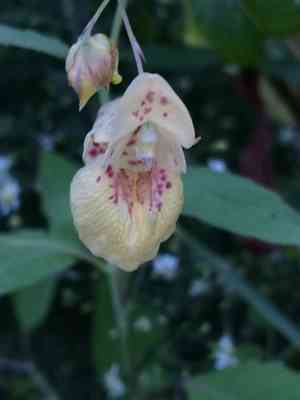
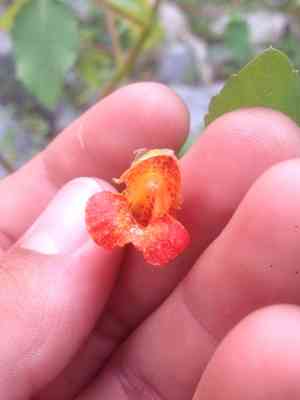
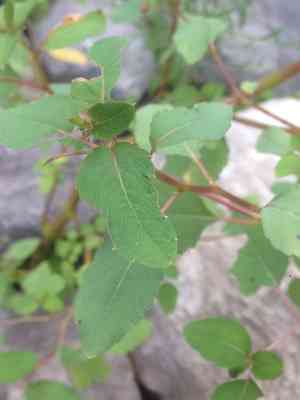
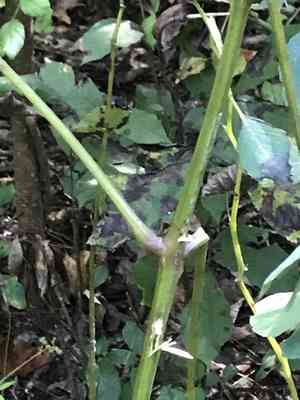
Quickly Identify Spotted touch-me-not
1
Luscious annual with translucent stem, reaching 3-5 feet (91-152 cm) in height.
2
Leaves are oval, coarsely toothed, bluish-green, with fuzzy undersides, 1.5-3.5 inches (4-9 cm) long.
3
Vibrant orange to orange-yellow flowers, 1 inch (2.5 cm) long, with reddish-brown spots.
4
Seed capsules with explosive dehiscence, scatter tiny seeds widely for effective distribution.
5
Distinct vein pattern on leaves, enhancing identifiable characteristics of the plant.
Scientific Classification of Spotted touch-me-not
Phylum
Vascular plants
Class
Dicotyledons
Order
Ericales
Family
Balsam
Genus
Jewelweed
Species
Spotted touch-me-not
Planting and Growing of Spotted touch-me-not
Care Difficulty
Easy
Watering Schedule
Every 8 days
Sunlight Requirements
Partial sun
Sunshine Duration
8-12 hours
Ideal Temperature
65-75℉
Soil Type
Potting Mix, Peat Mix
Soil pH
6.5-7.5
Fertilizer Type
Balanced
Pruning Season
Spring, Summer
Pruning Area
Branches, Leaves
Pruning Frequency
2 times a year
Repotting Season
Spring
Pot Type
Plastic, Ceramic
 How to Water Spotted touch-me-not?
When it comes to watering Impatiens capensis, aim for about 250 ml of water per session. The goal is to keep the soil evenly moist but not waterlogged. You want the top layer of soil to feel damp to the touch, yet water should not pool on the surface or drain out excessively from the bottom.
More About Watering Techniques→
What are the symptoms of an underwatered Spotted touch-me-not?
›
What should I do if my Spotted touch-me-not is not getting enough water?
›
What are the symptoms of an overwatered Spotted touch-me-not?
›
How to save an overwatered Spotted touch-me-not?
›
 What Are the Sunlight Requirements for Spotted touch-me-not?
Partial sun to full shade is ideal. This range promotes healthy blooms and robust foliage, allowing Impatiens capensis to maximize its growth potential with the necessary energy for reproduction.
More About Sunlight Requirements Techniques→
What lighting conditions does Impatiens capensis prefer?
›
How can you provide ideal lighting for Impatiens capensis?
›
What are the benefits of ideal lighting conditions for Impatiens capensis?
›
 What Is the Ideal Temperature Range for Spotted touch-me-not?
For Impatiens capensis, the ideal temperature range is between 65°F and 75°F. This range allows for optimal growth and development, encouraging vigorous flowering and healthy foliage. At these temperatures, the plant can efficiently photosynthesize and absorb nutrients, promoting robust health.
 What Soil is Best for Spotted touch-me-not?
Impatiens capensis thrives in soil that provides excellent drainage. Well-drained soil ensures that the roots do not sit in water, reducing the risk of root rot, and promoting vigorous growth. This plant benefits from soil that can retain moisture while also ensuring proper drainage. A balance helps keep the plant hydrated without over-saturation, crucial for its healthy foliar development. Having nutrient-rich soil is essential as Impatiens capensis flourishes with a steady supply of nutrients, ensuring vibrant flowers and lush foliage throughout the growing season.
More About Soil→
 How to Fertilize Spotted touch-me-not?
For Impatiens capensis, use a balanced 10-10-10 liquid fertilizer. When applying liquid fertilizer, dilute it to half of the recommended strength. For each application, ensure the soil is evenly moist but not waterlogged to prevent root damage.
More About Fertilizing Techniques→
 How to Prune Spotted touch-me-not?
Start by identifying any dead or damaged stems and leaves. Use clean, sharp scissors or pruners to snip these away. Always cut just above a node to encourage new, healthy growth. To maintain the plant's shape and fullness, periodically pinch back leggy branches. This can also prevent the plant from becoming too bushy or crowded, which detracts from the garden's aesthetics. Deadheading involves removing spent flowers to encourage more blooms. To deadhead Impatiens capensis, gently grasp the faded flower between your thumb and forefinger, and twist it off at the base. This practice not only tidies up the plant but also redirects the plant’s energy towards producing new flowers rather than seeds.
More About Pruning Techniques→
 How to Propagate Spotted touch-me-not plant?
1
Gather seeds from mature plants when the pods burst open. Ensure seeds are completely dry before storage to prevent mold.
2
Select healthy, non-flowering stems about 4-6 inches long. Cut just below a leaf node to increase chances of successful rooting.
3
Sow seeds or place cuttings in a well-draining potting mix. Water lightly to moisten the soil but avoid oversaturating to prevent rot.
 How to Repot Spotted touch-me-not plant?
1
The ideal time to repot Impatiens capensis is when you notice roots emerging from the drainage holes of the pot. This signals that your plant has outgrown its container. If your plant appears wilted despite regular watering, it might be time to give it more space. Also, observe if the soil compacts quickly, indicating depleted nutrition levels.
2
Select a pot that is one size larger than the current one. The new pot should have proper drainage holes to prevent waterlogging. A slightly larger pot allows roots to spread, promoting healthy growth. Avoid pots that are too large, as this can lead to overwatering issues. The material, whether ceramic, plastic, or terracotta, should match the plant's environment—retain moisture in arid conditions or facilitate drainage in humid environments.
3
Opt for a well-draining potting mix suitable for flowering plants. A mix containing peat moss, perlite, or vermiculite will protect your plant from waterlogged roots. This kind of soil provides the necessary aeration while retaining enough moisture to foster the growth of Impatiens capensis. Ensure the soil has sufficient organic matter to support the nutritional needs of the plant.
Learn More About Spotted touch-me-not Diseases
Anthracnose
Bacterial Leaf Spot
Bacterial Soft Rot
Bacterial Wilt
Chemical Injury
Damping-off
Downy Mildew
Drought Stress
Fusarium Wilt
Gray Mold
Leaf Curl
Leaf Spot
Mosaic
Nutrient Deficiency
Nutrient Toxicity
Powdery Mildew
Root Rot
Root-knot Nematode
Rusts
Sooty Mold
Spider Mites
Temperature Stress
Thrips Damage
White Mold



