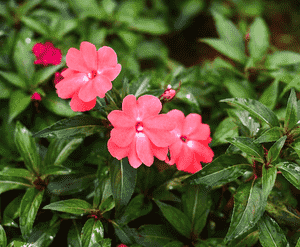
New guinea impatiens (Impatiens hawkeri)
Also known as: New Guinea Impatiens, New Guinea Busy Lizzie
New guinea impatiens (Impatiens hawkeri) is a flowering plant native to Papua New Guinea and the Solomon Islands. New guinea impatiens is commonly cultivated as a garden plant, especially in nurseries. New guinea impatiens is often bred with other species to improve its ability to withstand droughts.
In This Article
Attributes of New guinea impatiens
Lifespan
Perennial, Annual
Plant Type
Herb
Plant Height
20 cm to 60 cm
Spread
15 cm to 30 cm
Leaf Color
Green
Flower Size
4 cm to 7 cm
Flower Color
White Pink Red Orange Purple Lavender Burgundy
Images of New guinea impatiens
Quickly Identify New guinea impatiens
1
Vibrant flowers with elongated spurs, measuring 1-2 inches (2.5-5 cm) in diameter.
2
Distinctively ribbed, explosive capsules with a rolling mechanism for seed dispersal.
3
Variegated leaves with crenate margins and prominent veins, ranging from 2 to 6 inches (5 to 15 cm).
Scientific Classification of New guinea impatiens
Phylum
Vascular plants
Class
Dicotyledons
Order
Ericales
Family
Balsam
Genus
Jewelweed
Species
New guinea impatiens
Planting and Growing of New guinea impatiens
Care Difficulty
Easy
Watering Schedule
Every 8 days
Sunlight Requirements
Partial sun
Sunshine Duration
4-6 hours
Ideal Temperature
65-75℉
Soil Type
Potting Mix, Peat Mix
Soil pH
6.5-7.5
Fertilizer Type
Balanced
Pruning Season
Spring, Summer
Pruning Area
Branches, Leaves
Pruning Frequency
2 times a year
Repotting Season
Spring
Pot Type
Plastic, Terracotta
 How to Water New guinea impatiens?
When it comes to Impatiens hawkeri, ensure the soil remains consistently moist but not waterlogged. A good rule of thumb is to water until you see excess moisture beginning to drain from the bottom of the pot, which indicates the soil has been fully saturated.
More About Watering Techniques→
What are the symptoms of an underwatered New guinea impatiens?
›
What should I do if my New guinea impatiens is not getting enough water?
›
What are the symptoms of an overwatered New guinea impatiens?
›
How to save an overwatered New guinea impatiens?
›
 What Are the Sunlight Requirements for New guinea impatiens?
Partial sun or full shade is optimal for Impatiens hawkeri, allowing it to maintain vibrancy and healthy growth. Ideal lighting facilitates lush bloom development and maintains resilience against stressors.
More About Sunlight Requirements Techniques→
What is the best lighting condition for Impatiens hawkeri?
›
How can I achieve these ideal lighting conditions?
›
What benefits come from providing ideal lighting?
›
 What Is the Ideal Temperature Range for New guinea impatiens?
Impatiens hawkeri thrives best in environments where the temperature remains between 65°F and 75°F. This range encourages optimal growth, ensuring that the plant can photosynthesize efficiently and maintain its vibrant appearance. Temperatures within this range help facilitate the plant's natural processes and reduce the risk of stress.
 What Soil is Best for New guinea impatiens?
Impatiens hawkeri thrives best in nutrient-rich soil, which provides essential nutrients that support vibrant growth and blooming. Enriching the soil with compost or organic matter ensures the plant receives a balanced diet of nitrogen, phosphorus, and potassium for its health and vitality. Well-drained soil is crucial for preventing waterlogging, which can lead to root rot. This type of soil prevents water from accumulating around the roots, ensuring that the plant's roots stay healthy and well-aerated, supporting optimal growth and development. Impatiens hawkeri prefers consistently moist soil but not soggy. Regular watering keeps the soil moisture balanced, which is vital for continuous nutrient uptake and maintaining the turgor pressure necessary for the plant's lush, full appearance.
More About Soil→
 How to Fertilize New guinea impatiens?
For Impatiens hawkeri, the amount of fertilizer should be carefully managed. A general recommendation is to use a balanced liquid fertilizer with an N-P-K ratio of 20-20-20 at half the strength recommended on the label. This helps prevent over-fertilizing, which can burn the roots.
More About Fertilizing Techniques→
 How to Prune New guinea impatiens?
Begin by examining your Impatiens hawkeri for any dead, wilted, or damaged stems and leaves. Use sterilized, sharp scissors or shears to cut these parts back to healthy tissue. This encourages robust growth and prevents the spread of disease. To maintain an even and bushy appearance, lightly trim the tips of the plant. Focus on cutting just above a node, where leaves join the stem for optimal regrowth. This practice encourages branching and fuller foliage. Prune spent blooms regularly to direct energy towards new flowering. Pinch or snip just below the faded flowerhead to maintain vibrant bloom production throughout the seasons.
More About Pruning Techniques→
 How to Propagate New guinea impatiens plant?
1
Harvest seeds from mature Impatiens hawkeri plants before they dry out completely. Ensure they are cleaned and stored in a dry, cool place until sowing.
2
Choose healthy stems and cut them at a 45-degree angle below a node. Remove the lower leaves and dip the cut end into rooting hormone before planting in a moist, well-draining medium.
3
For seeds, sow them on the soil surface and cover lightly. For cuttings, plant them in a prepared medium, ensuring consistent moisture and warmth to encourage root formation.
 How to Repot New guinea impatiens plant?
1
Recognizing when to repot your Impatiens hawkeri involves observing key signs. If the plant appears root-bound, is showing stunted growth, or the soil dries out rapidly after watering, it's time to consider repotting. These signals indicate the plant needs more space and fresh nutrients.
2
Select a pot that is 1-2 inches larger in diameter than the current one. This slight increase allows the roots to expand without overwhelming them with excess soil, which can retain too much moisture. Ensure the pot has drainage holes to prevent waterlogging, which can lead to root rot.
3
Opt for a well-draining potting mix to ensure excess water drains away easily, preventing root rot. A mix containing peat moss, perlite, and vermiculite offers a balanced moisture retention and aeration, providing the ideal environment for healthy root growth.
Learn More About New guinea impatiens Diseases
Anthracnose
Bacterial Leaf Spot
Bacterial Soft Rot
Bacterial Wilt
Black Spot
Chemical Injury
Damping-off
Downy Mildew
Drought Stress
Fusarium Wilt
Gray Mold
Leaf Curl
Leaf Spot
Mosaic
Nutrient Deficiency
Nutrient Toxicity
Powdery Mildew
Root Rot
Root-knot Nematode
Sooty Mold
Spider Mites
Temperature Stress
Thrips Damage
White Mold



