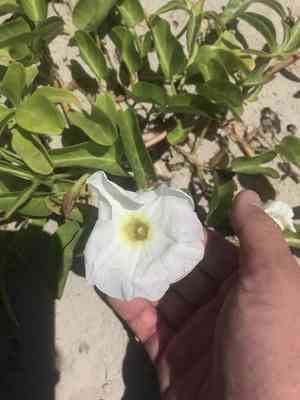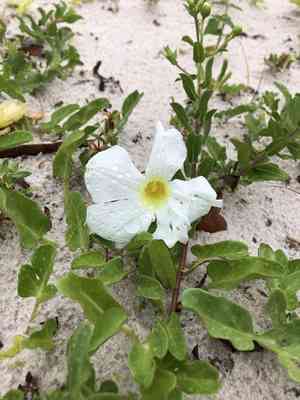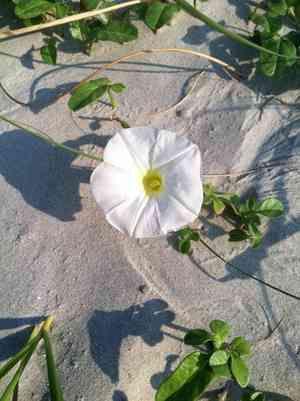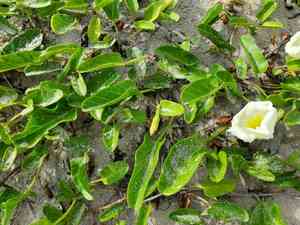
Beach morning-glory(Ipomoea imperati)

Beach morning-glory (Ipomoea imperati)

Also known as: Seafoam morning glory

The **Beach Morning Glory** (Ipomoea imperati) is a plant known for its seed dispersal via seawater, thanks to its buoyant seedpods. This mechanism allows it to spread to beaches worldwide, except Antarctica. The flowers of this plant open in the morning and close by the afternoon, which is why it's called Beach Morning Glory.

Attributes of Beach morning-glory

Lifespan
Perennial
Plant Type
Herb, Vine
Plant Height
2.5 cm to 15 cm
Spread
9 m
Leaf Color
Green
Flower Size
5 cm
Flower Color
White Yellow

PlantJoy - Identify plants with a snap

Identify and diagnose plants, get toxicity alerts, and explore safety guides for all types of fungi.

Try for Free

Images of Beach morning-glory

Beach morning-glory(Ipomoea imperati)

Quickly Identify Beach morning-glory

1
Large heart-shaped leaves
2
White flowers with yellow centers
3
Smooth, creeping stems over 3 feet
4
Dry dehiscent capsules with papery husks
5
Simple, fleshy leaves with a prominent central vein

Scientific Classification of Beach morning-glory

Phylum
Vascular plants
Class
Dicotyledons
Order
Solanales
Family
Morning-glory
Genus
Morning glories
Species
Beach morning-glory

Planting and Growing of Beach morning-glory

Care Difficulty
Easy
Watering Schedule
Every 2 days
Sunlight Requirements
Full sun
Sunshine Duration
6-10 hours
Ideal Temperature
70-85℉
Soil Type
Potting Mix, Peat Mix
Soil pH
6-8
Fertilizer Type
Balanced
Pruning Season
Spring, Summer
Pruning Area
Branches, Leaves
Pruning Frequency
2 times a year
Repotting Season
Spring
Pot Type
Plastic, Ceramic

water icon How to Water Beach morning-glory?

Ipomoea imperati thrives when watered deeply but infrequently. This means you need to ensure water reaches the roots, approximately 200ml per session, helping maintain moisture without waterlogging. Always allow the topsoil to dry out between waterings.
What are the symptoms of an underwatered Beach morning-glory?
What should I do if my Beach morning-glory is not getting enough water?
What are the symptoms of an overwatered Beach morning-glory?
How to save an overwatered Beach morning-glory?

sunlight icon What Are the Sunlight Requirements for Beach morning-glory?

Sunlight Requirements: Full sun, Partial sun
Duration of light: 6-8 hours daily
Ipomoea imperati thrives best under full sun to partial sun conditions. With this light range, the plant reaps the benefits of strong photosynthetic activity, promoting vigorous growth and bountiful blossoms.
How much light is ideal for Ipomoea imperati?
What are the best ways to ensure ideal light conditions?
What benefits does ideal lighting provide for the plant?

temperature icon What Is the Ideal Temperature Range for Beach morning-glory?

Ideal Temperature: 70 ~ 85℉
Ipomoea imperati thrives best within a temperature range of 70°F to 85°F. This range ensures optimal metabolic processes, enabling robust growth and vibrant foliage. In this ideal environment, the plant can maximize photosynthesis efficiency, leading to healthier and more vigorous plants.

soil icon What Soil is Best for Beach morning-glory?

Soil type: Sandy soil, Sandy loam
Soil PH: 6 ~ 8
Ipomoea imperati thrives in well-drained soils, which prevent root rot by allowing excess water to escape easily. This is essential for the plant's health as it reduces the risk of disease and promotes robust growth. A nutrient-rich substrate provides essential minerals and compounds that support the energetic growth phases of Ipomoea imperati. Boosting its available nutrients ensures lush foliage and vibrant blooms, enhancing the plant's visual appeal and ecological role. Soil aeration helps the roots of Ipomoea imperati receive adequate oxygen. This prevents the soil from becoming compacted and enhances microbial activity, which in turn enhances nutrient availability and absorption for the plant.

fertilize icon How to Fertilize Beach morning-glory?

Fertilizer type: Balanced
Ipomoea imperati typically requires a balanced fertilizer. Use a 20-20-20 NPK liquid fertilizer diluted to half strength. Apply about 250 ml per plant, ensuring you cover the surrounding soil evenly. This helps provide essential nutrients for healthy growth without overwhelming the plant.

prune icon How to Prune Beach morning-glory?

Pruning Time: Spring, Summer
Begin pruning your Ipomoea imperati by identifying dead or damaged stems, which should be removed first to prevent disease spread. Use sterilized, sharp pruning shears to make clean cuts close to the base of these stems without damaging the main body of the plant. Trim back any excessively long vines to encourage a bushier growth form. Focus on cutting right above leaf nodes to stimulate new growth. During the spring and summer, you may also want to shape the plant by selectively cutting back any unruly parts to maintain a neat appearance. Pruning should occur monthly, adjusting as needed depending on the plant's health and growth rate.

propagate icon How to Propagate Beach morning-glory plant?

Propagate Time: Spring,Early summer
1
Choose mature, healthy seeds free from any signs of damage or disease. This increases the chances of successful germination and strong seedling development.
2
Select a healthy section of the Ipomoea imperati plant, cut a 4-6 inch segment just below a node, remove lower leaves, and dip the cut end in rooting hormone to stimulate root growth.
3
Place seeds or cuttings in a pot filled with a moistened, well-draining potting mix. Ensure the seeds are lightly covered with soil, while cuttings should be inserted about an inch deep.

repot icon How to Repot Beach morning-glory plant?

Repotting frequency: Every 1-2 years
1
Ipomoea imperati shows signs of needing a new pot when you see roots emerging from the drainage holes. Additionally, if the growth seems stunted or the plant appears top-heavy, it's likely time to repot. Spring and early summer are optimal times as the plant is gearing up for active growth during these months. Transitioning at this period ensures minimum stress on the plant.
2
Select a pot slightly larger than the current one, with adequate drainage holes. This ensures that excess water doesn't linger at the bottom, keeping the roots healthy. A pot that's too large can hold excessive moisture, leading to potential root rot. Lightweight materials like plastic or ceramic are ideal, allowing you to move the plant without much effort, adapting to changes in sunlight and temperature.
3
Opt for a well-draining sandy soil mix. This type of soil mimics the plant's natural habitat and ensures roots do not stand in water, which can lead to root rot. A well-aerated soil encourages vigorous root growth and supports the plant in both nutrition absorption and stability. Incorporating organic matter, such as perlite or pumice, enhances the drainage capacity.

PlantJoy - Identify plants with a snap

Find the best spots for them to optimize their health, simply using your phone.

Try for Free

Toxicity of Beach morning-glory

Is Beach morning-glory toxic to humans?

The seeds of beach morning-glory possess mild toxicity if ingested. Higher amounts can lead to symptoms such as vomiting and delirium. It is strongly recommended to avoid consuming beach morning-glory seeds, as accidental ingestion is improbable due to their dissimilarity to palatable edible plants. Notably, this plant does not cause skin irritations upon contact, nor does it emit any airborne allergens.

Identify toxic plants for your safety

Learn which plants are harmful to you and your pets, and make informed choices for a safer home!

Try for Free
WARNING
The judgment on toxicity and danger is for reference only. We DO NOT GUARANTEE any accuracy of such judgment. Therefore, you SHALL NOT rely on such judgment. It is IMPORTANT TO SEEK PROFESSIONAL ADVICE in advance when necessary.