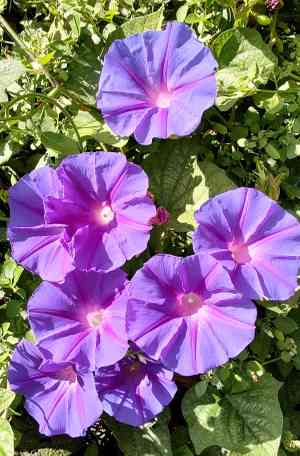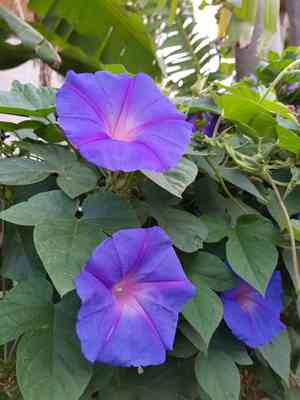
Blue morning glory(Ipomoea indica)

Blue morning glory (Ipomoea indica)

Also known as: Blue dawn flower, Koali awa

The blue morning glory (Ipomoea indica) is a perennial vine commonly found in tropical regions globally. Each morning, its flowers open up in a vivid blue hue. As the day progresses, these blooms gradually shift to a purple-pink shade by late afternoon. The plant produces fresh flowers every day from late spring through early autumn.

Attributes of Blue morning glory

Lifespan
Perennial, Annual, Biennial
Plant Type
Vine, Herb
Plant Height
1.2 m to 4.5 m
Spread
60 cm to 90 cm
Leaf Color
Green
Flower Size
6 cm to 8 cm
Flower Color
Blue Purple

PlantJoy - Identify plants with a snap

Identify and diagnose plants, get toxicity alerts, and explore safety guides for all types of fungi.

Try for Free

Images of Blue morning glory

Blue morning glory(Ipomoea indica)

Quickly Identify Blue morning glory

1
Velvety, deeply lobed leaves covering expansive areas rapidly.
2
Vibrant flowers transitioning from deep blue-purple to dark pink.
3
Tri-lobed or heart-shaped leaves with pronounced vein patterns.
4
Soft, velvety stems with twining/climbing habit, slightly reddish in areas.
5
Large, funnel-shaped flowers in clusters, sepals measuring 0.55-0.87 inches (14-22 mm).

Scientific Classification of Blue morning glory

Phylum
Vascular plants
Class
Dicotyledons
Order
Solanales
Family
Morning-glory
Genus
Morning glories
Species
Blue morning glory

Planting and Growing of Blue morning glory

Care Difficulty
Easy
Watering Schedule
Every 12 days
Sunlight Requirements
Full sun
Sunshine Duration
4-8 hours
Ideal Temperature
68-77℉
Soil Type
Potting Mix, Peat Mix
Soil pH
6-8
Fertilizer Type
Balanced
Pruning Season
Spring, Summer
Pruning Area
Branches, Leaves
Pruning Frequency
2 times a year
Repotting Season
Spring
Pot Type
Plastic, Ceramic

water icon How to Water Blue morning glory?

Watering for Ipomoea indica should aim to thoroughly moisten the soil, allowing water to reach the deeper roots. Generally, 500 ml per session should suffice, ensuring the soil is moist but not soggy. Always prioritize checking the top 2 inches of soil, which should be allowed to dry between watering.
What are the symptoms of an underwatered Blue morning glory?
What should I do if my Blue morning glory is not getting enough water?
What are the symptoms of an overwatered Blue morning glory?
How to save an overwatered Blue morning glory?

sunlight icon What Are the Sunlight Requirements for Blue morning glory?

Sunlight Requirements: Full sun, Partial sun
Duration of light: 6-8 hours daily
Ipomoea indica thrives in full to partial sun, ideally 6-8 hours of sunlight daily. Adequate light enhances its blooming potential and maintains lush leaf growth, ensuring an aesthetically pleasing and healthy plant.
What is the ideal lighting condition for Ipomoea indica?
How can I ensure Ipomoea indica gets enough light?
What benefits does proper lighting offer Ipomoea indica?

temperature icon What Is the Ideal Temperature Range for Blue morning glory?

Ideal Temperature: 68 ~ 77℉
Ipomoea indica thrives best in warm environments, with temperatures ranging from 68°F to 77°F. This temperature range ensures adequate growth and blooming, as the plant benefits from the warmth to stimulate its metabolic activities and photosynthesis processes, leading to healthy and vigorous growth.

soil icon What Soil is Best for Blue morning glory?

Soil type: Loam, Sandy loam
Soil PH: 6 ~ 8
Ipomoea indica thrives in well-draining soil to prevent waterlogging, which can lead to root rot. A well-draining mix ensures roots get enough oxygen and promotes healthy growth. This plant benefits greatly from a nutrient-rich soil that supports its vigorous growth. A loamy soil enriched with organic matter will keep the plant lush and floriferous. The soil should balance moisture retention and drainage, ensuring stability against drought while preventing excessive dampness. This condition helps sustain the plant during dry spells without overwatering.

fertilize icon How to Fertilize Blue morning glory?

Fertilizer type: Balanced
For Ipomoea indica, a moderate amount of fertilizer is optimal. When using liquid fertilizer, dilute it to half the recommended strength to prevent root burn. For solid, granular fertilizers, apply around 100 grams per square meter, lightly raked into the soil to ensure even distribution.

prune icon How to Prune Blue morning glory?

Pruning Time: Spring, Summer, Autumn
Begin pruning by removing spent blooms and dead flowers. This not only keeps the plant looking tidy but also helps in channelizing the plant's energy toward producing new, vibrant blooms. Prune back any excessive vine growth to contain the size of the plant. Ipomoea indica can grow aggressively, and regular trimming helps control its spread and maintains its beautiful form. Carefully inspect for any damaged or diseased branches. Use clean, sharp scissors to cut back all unhealthy parts to maintain the plant's overall health and prevent the disease from spreading. Mold the plant to your desired shape by trimming back certain parts. Prune selectively to create an aesthetic appearance that complements your garden space.

propagate icon How to Propagate Blue morning glory plant?

Propagate Time: Spring, Early spring, Late spring, Summer
1
Collect seeds from mature Ipomoea indica plants. Sow them in a well-draining seed mix and keep them warm and moist. Germination should occur in 1-2 weeks.
2
Use pruning shears to take 6-8 inch cuttings from a healthy plant. Remove lower leaves, dip the cut end in rooting hormone, and place it in a moist medium.
3
Divide larger, established plants in spring or summer. Gently separate sections with roots attached and replant them in a suitable environment.

repot icon How to Repot Blue morning glory plant?

Repotting frequency: Every 1-2 years
1
Watch for roots coming out of the drainage holes or a lack of growth, indicating the plant may be root-bound. Repotting is best done in early spring as new growth begins. This allows the plant to establish itself in its new container before the onset of extreme weather conditions.
2
Select a pot that is one size larger than the current one. It should have good drainage holes to prevent waterlogging, which can lead to root rot. The right pot ensures adequate space for root expansion, enhancing plant stability and nutrient uptake.
3
Go for a well-draining soil mix, rich in organic components, to support healthy growth. Loamy soil enriched with perlite or sand helps to drain excess moisture while maintaining enough nutrients—ideal for the vigorous growth patterns of Ipomoea indica.

PlantJoy - Identify plants with a snap

Find the best spots for them to optimize their health, simply using your phone.

Try for Free

Toxicity of Blue morning glory

Is Blue morning glory toxic to humans?

The blue morning glory plant is toxic to humans when consumed, although the likelihood of fatality is low. Typical side effects of ingesting blue morning glory include gastrointestinal distress, nausea, vomiting, and diarrhea, while eating the seeds may cause visual disturbances and restlessness. Additionally, contact with the blue morning glory can lead to skin irritation, suggesting that it is advisable to wear gloves and long sleeves when managing this plant, followed by a thorough hand wash.

Is Blue morning glory toxic to cat?

The blue morning glory is recognized as toxic to cats. These felines can become poisoned if they accidentally ingest the seeds of this plant, which are the toxic elements. Following the ingestion of such parts, a cat might display symptoms of physical distress or illness, signaling an adverse reaction. It is essential for cat owners to observe their pets for any shifts in behavior or health and to promptly seek veterinary assistance if poisoning is suspected. Early intervention is crucial to mitigate the health risks associated with blue morning glory for cats.

Is Blue morning glory toxic to dog?

Blue morning glory is a plant that presents a toxicity hazard for dogs. Canines may suffer poisoning primarily by mistakenly ingesting this plant. The seeds of blue morning glory are the toxic components that carry the elements responsible for the poisoning. Following the consumption of these seeds, dogs may exhibit a range of symptoms that suggest poisoning. It is crucial for dog owners to recognize these possible signs and respond promptly if they suspect their pet has ingested any part of blue morning glory. In such situations, one should urgently seek professional veterinary assistance to guarantee the best possible outcome for their dog.

Identify toxic plants for your safety

Learn which plants are harmful to you and your pets, and make informed choices for a safer home!

Try for Free
WARNING
The judgment on toxicity and danger is for reference only. We DO NOT GUARANTEE any accuracy of such judgment. Therefore, you SHALL NOT rely on such judgment. It is IMPORTANT TO SEEK PROFESSIONAL ADVICE in advance when necessary.