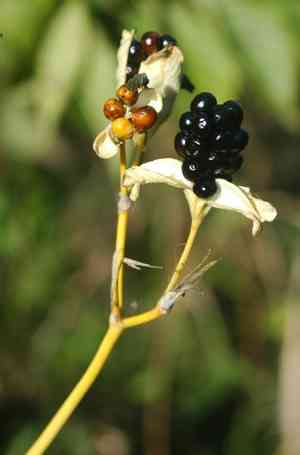
Blackberry lily (Iris domestica)
Also known as: Leopard flower
Blackberry lily (Iris domestica), also known as leopard lily, is a herbaceous perennial that reaches heights of 61 to 91 cm. Its fan-shaped leaves resemble those of a gladiolus, and it produces striking orange flowers with speckles, blooming from summer to early fall. For ideal growth, plant it in full sun and ensure the soil is well-drained.
Attributes of Blackberry lily
Images of Blackberry lily
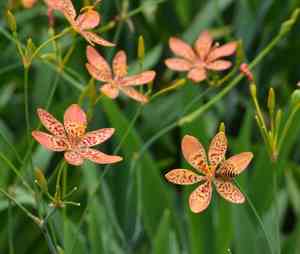
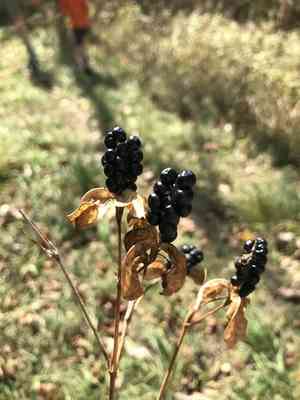
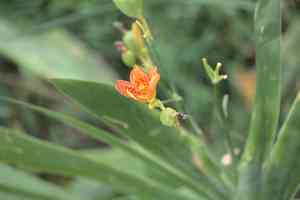
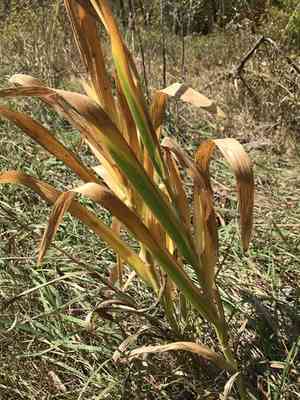
Quickly Identify Blackberry lily
Scientific Classification of Blackberry lily
Planting and Growing of Blackberry lily
 How to Water Blackberry lily?
 What Are the Sunlight Requirements for Blackberry lily?
 What Is the Ideal Temperature Range for Blackberry lily?
 What Soil is Best for Blackberry lily?
 How to Fertilize Blackberry lily?
 How to Prune Blackberry lily?
 How to Propagate Blackberry lily plant?
 How to Repot Blackberry lily plant?
Toxicity of Blackberry lily
Is Blackberry lily toxic to cat?
The blackberry lily poses a toxicity risk to cats. If accidentally consumed, the fruits, leaves, or roots of the blackberry lily can lead to poisoning in felines. Symptoms may include physical discomfort, particularly gastrointestinal disturbances or irritations. It is crucial to observe any alterations in behavior or health and to immediately consult a veterinary professional if there is a suspicion that a cat has ingested blackberry lily.
Is Blackberry lily toxic to dog?
Blackberry lily is recognized as a toxic species when it comes to dogs. If dogs consume any portions of this plant, especially its fruits, leaves, or roots, they may experience poisoning. Symptoms of poisoning may include vomiting, diarrhea, lethargy, or more serious indications depending on the quantity ingested. Given the potential dangers posed by blackberry lily, it is essential for dog owners to keep a vigilant eye on their pets and to restrict their access to this plant. Should a dog consume any section of the blackberry lily, it is critical to obtain immediate veterinary assistance to secure the best possible outcome for the animal.



