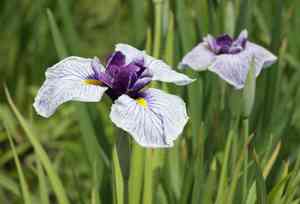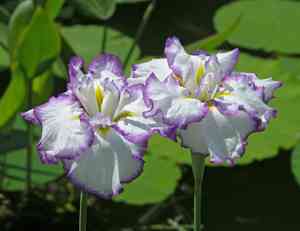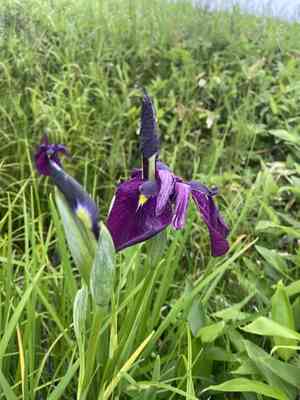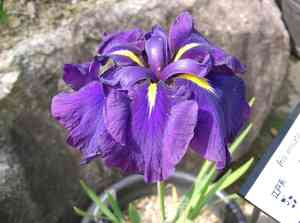
Japanese Iris(Iris ensata)

Japanese Iris (Iris ensata)

Also known as: Japanese Iris, Japanese Water Iris

The Lotus (Nelumbo nucifera) is a stunning perennial aquatic plant featuring large, vibrant flowers in shades of pink and white. Native to parts of Asia, it is well-suited for wet environments. This plant excels in ponds and water features, flourishing in both full sun and partial shade.

Attributes of Japanese Iris

Lifespan
Perennial
Plant Type
Herb
Plant Height
80 cm to 1 m
Spread
60 cm to 90 cm
Leaf Color
Green
Flower Size
9 cm to 10 cm
Flower Color
Purple White Red Violet Blue

PlantJoy - Identify plants with a snap

Identify and diagnose plants, get toxicity alerts, and explore safety guides for all types of fungi.

Try for Free

Images of Japanese Iris

Japanese Iris(Iris ensata)

Quickly Identify Japanese Iris

1
Butterfly-like flowers with 6-part structure, featuring spreading 'falls' and erect 'standards'.
2
Flat bloom measuring 3-6 inches, with truncated standard and diverse colors/patterns.
3
Strap-like leaves up to 24 inches long, knife-shaped with parallel vein pattern.

Scientific Classification of Japanese Iris

Phylum
Vascular plants
Class
Monocotyledons
Order
Asparagus and allies
Family
Iris
Genus
Irises
Species
Japanese Iris

Planting and Growing of Japanese Iris

Care Difficulty
Moderate
Watering Schedule
Every 8 days
Sunlight Requirements
Full sun
Sunshine Duration
6-10 hours
Ideal Temperature
59-75℉
Soil Type
Potting Mix, Peat Mix
Soil pH
5.5-6.5
Fertilizer Type
Balanced
Pruning Season
Spring, Summer
Pruning Area
Branches, Leaves
Pruning Frequency
2 times a year
Repotting Season
Spring
Pot Type
Plastic, Ceramic

water icon How to Water Japanese Iris?

Iris ensata, also known as Japanese Iris, requires substantial watering to maintain its lush growth, particularly in the growing season. Each watering session should provide approximately 500 milliliters of water ensuring the soil remains consistently moist but not waterlogged. The goal is to achieve a damp soil environment conducive to robust development and flowering.
What are the symptoms of an underwatered Japanese Iris?
What should I do if my Japanese Iris is not getting enough water?
What are the symptoms of an overwatered Japanese Iris?
How to save an overwatered Japanese Iris?

sunlight icon What Are the Sunlight Requirements for Japanese Iris?

Sunlight Requirements: Full sun, Partial sun
Duration of light: 4 to 6 hours daily
Iris ensata prefers a range of light from full sun to partial sun. Ideal light conditions foster healthy foliage, robust stem development, and a spectacular display of flowers that make the plant a stunning focal point in gardens.
What is the best lighting condition for Iris ensata?
How can I ensure Iris ensata gets the ideal amount of sunlight?
What benefits does Iris ensata gain from ideal light exposure?
More About Sunlight Requirements Techniques

temperature icon What Is the Ideal Temperature Range for Japanese Iris?

Ideal Temperature: 59 ~ 75℉
Iris ensata thrives best in a climate where the temperature is consistently between 59°F to 75°F. This range provides the optimal conditions for photosynthesis and other metabolic processes. Maintaining this temperature range ensures robust growth and vibrant blooms.

soil icon What Soil is Best for Japanese Iris?

Soil type: Loam, Acidic soil, Peat soil
Soil PH: 5.5 ~ 6.5
Iris ensata thrives in soil that retains moisture well. A soil with good moisture retention supplies the plant with the consistent hydration it needs, preventing wilting and promoting vibrant growth. This plant prefers acidic soil with a pH between 5.5 and 6.5. The acidic environment helps Iris ensata absorb essential nutrients more efficiently, leading to healthier foliage and blooms. Rich in organic matter, the soil should provide ample nutrients. Nutrient-rich soils contribute to robust plant growth and more exquisite flowers, a signature of healthy Japanese irises. More About Soil

fertilize icon How to Fertilize Japanese Iris?

Fertilizer type: Balanced
For Iris ensata, the amount of fertilizer depends on the plant's growth stage and surrounding nutrients. During active growth, apply a liquid fertilizer mixed with water at half the strength recommended for typical garden plants. Avoid excessive nitrogen to prevent leggy growth that compromises blooms.

prune icon How to Prune Japanese Iris?

Pruning Time: Spring, Autumn
Begin by using sharp, sterilized pruners to cut back the leaves after they turn yellow in the fall. Cut the leaves down to about 6 inches above the crown of the plant. This will reduce the risk of disease and tidy up the plant for the winter months. Every few years, it's advisable to divide the rhizomes. After flowering ends in summer, carefully dig up the rhizomes and separate them into smaller sections, ensuring each section has roots and at least one fan of leaves. Replant them promptly, giving each a chance to establish before winter. More About Pruning Techniques

propagate icon How to Propagate Japanese Iris plant?

Propagate Time: Spring, Early spring
1
Begin by selecting a well-drained, acidic soil mix. Prepare the soil by removing weeds and debris, ensuring it is loose enough to encourage root development for Iris ensata.
2
When propagating from seeds, sow them in trays at the start of the spring. Cover them lightly with soil and maintain consistent moisture to ensure successful germination.
3
For division propagation, carefully dig up the mature plant and separate the rhizomes by hand or with sharp tools. Replant the divisions promptly to reduce stress on the plant.
More About Propagating Techniques

repot icon How to Repot Japanese Iris plant?

Repotting frequency: Every 2-3 years
1
Iris ensata shows the need for repotting when the roots begin circling inside the pot, or if the flowering is diminished. Spring or autumn are the best seasons for repotting, ensuring minimal shock and optimal growth conditions.
2
Select a pot that's 2-3 inches larger in diameter than the current one. It should have good drainage holes to prevent waterlogging, which ensures healthy root development and prevents root rot.
3
Use rich, acidic, and well-draining soil. This type of soil replicates Iris ensata's natural habitat, allowing for robust growth and vibrant blooms. Soil rich in organic matter also provides essential nutrients.

PlantJoy - Identify plants with a snap

Find the best spots for them to optimize their health, simply using your phone.

Try for Free

Toxicity of Japanese Iris

Is Japanese Iris toxic to humans?

Japanese Iris possesses mild toxicity when ingested or if the sap comes into contact with the skin. The resulting side effects are generally minor and tend to be transient. Typically, they persist for only a few minutes following the consumption of its roots, seeds, or sap. Symptoms may include increased salivation and elevated body temperature. Additionally, nausea, abdominal discomfort, vomiting, and drowsiness can occur after consuming the plant. While the sap can irritate the skin, this irritation usually lasts just a few minutes. Common reactions include redness, mild pain, and irritation if the sap contacts the skin. Gardeners, particularly during pruning, are most at risk.

Is Japanese Iris toxic to cat?

The Japanese Iris presents a moderate toxicity risk for cats. Exposure may happen through physical contact or accidental consumption, impacting felines that touch or ingest any portion of the plant, as its entire makeup is poisonous. When poisoned, cats may show symptoms of physical discomfort, distress, or various health issues. The specific toxic compound found in Japanese Iris is pentacyclic terpenoids, making it crucial for cat owners to closely monitor their pets' engagement with this plant. If a cat displays any health irregularities indicative of poisoning from Japanese Iris, prompt veterinary attention is crucial.

Is Japanese Iris toxic to dog?

The plant species known as Japanese Iris presents a moderate degree of toxicity to dogs. Canines can suffer poisoning from Japanese Iris through dermal contact or inadvertent ingestion. Upon exposure to this plant, dogs may display symptoms such as digestive disturbances, skin irritation, or more serious systemic reactions due to the presence of pentacyclic terpenoids. Every part of the Japanese Iris is regarded as toxic and poses a risk when interacted with by dogs. If a dog begins to show symptoms of poisoning from Japanese Iris, it is crucial to obtain immediate veterinary assistance to ensure the best possible outcome for the affected animal.

Identify toxic plants for your safety

Learn which plants are harmful to you and your pets, and make informed choices for a safer home!

Try for Free
WARNING
The judgment on toxicity and danger is for reference only. We DO NOT GUARANTEE any accuracy of such judgment. Therefore, you SHALL NOT rely on such judgment. It is IMPORTANT TO SEEK PROFESSIONAL ADVICE in advance when necessary.
More About Toxic Techniques