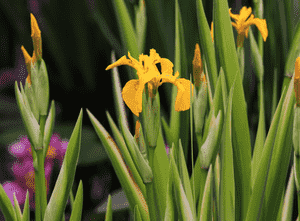
Yellow flag(Iris pseudacorus)

Yellow flag (Iris pseudacorus)

Also known as: Dragon flower, Paleyellow iris

The yellow flag (Iris pseudacorus) is a perennial flowering plant indigenous to Europe, North Africa, and parts of Asia. It is often grown as an ornamental plant in temperate regions worldwide. This plant contains tannin, which can cause skin irritation. Additionally, it is recognized as an invasive species in aquatic environments.

Attributes of Yellow flag

Lifespan
Perennial
Plant Type
Herb
Plant Height
1 m to 1.5 m
Spread
60 cm to 90 cm
Leaf Color
Green Yellow
Flower Size
7 cm to 10 cm
Flower Color
Yellow

PlantJoy - Identify plants with a snap

Identify and diagnose plants, get toxicity alerts, and explore safety guides for all types of fungi.

Try for Free

Images of Yellow flag

Yellow flag(Iris pseudacorus)

Quickly Identify Yellow flag

1
Vibrant yellow flowers reaching 1-2 feet (30-60 cm) in height.
2
Sword-shaped leaves up to 3-4 feet (90-120 cm) with parallel venation.
3
Distinctly shaped, dry 3-sided capsule measuring 1.5–3 inches (3.8–7.6 cm) in length.
4
Stout, upright stem reaching 3-4 feet (90-120 cm) with smooth, unbranched structure.
5
April to June blooming period with lance-shaped petals in fan-like distribution.

Scientific Classification of Yellow flag

Phylum
Vascular plants
Class
Monocotyledons
Order
Asparagus and allies
Family
Iris
Genus
Irises
Species
Yellow flag

Planting and Growing of Yellow flag

Care Difficulty
Easy
Watering Schedule
Every 8 days
Sunlight Requirements
Full sun
Sunshine Duration
6-10 hours
Ideal Temperature
60-75℉
Soil Type
Potting Mix, Peat Mix
Soil pH
6.5-7.5
Fertilizer Type
Balanced
Pruning Season
Spring, Summer
Pruning Area
Branches, Leaves
Pruning Frequency
2 times a year
Repotting Season
Spring
Pot Type
Plastic, Ceramic

water icon How to Water Yellow flag?

Iris pseudacorus thrives in moist environments and requires consistent watering to the extent that the soil is kept adequately wet without becoming waterlogged. It is best to provide around 500 ml of water per session to ensure the roots can absorb enough moisture without drowning. The goal is to replicate the plant's natural habitat by ensuring the soil remains damp.
What are the symptoms of an underwatered Yellow flag?
What should I do if my Yellow flag is not getting enough water?
What are the symptoms of an overwatered Yellow flag?
How to save an overwatered Yellow flag?
More About Watering Techniques

sunlight icon What Are the Sunlight Requirements for Yellow flag?

Sunlight Requirements: Full sun, Partial sun
Duration of light: 6-8 hours daily
Requires full sun to partial sun for at least 6-8 hours. Ideal lighting ensures vigorous growth and abundant flowering, while maintaining the plant's health and robustness.
What is the ideal lighting condition for Iris pseudacorus?
How can you achieve ideal lighting for Iris pseudacorus?
What benefits does Iris pseudacorus derive from ideal lighting conditions?
More About Sunlight Requirements Techniques

temperature icon What Is the Ideal Temperature Range for Yellow flag?

Ideal Temperature: 60 ~ 75℉
The ideal temperature range for Iris pseudacorus, commonly known as yellow flag iris, is between 60°F to 75°F. This temperature range supports optimal growth and flowering, providing the balance needed for nutrient uptake and metabolism. In these conditions, the plant can flourish, showcasing its vibrant yellow blooms and healthy foliage.

soil icon What Soil is Best for Yellow flag?

Soil type: Loam, Clay soil, Sandy loam
Soil PH: 6.5 ~ 7.5
Iris pseudacorus thrives in soil that retains moisture well. It is particularly fond of wetland-like conditions, which aids in its rapid growth and prolific flowering. Ensuring the soil retains enough water can prevent the plant from drying out during hotter spells, making it less stressed and more vigorous. This iris species flourishes in soil that is rich in organic nutrients. High nutrient content ensures robust growth and vibrant blooms, providing the plant with the essential elements needed for photosynthesis and growth cycles. While Iris pseudacorus enjoys moisture, it also needs well-draining soil to prevent root rot. A balance between never being too wet or too dry keeps its roots healthy and supports the plant’s metabolic processes efficiently. More About Soil

fertilize icon How to Fertilize Yellow flag?

Fertilizer type: Balanced
When fertilizing Iris pseudacorus, use a balanced 10-10-10 fertilizer. Apply approximately 1 pound of this balanced fertilizer per 100 square feet of planting area to ensure the plants receive adequate nutrients for robust growth. More About Fertilizing Techniques

prune icon How to Prune Yellow flag?

Pruning Time: Spring, Autumn
Begin by inspecting the plant for dead or damaged leaves and stems. Use sharp, clean pruning shears to make cuts at a 45-degree angle. Remove any yellowing or wilting foliage to allow better airflow and prevent disease. Be cautious not to cut too much green growth as it can hinder the plant's blooming ability. Focus on tidying up and maintaining a compact shape while preserving next season's buds. More About Pruning Techniques

propagate icon How to Propagate Yellow flag plant?

Propagate Time: Spring, Early spring, Late spring
1
Collect seeds from mature Iris pseudacorus plants and allow them to dry. Sow the seeds on the surface of well-draining soil in containers or directly into the garden. Keep the soil consistently moist until germination occurs.
2
During spring, dig up the plant and gently separate the rhizomes using a knife. Ensure each division has some roots attached. Replant the divided rhizomes at the same depth they were growing initially.
3
Water the newly planted seeds or rhizomes thoroughly. Maintain soil moisture, especially in the early stages, to encourage strong root establishment. Apply a light mulch to retain moisture.
More About Propagating Techniques

repot icon How to Repot Yellow flag plant?

Repotting frequency: Every 2-3 years
1
You should consider repotting Iris pseudacorus when roots start emerging from the drainage holes or when the plant becomes root-bound. Another signal for repotting is stagnant growth during peak growing seasons, indicating that the plant needs more space or fresh nutrients.
2
Select a pot that is 1-2 inches larger in diameter than the current one. Ensure it has ample drainage holes to prevent waterlogging, which is crucial for the health of Iris pseudacorus. A slightly deeper pot can also support further root growth, promoting robust development.
3
Choose a soil mix that retains moisture yet drains well, like a mixture of loamy soil and sand. This helps in providing the right balance of water and air to the roots, preventing root rot while keeping the plant hydrated.

PlantJoy - Identify plants with a snap

Find the best spots for them to optimize their health, simply using your phone.

Try for Free

Toxicity of Yellow flag

Is Yellow flag toxic to humans?

The yellow flag presents a moderate level of toxicity risk to humans. Poisoning may occur through unintentional ingestion or exposure to the plant's sap. Every part of the plant is toxic, imbued with compounds that can elicit adverse effects. Consuming the plant can lead to symptoms such as nausea, vomiting, abdominal discomfort, and diarrhea. Exposure to the sap can result in skin irritation or allergic responses. It is essential to steer clear of unintentional ingestion and manage the plant with caution to avert poisoning incidents. Prompt medical attention should be sought if poisoning takes place.

Is Yellow flag toxic to cat?

The plant species known as yellow flag poses a toxic threat to felines. A frequent way that cats may be poisoned is through the accidental consumption of this plant. Notably, the leaves possess harmful properties. When a cat consumes any part of the yellow flag, it might start to show signs of discomfort or sickness. It is crucial for cat owners to keep a close eye on their pets and swiftly consult a veterinary clinic if any abnormal behavior or distress signals are noticed following possible contact with yellow flag.

Is Yellow flag toxic to dog?

The yellow flag is a plant that presents a serious threat to dogs due to its toxic nature. Canines are at risk of poisoning from the yellow flag when they consume any parts of the plant, especially the leaves, either accidentally or when permitted to wander freely in areas where this plant grows. Upon ingestion of yellow flag, dogs may display a variety of symptoms signaling potential poisoning. These symptoms can vary significantly in severity, and may encompass mild reactions such as vomiting, diarrhea, and excessive drooling, or more critical issues, including lethargy, trouble breathing, or irregular heart rates. It is essential for dog owners to remain alert and ensure their pets do not access environments where yellow flag is found. Should a dog ingest any portion of yellow flag, it is vital to seek immediate veterinary assistance to guarantee the most favorable outcome for the affected pet.

Identify toxic plants for your safety

Learn which plants are harmful to you and your pets, and make informed choices for a safer home!

Try for Free
WARNING
The judgment on toxicity and danger is for reference only. We DO NOT GUARANTEE any accuracy of such judgment. Therefore, you SHALL NOT rely on such judgment. It is IMPORTANT TO SEEK PROFESSIONAL ADVICE in advance when necessary.
More About Toxic Techniques

