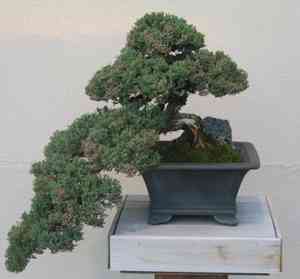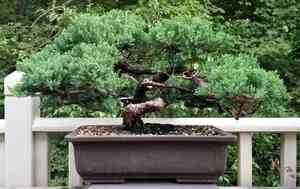
Japanese garden juniper(Juniperus procumbens)

Japanese garden juniper (Juniperus procumbens)

Also known as: Bonin islands juniper

Japanese garden juniper (*Juniperus procumbens*) is a low-growing, evergreen ground cover that typically reaches heights of 20 to 30 cm and can spread extensively, covering areas up to 4.5 meters wide. The blue-green foliage may turn purplish in winter, and pruning is generally unnecessary. This juniper prefers full sun but can tolerate partial shade. It does best in well-drained soil and requires moderate watering, with increased attention during hot summer months.

Attributes of Japanese garden juniper

Lifespan
Perennial
Plant Type
Shrub
Plant Height
15 cm to 46 cm
Spread
3 m to 4.5 m
Leaf Color
Green Blue
Flower Size
N/A (Do not produce typical flowers)
Flower Color
N/A (Do not produce typical flowers)

PlantJoy - Identify plants with a snap

Identify and diagnose plants, get toxicity alerts, and explore safety guides for all types of fungi.

Try for Free

Images of Japanese garden juniper

Japanese garden juniper(Juniperus procumbens)

Quickly Identify Japanese garden juniper

1
Low stature, under 2 feet (60 cm) tall, but wide-reaching branches up to 15 feet (4.5 meters).
2
Unique flower structures resembling cones, small in size (0.2 inches/5 mm) with pale colors.
3
Waxy, blackish berries, 0.3 inches (7-10 mm) wide, elusive on cultivated specimens.
4
Spiny, needle-like leaves, blue-green to gray-green, forming whorls of three, year-round color.
5
Thin, brownish-gray stems, 0.1 to 0.3 inches (2-7 mm) in thickness, rough surface with scales.

Scientific Classification of Japanese garden juniper

Phylum
Vascular plants
Class
Conifers
Order
Pines and allies
Family
Cypress
Genus
Junipers
Species
Japanese garden juniper

Planting and Growing of Japanese garden juniper

Care Difficulty
Easy
Watering Schedule
Every 3 days
Sunlight Requirements
Full sun
Sunshine Duration
4-8 hours
Ideal Temperature
60-75℉
Soil Type
Potting Mix, Peat Mix
Soil pH
6.5-7.5
Fertilizer Type
Balanced
Pruning Season
Spring, Summer
Pruning Area
Branches, Leaves
Pruning Frequency
2 times a year
Repotting Season
Spring
Pot Type
Plastic, Ceramic

water icon How to Water Japanese garden juniper?

Juniperus procumbens prefers its soil to be slightly dry between waterings. Ensure water soaks through the soil evenly but does not puddle. About 250 ml per session should suffice, but adjust based on weather conditions.
What are the symptoms of an underwatered Japanese garden juniper?
What should I do if my Japanese garden juniper is not getting enough water?
What are the symptoms of an overwatered Japanese garden juniper?
How to save an overwatered Japanese garden juniper?
More About Watering Techniques

sunlight icon What Are the Sunlight Requirements for Japanese garden juniper?

Sunlight Requirements: Full sun, Partial sun
Duration of light: 4 to 6 hours
Juniperus procumbens thrives in full to partial sunlight, translating to a well-round, lush growth. Ideal light encourages optimal metabolic and photosynthesis processes, fortifying the plant's natural defenses.
How to Ensure Ideal Lighting Conditions?
What Are the Ways to Achieve Ideal Lighting?
Benefits of Ideal Lighting for Juniperus procumbens?
More About Sunlight Requirements Techniques

temperature icon What Is the Ideal Temperature Range for Japanese garden juniper?

Ideal Temperature: 60 ~ 75℉
Juniperus procumbens thrives best in temperatures ranging from 60°F to 75°F. This temperature range provides a balanced environment that promotes healthy growth and development of the plant. Maintaining this ideal range ensures that the plant's physiological processes function efficiently.

soil icon What Soil is Best for Japanese garden juniper?

Soil type: Sandy soil, Loam, Sandy loam
Soil PH: 6.5 ~ 7.5
Juniperus procumbens thrives in well-drained soil, which prevents root rot and allows the roots to access oxygen effectively. Proper drainage ensures healthy root growth, which is vital for the plant's overall health. The plant benefits from soil that is moderately fertile. Nutrients such as nitrogen, phosphorus, and potassium are crucial for its growth, foliage density, and resilience to pests and diseases. While Juniperus procumbens prefers well-drained soil, a certain level of moisture retention is beneficial. This helps during dry spells, ensuring that the plant remains hydrated without being waterlogged. More About Soil

fertilize icon How to Fertilize Japanese garden juniper?

Fertilizer type: Balanced
For Juniperus procumbens, applying fertilizer should be done cautiously to avoid nutrient burn. Use a balanced, general-purpose fertilizer at a half-strength rate, especially if liquid. When using slow-release granules, a small handful per square meter around the root zone suffices. Always water thoroughly after application to prevent the concentration of nutrients in one area.

prune icon How to Prune Japanese garden juniper?

Pruning Time: Spring, Summer, Autumn
When pruning Juniperus procumbens, start by sterilizing your pruning shears to prevent disease. Always trim above a bud at a 45-degree angle to encourage new growth. Remove dead or overgrown branches to improve air circulation and let light penetrate the inner parts of the plant. To maintain a desired shape or size, trim junipers regularly. Focus on pruning excess growth that disrupts the plant's natural form. Use your shears to follow the natural curve of the branches, lightly trimming back to maintain an even silhouette and encourage a dense, compact appearance. More About Pruning Techniques

propagate icon How to Propagate Japanese garden juniper plant?

Propagate Time: Spring, Early spring, Late spring
1
Collect seeds from mature Juniperus procumbens cones when they change from a green to a dark color. Clean the seeds and allow them to dry in a cool place for a few days.
2
Select sturdy, healthy stems that are not flowering. Cut these stems at a length of 10-15 cm and remove the lower foliage. Dip the end in rooting hormone before planting in well-draining soil.
3
For layering propagation, select a low, flexible branch and bend it to the ground. Make a small incision on the underside and cover it with soil, securing it with a peg to encourage root growth.
More About Propagating Techniques

repot icon How to Repot Japanese garden juniper plant?

Repotting frequency: Every 2-3 years
1
You should consider repotting Juniperus procumbens when its growth seems stunted or roots are visibly growing out of the pot's drainage holes. These are clear signs that the plant has outgrown its current home and needs more space and fresh nutrients to thrive.
2
Select a pot that's one size larger than the current one, with plenty of drainage holes to prevent waterlogging. A proper pot size prevents root rot, allows the plant to grow comfortably, and improves aeration around the root system.
3
For Juniperus procumbens, a well-draining loamy soil is ideal. This mix ensures adequate moisture retention while allowing excess water to escape, imitating the plant's natural environment and reducing the risk of root rot.

PlantJoy - Identify plants with a snap

Find the best spots for them to optimize their health, simply using your phone.

Try for Free

Toxicity of Japanese garden juniper

Is Japanese garden juniper toxic to cat?

The Japanese garden juniper presents a mild toxic hazard to felines. Cats may face poisoning risks chiefly if they ingest a substantial quantity of its seeds. Contact with Japanese garden juniper can lead to physical distress, which may appear as illness or discomfort, prompting cat owners to remain alert. If poisoning is suspected, urgent care at a veterinary facility is essential. It is vital to keep a close watch on cats when they are near Japanese garden juniper to avert potential consumption and protect their well-being.

Is Japanese garden juniper toxic to dog?

Japanese garden juniper presents a mild toxicity risk for dogs. Although the plant itself is not considered highly toxic, the ingestion of its seeds in significant quantities can result in poisoning. Dogs may be drawn to these seeds and consume them out of curiosity or boredom. Symptoms of poisoning from Japanese garden juniper can differ but may include gastrointestinal disturbances, such as vomiting and diarrhea, with more severe reactions occurring based on the quantity ingested. It is vital for dog owners to closely supervise their pets and prevent them from accessing the seeds of Japanese garden juniper. If a dog is suspected of having consumed this plant and is showing signs of poisoning, prompt veterinary attention is essential to effectively manage symptoms and safeguard the animal's health.

Identify toxic plants for your safety

Learn which plants are harmful to you and your pets, and make informed choices for a safer home!

Try for Free
WARNING
The judgment on toxicity and danger is for reference only. We DO NOT GUARANTEE any accuracy of such judgment. Therefore, you SHALL NOT rely on such judgment. It is IMPORTANT TO SEEK PROFESSIONAL ADVICE in advance when necessary.
More About Toxic Techniques