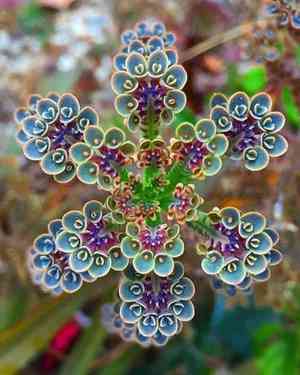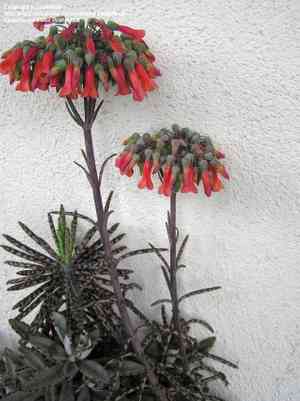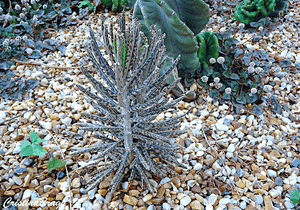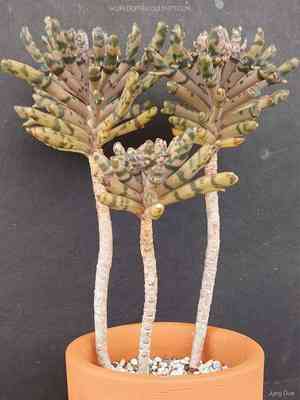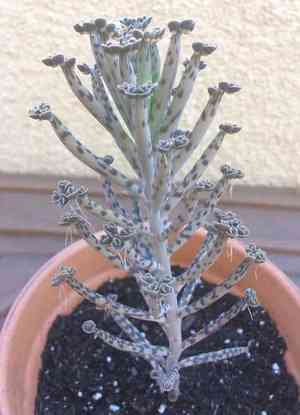
Chandelier plant(Kalanchoe delagoensis)

Chandelier plant (Kalanchoe delagoensis)

Also known as: Devil's backbone

Kalanchoe delagoensis, also known as the chandelier plant, is a succulent native to Madagascar. It is also referred to as Bryophyllum delagoense. Another common name for this plant is mother of millions. Its ability to withstand drought makes it a favored choice for gardens.

Attributes of Chandelier plant

Lifespan
Perennial
Plant Type
Herb, Shrub
Plant Height
20 cm to 2 m
Spread
30 cm
Leaf Color
Green Red Silver Gray
Flower Size
5 cm to 20 cm
Flower Color
Orange Red Yellow Purple

PlantJoy - Identify plants with a snap

Identify and diagnose plants, get toxicity alerts, and explore safety guides for all types of fungi.

Try for Free

Images of Chandelier plant

Chandelier plant(Kalanchoe delagoensis)

Quickly Identify Chandelier plant

1
Succulent leaves with detachable plantlets up to 6 inches (15 cm) long.
2
Pendulous flower clusters with tubular, colorful blooms in late winter to early spring.
3
Dry indehiscent follicles in muted earthy tones, clustered without splitting open.
4
Opposite or sets of three leaves with reddish-green hues and viviparous edge plantlets.
5
Erect, unbranched green stem up to 3 feet (90 cm) with short sterile shoots.

Scientific Classification of Chandelier plant

Phylum
Vascular plants
Class
Dicotyledons
Order
Saxifragales
Family
Stonecrop
Genus
kalanchoe
Species
Chandelier plant

Planting and Growing of Chandelier plant

Care Difficulty
Easy
Watering Schedule
Every 2 days
Sunlight Requirements
Full sun
Sunshine Duration
6-8 hours
Ideal Temperature
65-75℉
Soil Type
Potting Mix, Peat Mix
Soil pH
6.5-7.5
Fertilizer Type
Balanced
Pruning Season
Spring, Summer
Pruning Area
Branches, Leaves
Pruning Frequency
2 times a year
Repotting Season
Spring
Pot Type
Plastic, Ceramic

water icon How to Water Chandelier plant?

For Kalanchoe delagoensis, the key to watering is moderation. Ensure the soil is completely dry before re-watering. A typical watering should involve about 100 ml of water per session, allowing the soil to soak without becoming waterlogged. Proper drainage is essential to prevent root rot.
What are the symptoms of an underwatered Chandelier plant?
What should I do if my Chandelier plant is not getting enough water?
What are the symptoms of an overwatered Chandelier plant?
How to save an overwatered Chandelier plant?

sunlight icon What Are the Sunlight Requirements for Chandelier plant?

Sunlight Requirements: Full sun, Partial sun
Duration of light: 4 to 6 hours
Kalanchoe delagoensis thrives in partial to full sunlight, ideally receiving about 4 to 6 hours of sunlight. Achieving this balance promotes vibrant leaf coloration and robust flowering, ensuring the plant's growth and longevity.
What is the ideal sunlight exposure for Kalanchoe delagoensis?
How can I ensure my plant receives ideal lighting indoors?
What are the benefits of providing ideal lighting conditions?

temperature icon What Is the Ideal Temperature Range for Chandelier plant?

Ideal Temperature: 65 ~ 75℉
Kalanchoe delagoensis thrives best within the temperature range of 65 to 75°F. This range allows the plant to maintain optimal metabolic processes and growth. Temperatures within this range simulate the natural habitat conditions of the plant, ensuring healthy foliage and vibrant flowers.

soil icon What Soil is Best for Chandelier plant?

Soil type: Sandy soil, Loam
Soil PH: 6.5 ~ 7.5
Kalanchoe delagoensis thrives in well-draining soil to prevent root rot. The use of sandy soil or loam offers excellent drainage properties, ensuring excess water doesn't pose a threat to the plant's root health. This plant prefers a soil pH between 6.5 and 7.5, which provides the optimal environment for nutrient absorption. This pH range ensures that essential nutrients remain available, promoting healthy growth and vibrant foliage. A light and aerated soil mix supports Kalanchoe delagoensis by ensuring oxygen reaches the roots. This is vital for root respiration and overall plant vigor, resulting in a robust and healthy plant.

fertilize icon How to Fertilize Chandelier plant?

Fertilizer type: Balanced
Kalanchoe delagoensis, commonly known as the Chandelier Plant, needs a balanced amount of fertilizer to thrive. Use a half-strength, balanced liquid fertilizer, diluted to 50% of the recommended dosage. This ensures the plant receives an adequate supply of nutrients while avoiding nutrient burn.

prune icon How to Prune Chandelier plant?

Pruning Time: Spring, Summer
Focus on stems that appear unhealthy, such as those showing signs of rot or yellowing, and trim them back to healthy tissue to promote vigorous new growth. Be intentional about where you cut to shape the plant attractively. Removing spent blooms just below the flower head can not only tidy up the plant but also encourage more abundant blooming. Controlling flower growth diverts energy back into stem and leaf development.

propagate icon How to Propagate Chandelier plant plant?

Propagate Time: Spring,Summer
1
Choose a healthy, disease-free mother plant. A robust mother plant ensures the cuttings have enough stored nutrients to thrive and develop roots.
2
Using a sterile knife or scissors, take cuttings just below a leaf node. Cuttings should be at least 4 inches long to provide enough material for root development.
3
Remove the leaves from the lower half and apply rooting hormone if desired. Allow the cuttings to dry for a few hours to form a callus, reducing the chance of rot.
4
Insert the callused cut end into a well-draining soil mix. Ensure the cuttings are stable and supported, as this promotes better contact with the soil for root growth.
5
Water lightly immediately after planting to settle the soil around the cuttings. Place the pot in indirect light to prevent sunburn and dehydration of the cuttings.

repot icon How to Repot Chandelier plant plant?

Repotting frequency: Every 2-3 years
1
Repot Kalanchoe delagoensis in spring when you notice roots crowding or emerging through drainage holes. If the plant has become top-heavy or the soil drains poorly, these are strong signals that it's time for a new pot.
2
Select a pot slightly larger with drainage holes to prevent waterlogging. The right pot size helps to avoid excess soil, which can hold too much moisture and lead to root rot.
3
Opt for a well-draining cactus mix with perlite or sand. This ensures good aeration and prevents root rot, supporting the succulent's preference for dry conditions.

PlantJoy - Identify plants with a snap

Find the best spots for them to optimize their health, simply using your phone.

Try for Free

Toxicity of Chandelier plant

Is Chandelier plant toxic to cat?

The chandelier plant, celebrated for its captivating appearance, carries a slight toxicity risk for cats. Ingestion of substantial quantities of this plant can pose a danger as all parts are potentially harmful. Symptoms of physical discomfort may arise, signaling distress in the animal. Should a cat consume any part of the chandelier plant, it is vital to obtain prompt veterinary assistance to safeguard the pet's health and well-being. Swift medical intervention is essential to address the symptoms and avert any further complications.

Is Chandelier plant toxic to dog?

The chandelier plant presents a mild toxicity risk to dogs. If consumed in large quantities, canines can experience poisoning from this plant. Every part of the chandelier plant is toxic, meaning that ingestion of any section, whether it be the leaves, stems, or flowers, has the potential to result in poisoning. Dog owners need to stay alert for signs of toxicity, which may include symptoms such as vomiting, diarrhea, lethargy, or alterations in behavior. If you suspect that your dog has ingested the chandelier plant, it is crucial to promptly seek veterinary assistance to ensure the best possible outcome for your furry friend.

Identify toxic plants for your safety

Learn which plants are harmful to you and your pets, and make informed choices for a safer home!

Try for Free
WARNING
The judgment on toxicity and danger is for reference only. We DO NOT GUARANTEE any accuracy of such judgment. Therefore, you SHALL NOT rely on such judgment. It is IMPORTANT TO SEEK PROFESSIONAL ADVICE in advance when necessary.