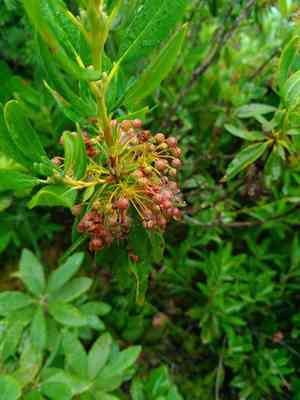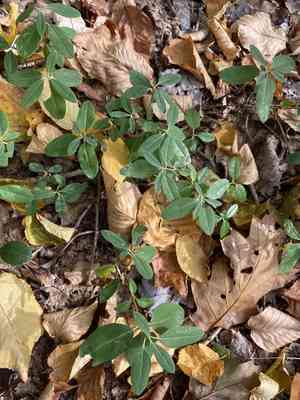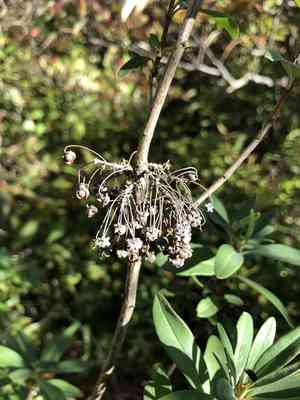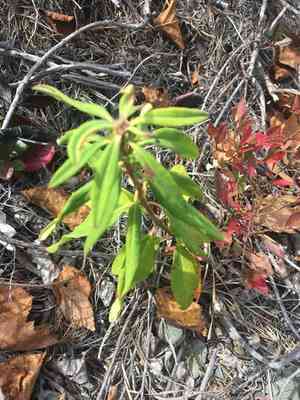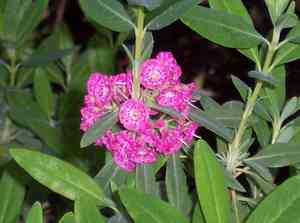
Sheep laurel(Kalmia angustifolia)

Sheep laurel (Kalmia angustifolia)

Also known as: Lambkill kalmia

The plant you're referring to is likely Sheep Laurel (Kalmia angustifolia), an evergreen shrub reaching up to 91 cm in height. It produces clusters of deep pink, saucer-shaped flowers in late spring and early summer. This plant is toxic and typically grows in wetland areas such as bogs and swamps.

Attributes of Sheep laurel

Lifespan
Perennial
Plant Type
Shrub
Plant Height
15 cm to 90 cm
Spread
1.5 m
Leaf Color
Green Blue
Flower Size
6 mm to 1.3 cm
Flower Color
Pink Red Purple Burgundy

PlantJoy - Identify plants with a snap

Identify and diagnose plants, get toxicity alerts, and explore safety guides for all types of fungi.

Try for Free

Images of Sheep laurel

Sheep laurel(Kalmia angustifolia)

Quickly Identify Sheep laurel

1
Lanceolate leaves with shiny deep green above and paler underside, whorled arrangement.
2
Saucer-shaped pink to deep rose-colored flowers in dense clusters at branch tips.
3
Dry dehiscent capsules with numerous tiny seeds, persisting on plant for years.
4
Oval blue-green leaves with pinnate veins, smooth texture, changing color in fall.
5
Smooth, erect stems up to 2 feet (60 cm) tall, minimal branching, non-hairy texture.

Scientific Classification of Sheep laurel

Phylum
Vascular plants
Class
Dicotyledons
Order
Ericales
Family
Heath
Genus
sheep laurel
Species
Sheep laurel

Planting and Growing of Sheep laurel

Care Difficulty
Moderate
Watering Schedule
Every 3 days
Sunlight Requirements
Partial sun
Sunshine Duration
4-6 hours
Ideal Temperature
60-75℉
Soil Type
Potting Mix, Peat Mix
Soil pH
4.5-6
Fertilizer Type
Balanced
Pruning Season
Spring, Summer
Pruning Area
Branches, Leaves
Pruning Frequency
2 times a year
Repotting Season
Spring
Pot Type
Plastic, Ceramic

water icon How to Water Sheep laurel?

Kalmia angustifolia prefers a moderate watering amount, around 250 ml per session. The soil should remain consistently moist but not waterlogged, simulating its natural habitat with adequate drainage.
What are the symptoms of an underwatered Sheep laurel?
What should I do if my Sheep laurel is not getting enough water?
What are the symptoms of an overwatered Sheep laurel?
How to save an overwatered Sheep laurel?

sunlight icon What Are the Sunlight Requirements for Sheep laurel?

Sunlight Requirements: Partial sun
Duration of light: 3 to 6 hours
Partial sun exposure, around 3 to 6 hours of light daily, enhances Kalmia angustifolia's health by supporting balanced growth and vibrant blooming. Such exposure simulates its natural settings, encouraging optimal development.
Why does Kalmia angustifolia prefer partial sun?
How to achieve ideal lighting for Kalmia angustifolia?
What are the benefits of ideal lighting for Kalmia angustifolia?
More About Sunlight Requirements Techniques

temperature icon What Is the Ideal Temperature Range for Sheep laurel?

Ideal Temperature: 60 ~ 75℉
The ideal temperature range for Kalmia angustifolia is between 60°F and 75°F. Within this range, the plant can thrive and grow optimally, displaying healthy foliage and vibrant blooms. Maintaining this temperature range provides the plant with the best conditions for nutrient uptake and photosynthesis.

soil icon What Soil is Best for Sheep laurel?

Soil type: Acidic soil, Peat soil, Sandy loam
Soil PH: 4.5 ~ 6
Kalmia angustifolia thrives in soils rich in organic matter, which provides essential nutrients for growth. Incorporating peat or leaf mold enriches the soil, promoting vigorous plant development and vibrant foliage. The plant requires well-drained soil to avoid waterlogging, which can lead to root rot. Loose, sandy loam facilitates quick drainage, keeping the roots healthy and promoting optimal plant vitality. Preferring a pH of 4.5 to 6.0, this plant thrives in acidic environments. Ensuring this pH level helps in the optimal uptake of nutrients, critical for maintaining the plant's lush green foliage and overall health.

fertilize icon How to Fertilize Sheep laurel?

Fertilizer type: Balanced
Kalmia angustifolia, known for its delicate beauty, benefits from a balanced application of fertilizer. A liquid fertilizer at half strength is ideal. Apply about 1/4 to 1/2 teaspoon per gallon during the active growing season. For slow-release granules, use approximately 2 to 3 ounces per plant annually, adjusting according to plant size and health.

prune icon How to Prune Sheep laurel?

Pruning Time: Spring, Summer
Prune Kalmia angustifolia right after it blooms in late spring or early summer to avoid cutting off next year's buds, which can diminish flowering. To maintain a compact shape, trim any leggy growth back to a lateral branch or bud; this encourages fuller growth and keeps the plant looking lush and rounded. More About Pruning Techniques

propagate icon How to Propagate Sheep laurel plant?

Propagate Time: Spring, Late Spring, Early Spring
1
Collect seeds from mature Kalmia angustifolia plants in late spring. Ensure the seeds are dry before placing them in the soil. Store them in a cool, dry location if not planting immediately.
2
Choose healthy wood from existing Kalmia angustifolia plants. Cut a 4-6 inch section of the stem at an angle. Remove leaves from the lower half and dip the cut end in rooting hormone to encourage root growth.
3
Dig up the parent plant carefully and separate clumps of roots using your hands or a sharp knife. Each division should have several roots and shoots. Plant divisions in pots with suitable soil and water thoroughly.
More About Propagating Techniques

repot icon How to Repot Sheep laurel plant?

Repotting frequency: Every 2-3 years
1
Kalmia angustifolia shows it’s ready for repotting when its roots start circling the pot, or if its growth seems stunted despite favorable conditions. Ideally, repot during Spring or Autumn to minimize stress.
2
Opt for a pot slightly larger than the current one with drainage holes to ensure excess water can escape. This prevents root rot and provides space for root expansion, supporting healthier growth.
3
Use an acidic, well-draining potting mix to suit Kalmia angustifolia's preference for environments similar to its native forest floor. This type of soil helps maintain necessary acidity and prevents waterlogging.

PlantJoy - Identify plants with a snap

Find the best spots for them to optimize their health, simply using your phone.

Try for Free

Toxicity of Sheep laurel

Is Sheep laurel toxic to cat?

The plant species known as sheep laurel poses a significant toxicity risk to cats. All parts of this plant are poisonous, and ingestion of any portion can result in serious health complications. Following ingestion, cats may exhibit acute physical discomfort, which can present as a range of symptoms that signal severe illness or pain. Cat owners must remain attentive, as felines can become poisoned merely by consuming parts of sheep laurel. If poisoning is suspected, it is essential to obtain prompt veterinary assistance to maximize the likelihood of recovery for the affected cat.

Is Sheep laurel toxic to dog?

Sheep laurel presents a significant toxicity risk to dogs. Any part of this plant, when ingested, can lead to poisoning, as all its components are toxic. Dogs can become poisoned by nibbling on its leaves, stems, flowers, or even seeds. Indicators of poisoning in dogs include vomiting, diarrhea, lethargy, difficulty in breathing, excessive drooling, and potentially life-threatening heart arrhythmias. Given the high toxicity associated with sheep laurel, it is essential for dog owners to ensure their pets do not have access to this plant and to supervise them closely while outdoors. If there is any suspicion that a dog has consumed any part of sheep laurel, seeking immediate veterinary assistance is vital to manage the poisoning and maximize the chance of recovery.

Identify toxic plants for your safety

Learn which plants are harmful to you and your pets, and make informed choices for a safer home!

Try for Free
WARNING
The judgment on toxicity and danger is for reference only. We DO NOT GUARANTEE any accuracy of such judgment. Therefore, you SHALL NOT rely on such judgment. It is IMPORTANT TO SEEK PROFESSIONAL ADVICE in advance when necessary.
More About Toxic Techniques