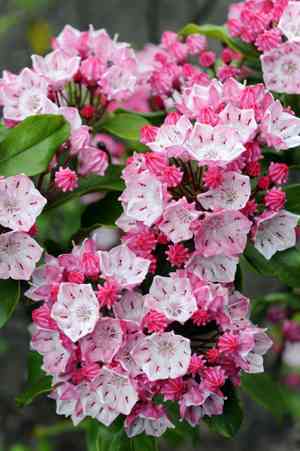
Mountain laurel(Kalmia latifolia)

Mountain laurel (Kalmia latifolia)

Also known as: Spoonwood

Mountain laurel is renowned for its distinctive pollination strategy, where its stamens build up tension and then spring forward to catapult pollen onto visiting insects. This unique method can launch pollen distances of up to 15 cm.

Attributes of Mountain laurel

Lifespan
Perennial
Plant Type
Shrub
Plant Height
1 m to 12 m
Spread
1.2 m to 2.5 m
Leaf Color
Green
Flower Size
1.9 cm to 2.5 cm
Flower Color
Pink White Red

PlantJoy - Identify plants with a snap

Identify and diagnose plants, get toxicity alerts, and explore safety guides for all types of fungi.

Try for Free

Images of Mountain laurel

Mountain laurel(Kalmia latifolia)

Quickly Identify Mountain laurel

1
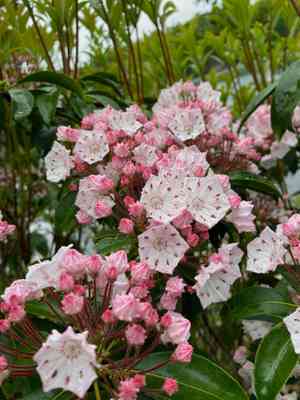
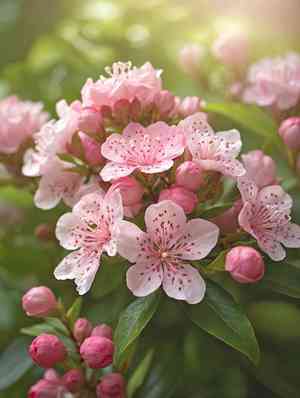
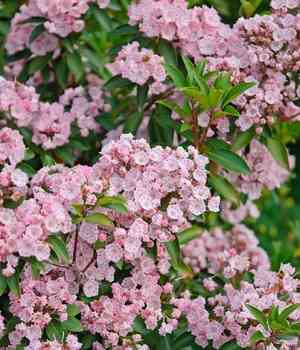
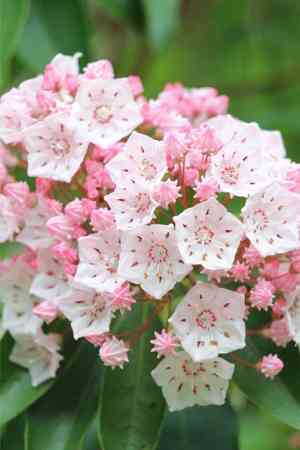
Terminal clusters of bell-shaped flowers with inner purple markings.
2
Leaves are elliptic, glossy dark green above, yellow-green beneath.
3
Stems exhibit crooked, gnarly appearance with distinct branching pattern.
4
Trunk develops distinctive shredding cinnamon bark as it matures.
5
Fruits are modest brown capsules, persisting into winter, measuring 3/16 inches (5 mm).

Scientific Classification of Mountain laurel

Phylum
Vascular plants
Class
Dicotyledons
Order
Ericales
Family
Heath
Genus
sheep laurel
Species
Mountain laurel

Planting and Growing of Mountain laurel

Care Difficulty
Hard
Watering Schedule
Every 4 days
Sunlight Requirements
Partial sun
Sunshine Duration
6-10 hours
Ideal Temperature
60-70℉
Soil Type
Potting Mix, Peat Mix
Soil pH
4.5-6
Fertilizer Type
Balanced
Pruning Season
Spring, Summer
Pruning Area
Branches, Leaves
Pruning Frequency
2 times a year
Repotting Season
Spring
Pot Type
Plastic, Ceramic

water icon How to Water Mountain laurel?

For Kalmia latifolia, it's best to aim for the soil to be evenly moist but not soggy. Using approximately 500 ml of water each time should suffice for a medium-sized plant. Ensure the water penetrates the root zone deeply without leaving any standing water.
What are the symptoms of an underwatered Mountain laurel?
What should I do if my Mountain laurel is not getting enough water?
What are the symptoms of an overwatered Mountain laurel?
How to save an overwatered Mountain laurel?

sunlight icon What Are the Sunlight Requirements for Mountain laurel?

Sunlight Requirements: Partial sun, Full shade
Duration of light: 3 to 6 hours daily
Partial sun is ideal, receiving dappled or morning light while avoiding harsh midday sun. This setup ensures Kalmia latifolia absorbs essential light for photosynthesis while staying protected from excess heat, showcasing optimal growth and vitality.
What is the best lighting condition for Kalmia latifolia?
How can I provide ideal lighting for Kalmia latifolia?
What benefits does Kalmia latifolia gain from ideal lighting?

temperature icon What Is the Ideal Temperature Range for Mountain laurel?

Ideal Temperature: 60 ~ 70℉
The ideal temperature range for Kalmia latifolia, also known as Mountain Laurel, is between 60°F to 70°F. This temperature range provides optimal conditions for growth, ensuring the plant can maintain healthy foliage and vibrant blooms. Within this range, the plant's physiological processes, such as photosynthesis and nutrient uptake, occur efficiently.

soil icon What Soil is Best for Mountain laurel?

Soil type: Sandy loam, Acidic soil, Loam
Soil PH: 4.5 ~ 6
Kalmia latifolia thrives in well-drained soil. Ensuring good drainage prevents root rot, a common problem in compacted or waterlogged soils, allowing the plant to grow robust and healthy. This plant prefers acidic soil with a pH range between 4.5 and 6.0. Acidity helps the plant uptake essential nutrients, fostering vibrant blooms and lush foliage. A soil rich in organic matter supports Kalmia latifolia's growth. Organic components provide essential nutrients and improve the soil structure, enhancing root development and plant health.

fertilize icon How to Fertilize Mountain laurel?

Fertilizer type: Balanced
For Kalmia latifolia, it's crucial to use fertilizers sparingly. A half dilution of a balanced 10-10-10 liquid fertilizer is recommended to avoid nutrient burn. Apply about 1 gallon per mature bush, ensuring the soil is moist during application to aid absorption and reduce root stress.

prune icon How to Prune Mountain laurel?

Pruning Time: Spring
The best time to prune Kalmia latifolia is right after it finishes blooming in late spring. Pruning too late in the season can remove next year's blooms, as this plant sets buds for the following year shortly after flowering. To maintain size, remove any overly long or leggy branches back to a main stem or just above a leaf node. Always make cuts at a slight angle to facilitate rainwater runoff and prevent disease. For a fuller look, remove dead, diseased, or crossed branches to encourage more robust growth and allow more sunlight and air circulation, which enhances plant vigor and bloom production.

propagate icon How to Propagate Mountain laurel plant?

Propagate Time: Late spring, Early summer
1
Collect mature seeds from established Kalmia latifolia plants during late spring. Sow the seeds in a seed tray filled with a well-draining potting mix and lightly cover. Keep seeds moist but not waterlogged.
2
Select semi-hardwood stems during early summer. Cut sections around 4-6 inches long. Remove lower leaves and dip the cut end in rooting hormone before planting in a potting mix.
3
Choose a healthy lower branch, bend it to the ground, and slightly wound the part to be buried. Secure it with a stake and cover with soil, leaving the tip exposed, to encourage rooting.

repot icon How to Repot Mountain laurel plant?

Repotting frequency: Every 2-3 years
1
Kalmia latifolia shows clear signs when it needs repotting: roots protruding from drainage holes, slowed growth, and compacted soil. Ideally, early spring or summer is the best time. Avoid winter or late growing season as it stresses the plant.
2
Select a pot with a diameter 2 inches larger than the current one, with multiple drainage holes. This provides enough room for growth, prevents root rot, and ensures adequate oxygenation. Opt for materials like clay for better moisture regulation.
3
Use acidic, well-drained soil, preferably with peat, pine bark, and perlite. This composition closely mimics its natural environment, ensuring healthy root development and preventing nutrient deficiencies.

PlantJoy - Identify plants with a snap

Find the best spots for them to optimize their health, simply using your phone.

Try for Free

Toxicity of Mountain laurel

Is Mountain laurel toxic to humans?

Mountain laurel is an evergreen shrub highly regarded for its beautiful blooms. Every part of this plant is extremely poisonous to both humans and animals.

Is Mountain laurel toxic to cat?

Mountain laurel represents a significant hazard to the health of felines. Any part of this plant can be toxic to cats, resulting in all of its components being perilous. The toxic reactions, which occur upon ingestion, can induce considerable physical discomfort in cats. Symptoms associated with this poisoning may include gastrointestinal disturbances, potentially resulting in more severe health issues. It is crucial for cat guardians to restrict access to mountain laurel and to respond promptly by obtaining professional veterinary assistance if they suspect that their cat has consumed this plant.

Is Mountain laurel toxic to dog?

Mountain laurel presents a significant toxicity hazard to dogs. Ingesting any portion of this plant can result in poisoning. Pet owners must remain alert, as every component of mountain laurel is poisonous; dogs are at risk if they chew on the leaves, stems, flowers, or berries. Poisoning symptoms may manifest as gastrointestinal distress, lethargy, breathing difficulties, and potentially life-threatening heart arrhythmias. Given the high toxicity levels associated with mountain laurel, it is essential for dog owners to keep their pets away from this plant. If there is a suspicion that a dog has ingested any part of mountain laurel, seeking immediate veterinary care is vital for effective management of the poisoning.

Identify toxic plants for your safety

Learn which plants are harmful to you and your pets, and make informed choices for a safer home!

Try for Free
WARNING
The judgment on toxicity and danger is for reference only. We DO NOT GUARANTEE any accuracy of such judgment. Therefore, you SHALL NOT rely on such judgment. It is IMPORTANT TO SEEK PROFESSIONAL ADVICE in advance when necessary.