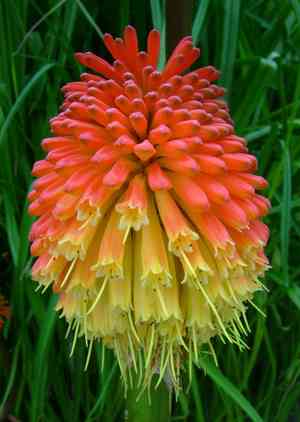
Red hot poker (Kniphofia uvaria)
Also known as: Tritomea, Tritoma
The red hot poker, known for its striking flower spikes, displays a variety of colors including pale yellow, apricot, orange, and red. These vibrant flowers typically bloom in the summer and are rich in nectar, making them attractive to hummingbirds, bees, and butterflies. Due to its invasive nature, it is considered an environmental weed in some areas of south-eastern Australia.
In This Article
Attributes of Red hot poker
Lifespan
Perennial
Plant Type
Herb
Plant Height
80 cm to 1.2 m
Spread
90 cm
Leaf Color
Green
Flower Size
3 cm to 4 cm
Flower Color
Red Yellow Orange
Images of Red hot poker
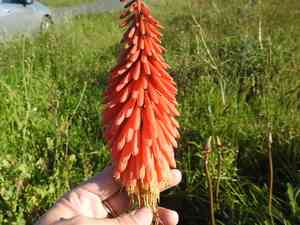
Quickly Identify Red hot poker
1
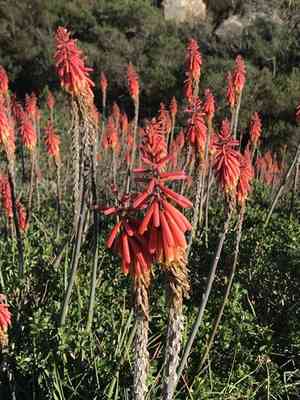
Towering, upright flowering spikes up to 5 feet (1.5 meters) tall.
2
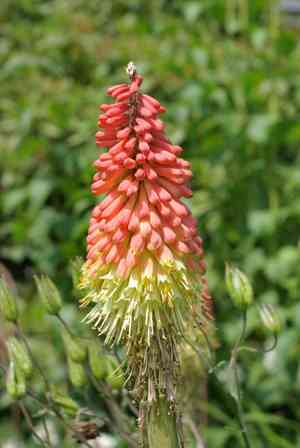
Distinctive blooms with vibrant orange transitioning to yellowish green gradient.
3
Basal leaves are sword-like, reaching up to 2 feet (60 cm) long.
4
Sequential blooming from bottom to top showcasing a range of colors.
5
Resilient against browsing deer with mild salt tolerance.
Scientific Classification of Red hot poker
Phylum
Vascular plants
Class
Monocotyledons
Order
Asparagus and allies
Family
Asphodel
Genus
Red hot pokers
Species
Red hot poker
Planting and Growing of Red hot poker
Care Difficulty
Easy
Watering Schedule
Every 2 days
Sunlight Requirements
Full sun
Sunshine Duration
6-10 hours
Ideal Temperature
70-80℉
Soil Type
Potting Mix, Peat Mix
Soil pH
6.5-7.5
Fertilizer Type
Balanced
Pruning Season
Spring, Summer
Pruning Area
Branches, Leaves
Pruning Frequency
2 times a year
Repotting Season
Spring
Pot Type
Plastic, Ceramic
 How to Water Red hot poker?
Kniphofia uvaria prefers a moderate amount of water, around 500 ml, during each session. The soil needs to be moist but not waterlogged, resembling a well-dampened sponge. The goal is to keep the roots hydrated while avoiding standing water.
What are the symptoms of an underwatered Red hot poker?
›
What should I do if my Red hot poker is not getting enough water?
›
What are the symptoms of an overwatered Red hot poker?
›
How to save an overwatered Red hot poker?
›
 What Are the Sunlight Requirements for Red hot poker?
Kniphofia uvaria thrives best in full sun, ideally involving at least 6-8 hours of direct sunlight. This ensures ample energy for photosynthesis and contributes to abundant flowering and strong growth.
More About Sunlight Requirements Techniques→
How much direct sunlight does Kniphofia uvaria need?
›
How to achieve ideal sunlight conditions for Kniphofia uvaria?
›
What are the benefits of ideal sunlight conditions for Kniphofia uvaria?
›
 What Is the Ideal Temperature Range for Red hot poker?
Kniphofia uvaria, commonly known as Red Hot Poker, thrives best in a temperature range of 70°F to 80°F. This range provides optimal conditions for growth and blooming, allowing the plant to absorb nutrients efficiently while maintaining vibrant colors and robust health.
 What Soil is Best for Red hot poker?
Kniphofia uvaria, commonly known as Red Hot Poker, thrives in well-draining soils. This requirement ensures that the roots do not stay waterlogged, which could lead to root rot. Well-draining soil allows excess water to flow away, keeping the plant's roots healthy and preventing fungal diseases. This perennial flourishes in nutrient-rich substrates that can offer a steady supply of essential nutrients. A soil enriched with organic matter such as compost ensures vigorous growth and enhances flower production, helping the plant reach its full flowering potential. Red Hot Poker requires soil with moderate moisture levels that afford sufficient hydration without causing saturation. Consistent moisture availability supports healthy plant metabolism and overall vitality, allowing it to withstand periods of drought more efficiently.
 How to Fertilize Red hot poker?
Kniphofia uvaria thrives best when provided with a balanced fertilizer mix. For liquid fertilizers, use a concentration of 1/2 to 1/4 of the recommended amount on the packaging. This prevents over-fertilization and ensures the plant receives nutrients it can absorb efficiently.
 How to Prune Red hot poker?
Cut back the flower stalks once the blooms have faded. This encourages more prolific flowering and prevents the plant from wasting energy on seed production. Cut the stalks close to the base, without damaging the leaves. Carefully prune any damaged or diseased foliage to enhance plant health. Use clean cuts just above healthy parts of the plant, ensuring that airflow is maintained and reducing the likelihood of fungal infections. Shape your Kniphofia uvaria to maintain a tidy appearance. Focus on removing older, outer leaves to keep the plant looking fresh and to provide space for new growth, ensuring the plant receives ample sunlight and air circulation.
More About Pruning Techniques→
 How to Propagate Red hot poker plant?
1
Begin by selecting a healthy Kniphofia uvaria plant with well-developed clumps. Water the plant one day before propagation to loosen the soil and reduce transplant shock.
2
Use a garden spade to carefully dig up the plant, ensuring minimal root damage. Divide the clump into smaller sections, each with roots and shoots, to encourage new growth after planting.
3
If using seed propagation, sow seeds in moist, well-draining soil in seed trays. Ensure seeds are lightly covered with soil and placed in a warm, bright area to germinate.
 How to Repot Red hot poker plant?
1
Kniphofia uvaria exhibits signs like root-bound conditions or reduced growth to indicate it's time for repotting. The optimal replanting season is early spring or autumn, allowing the plant to settle before the growth spurts of summer, thus ensuring it thrives in its new environment.
2
Opt for a pot with good drainage and 1-2 inches larger in diameter than the current one to allow space for root expansion. A pot too large can retain excess moisture, leading to root rot, while well-sized pots offer optimal growth without waterlogging risks.
3
Select a well-draining loamy mix for Kniphofia uvaria. This type of soil prevents waterlogging, offers good aeration, and provides essential nutrients. A well-chosen soil mix ensures efficient water absorption and reduces stress on the plant during the transition.
Learn More About Red hot poker Diseases
Anthracnose
Bacterial Leaf Spot
Bacterial Soft Rot
Bacterial Wilt
Chemical Injury
Crown Gall
Cyst Nematode
Damping-off
Downy Mildew
Drought Stress
Fusarium Wilt
Gray Mold
Leaf Spot
Mosaic
Nutrient Deficiency
Nutrient Toxicity
Powdery Mildew
Root Rot
Root-knot Nematode
Rusts
Sooty Mold
Spider Mites
Temperature Stress
Thrips Damage
White Mold



