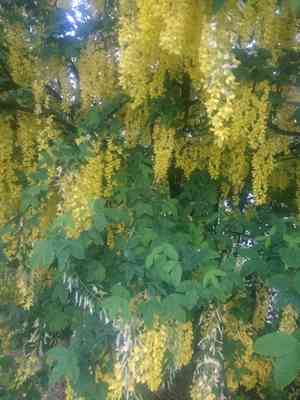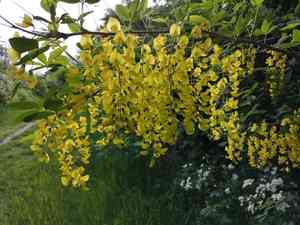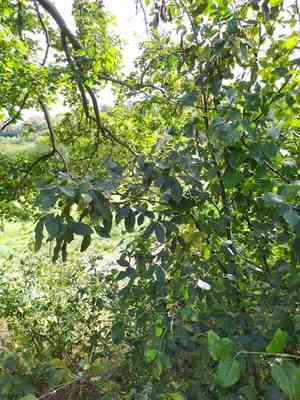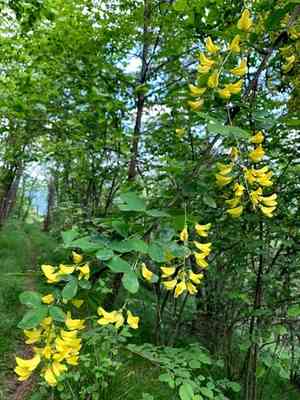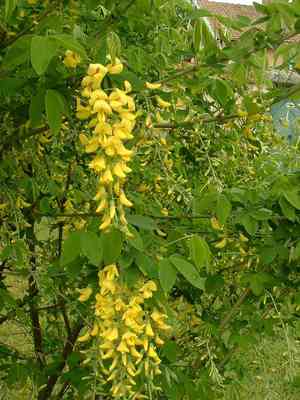
Golden chain tree(Laburnum anagyroides)

Golden chain tree (Laburnum anagyroides)

Also known as: Laburnum, Golden rain

The Laburnum, or Golden Chain tree, is cherished for its striking cascading yellow blooms that appear in late spring, making it a popular choice for gardens and patios. Beyond its ornamental appeal, the wood is prized for cabinetry, inlay work, and musical instruments, and its flexible branches were historically used for crafting bows. However, it's crucial to note that every part of the Golden Chain tree is extremely toxic and can be deadly if ingested.

Attributes of Golden chain tree

Lifespan
Perennial
Plant Type
Tree
Plant Height
4 m to 9 m
Spread
3 m to 4 m
Leaf Color
Green
Flower Size
15 cm
Flower Color
Yellow Gold

PlantJoy - Identify plants with a snap

Identify and diagnose plants, get toxicity alerts, and explore safety guides for all types of fungi.

Try for Free

Images of Golden chain tree

Golden chain tree(Laburnum anagyroides)

Quickly Identify Golden chain tree

1
Smooth bark with greenish-brown or gray hue, lacking deep furrows or ridges.
2
Trifoliate, oval leaves with sleek top surface and hairy texture beneath.
3
Vibrant golden flowers in pendulous racemes, butterfly-like pattern petals.
4
Long, flattened pods with dry texture, dark brown color, split open when mature.
5
Deciduous tree or shrub up to 30 ft (9 m) tall, with drooping twigs and fine pubescence.

Scientific Classification of Golden chain tree

Phylum
Vascular plants
Class
Dicotyledons
Order
Legumes, milkworts and allies
Family
Legume
Genus
Golden chain tree
Species
Golden chain tree

Planting and Growing of Golden chain tree

Care Difficulty
Easy
Watering Schedule
Every 2 days
Sunlight Requirements
Full sun
Sunshine Duration
6-10 hours
Ideal Temperature
60-75℉
Soil Type
Potting Mix, Peat Mix
Soil pH
6.5-7.5
Fertilizer Type
Balanced
Pruning Season
Spring, Summer
Pruning Area
Branches, Leaves
Pruning Frequency
2 times a year
Repotting Season
Spring
Pot Type
Terracotta, Plastic

water icon How to Water Golden chain tree?

For Laburnum anagyroides, water deeply at each session, ensuring about 500 ml of water reaches the soil. The goal is to keep the soil consistently moist without allowing it to become waterlogged. This allows the roots to absorb sufficient moisture without any risk of root rot.
What are the symptoms of an underwatered Golden chain tree?
What should I do if my Golden chain tree is not getting enough water?
What are the symptoms of an overwatered Golden chain tree?
How to save an overwatered Golden chain tree?

sunlight icon What Are the Sunlight Requirements for Golden chain tree?

Sunlight Requirements: Full sun
Duration of light: 6-8 hours
Laburnum anagyroides thrives in full sun with 6-8 hours of daylight, facilitating maximum growth and flowering, providing aesthetic beauty and ecological benefits such as attracting pollinators.
Optimal Sunlight Exposure
Solutions for Adjusting Light
Benefits of Ideal Light Conditions

temperature icon What Is the Ideal Temperature Range for Golden chain tree?

Ideal Temperature: 60 ~ 75℉
Laburnum anagyroides thrives in temperate climates where the temperature remains between 60°F and 75°F. This range supports optimal growth, ensuring the plant develops healthy foliage and productive flowering cycles. Maintaining this range also helps in preventing stress due to temperature fluctuations.

soil icon What Soil is Best for Golden chain tree?

Soil type: Loam, Sandy soil, Calcareous soil
Soil PH: 6.5 ~ 7.5
Laburnum anagyroides thrives in nutrient-rich soil, which supports its vigorous growth and vibrant blooms. This soil provides essential nutrients necessary for its health and sustenance. Ensuring well-drained soil is critical to prevent waterlogging, which can damage the root system. Good drainage facilitates healthy root development and prevents rot. This plant prefers soils with moderate humidity levels, promoting balanced moisture absorption. Maintaining such a balanced moisture level is key to maximizing plant health and growth.

fertilize icon How to Fertilize Golden chain tree?

Fertilizer type: Balanced
When applying fertilizer to Laburnum anagyroides, it's essential to use a balanced fertilizer with equal parts nitrogen, phosphorus, and potassium. For liquid fertilizers, mix 1 teaspoon with a gallon of water for optimal application. For solid fertilizers, apply about 1/4 cup around the base of the plant, ensuring even distribution across the root zone.

prune icon How to Prune Golden chain tree?

Pruning Time: Summer, Autumn
Begin by using clean and sharp pruning shears to avoid damaging the branches. Focus on removing dead, damaged, or diseased wood. Cut these back to the base or a main stem, making sure to make clean cuts to prevent infection. Next, thin out overcrowded branches to improve air circulation, which reduces the risk of fungal diseases. Lastly, shape the plant to maintain a pleasing form, removing any wayward shoots that detract from its overall silhouette.

propagate icon How to Propagate Golden chain tree plant?

Propagate Time: Spring, Early summer
1
Collect seeds from mature Laburnum anagyroides pods in late summer. Ensure the pods are dry and brown, indicating they are ready for harvesting. Store them in a cool, dry place until you are ready to sow them.
2
Mix equal parts of sand, peat moss, and perlite to create a well-draining potting mix for seeds or cuttings. This mix will keep the seeds or cuttings moist without waterlogging.
3
Sow seeds in seed trays filled with the prepared soil mix. Cover them lightly with soil and water gently. Keep the soil consistently moist but not waterlogged until germination occurs.

repot icon How to Repot Golden chain tree plant?

Repotting frequency: Every 2-3 years
1
Laburnum anagyroides signals its need for repotting when its roots start to coil around the base of the pot. You might also notice a significant drop in its growth rate. Aim to repot during the active growth periods in spring or autumn, as the plant is least stressed during these times.
2
Select a pot that is 1-2 inches larger in diameter than the current one with adequate drainage holes. A pot too large may retain excessive moisture, leading to root rot, whereas a well-sized pot promotes healthy root growth and prevents waterlogging.
3
Opt for a well-drained loamy soil mix to prevent waterlogging. Suitable soil ensures that the roots receive adequate oxygen and nutrients, which supports robust growth and minimizes the risk of root diseases.

PlantJoy - Identify plants with a snap

Find the best spots for them to optimize their health, simply using your phone.

Try for Free

Toxicity of Golden chain tree

Is Golden chain tree toxic to humans?

Every part of the golden chain tree is extremely poisonous due to the presence of the harmful alkaloid cytisine. The seeds pose a particular risk as they contain the highest levels of this toxic substance, although there is some evidence indicating that ingesting only a few seeds may not lead to severe adverse effects. Individuals may experience gastrointestinal issues, including nausea, vomiting, and diarrhea. However, consuming golden chain tree in significant amounts can lead to much more serious symptoms such as excessive salivation, profound lethargy, anxiety, abdominal pain, arrhythmia, seizures, loss of consciousness, and potentially death. There is no supporting evidence to suggest that contact with the skin results in dermatitis associated with the golden chain tree.

Is Golden chain tree toxic to cat?

The golden chain tree presents serious dangers to cats. Any part of this plant can be toxic to felines, resulting in a range of symptoms indicating physical distress and health issues. Should a cat inadvertently eat any part of the golden chain tree, it is crucial to obtain prompt veterinary care to safeguard the pet's health.

Is Golden chain tree toxic to dog?

The golden chain tree represents a considerable danger to dogs due to its extreme toxicity levels. If a dog unknowingly ingests any part of this plant, it can be poisoned, as all sections are harmful. Pet owners must remain attentive and keep their dogs away from the golden chain tree. Should ingestion occur, symptoms may manifest as vomiting, diarrhea, lethargy, and potentially more serious signs such as tremors or seizures. It is vital for dog owners to recognize these possible symptoms and respond quickly by obtaining immediate veterinary assistance if they suspect their dog has consumed any portion of the golden chain tree. Timely treatment is critical in addressing the impacts of poisoning.

Identify toxic plants for your safety

Learn which plants are harmful to you and your pets, and make informed choices for a safer home!

Try for Free
WARNING
The judgment on toxicity and danger is for reference only. We DO NOT GUARANTEE any accuracy of such judgment. Therefore, you SHALL NOT rely on such judgment. It is IMPORTANT TO SEEK PROFESSIONAL ADVICE in advance when necessary.