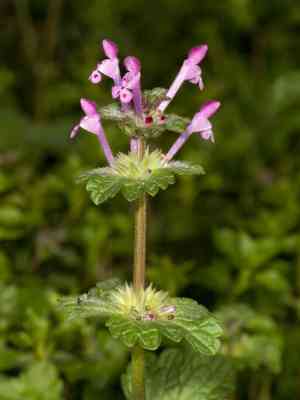
Henbit deadnettle (Lamium amplexicaule)
Also known as: Common Dead-nettle
Henbit deadnettle plays a crucial role in North American and Eurasian ecosystems. It serves as an early spring nectar source for bees and other pollinators when few other plants are blooming. Birds are also attracted to its seeds, and humans can consume its leaves, stems, and flowers either raw or cooked. This plant's presence supports pollinator health and biodiversity, making it a valuable ecological component.
In This Article
Attributes of Henbit deadnettle
Lifespan
Annual, Biennial
Plant Type
Herb
Plant Height
10 cm to 30 cm
Spread
10 cm
Leaf Color
Green Red
Flower Size
8 cm to 15 cm
Flower Color
Pink White Purple Red
Images of Henbit deadnettle
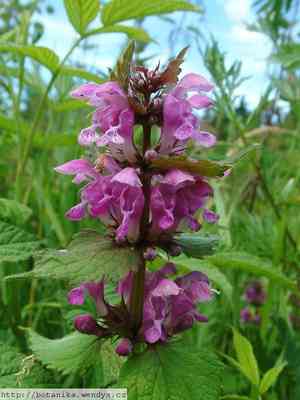
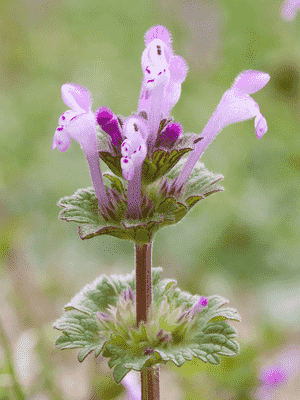
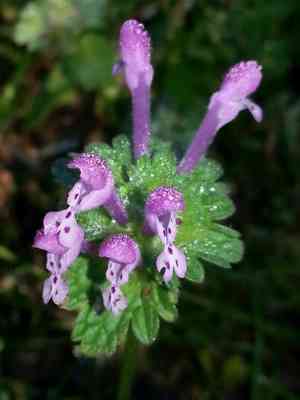
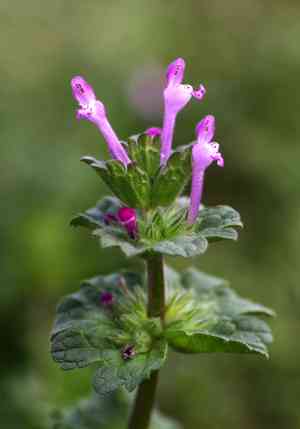
Quickly Identify Henbit deadnettle
1
Vibrant green, rounded leaves with deep notch at petiole end, clasping directly at stem.
2
Tubular flowers in pink to purple hues, often spotted, clustered in upper leaf axils.
3
Two-lipped, tubular, hairy lavender flowers with concave upper lip, about 0.6 inches (1.5 cm).
4
Leaves arranged in opposite pairs, lower ones stalked, upper stalkless and sometimes fused.
5
Leaf blades hairy, kidney-shaped, with rounded teeth, 0.5–1.5 inches (1.3–3.8 cm) long.
Scientific Classification of Henbit deadnettle
Phylum
Vascular plants
Class
Dicotyledons
Order
Mints plantains olives and allies
Family
Mint
Genus
Dead-nettles
Species
Henbit deadnettle
Planting and Growing of Henbit deadnettle
Care Difficulty
Easy
Watering Schedule
Every 4 days
Sunlight Requirements
Partial sun
Sunshine Duration
4-6 hours
Ideal Temperature
50-77℉
Soil Type
Potting Mix, Peat Mix
Soil pH
6.5-7.5
Fertilizer Type
Balanced
Pruning Season
Spring, Summer
Pruning Area
Branches, Leaves
Pruning Frequency
2 times a year
Repotting Season
Spring
Pot Type
Plastic, Ceramic
 How to Water Henbit deadnettle?
For Lamium amplexicaule, you should aim to water it generously, allowing the water to soak through the soil until it drains from the bottom of the pot. This ensures that the roots get enough moisture without becoming waterlogged.
What are the symptoms of an underwatered Henbit deadnettle?
›
What should I do if my Henbit deadnettle is not getting enough water?
›
What are the symptoms of an overwatered Henbit deadnettle?
›
How to save an overwatered Henbit deadnettle?
›
 What Are the Sunlight Requirements for Henbit deadnettle?
Lamium amplexicaule prefers partial sun, enabling it to achieve optimal photosynthesis with minimal water loss, resulting in fuller growth and more vibrant colors.
What is the best lighting condition?
›
How to achieve ideal lighting?
›
What are the benefits of ideal lighting?
›
 What Is the Ideal Temperature Range for Henbit deadnettle?
The ideal temperature range for growing Lamium amplexicaule is between 50°F and 77°F. These temperatures support optimal growth and flowering, allowing the plant to thrive. During this range, the plant's metabolic processes function efficiently, supporting robust health and preventing stress-related issues. Maintaining this temperature will help ensure that your Lamium amplexicaule exhibits vibrant foliage and blooms.
 What Soil is Best for Henbit deadnettle?
Lamium amplexicaule thrives in well-drained soil, preventing root rot and ensuring that the roots have adequate access to oxygen. This demand is crucial as it promotes healthy root development and aids in the absorption of essential nutrients. The plant shows an affinity for nutrient-rich soil, which enhances its growth and leads to more vibrant foliage. A soil that is rich in organic matter will support its robust flowering season and general vitality. While good drainage is essential, retaining the right amount of moisture supports the plant's overall energy needs, especially during dry spells. This balance promotes lush growth and helps in maintaining a stable plant health.
 How to Fertilize Henbit deadnettle?
When fertilizing Lamium amplexicaule, use a balanced, all-purpose liquid fertilizer diluted to half strength. Each application should deliver around 5ml of fertilizer per liter of water to avoid over-fertilization, which may harm the delicate root system.
 How to Prune Henbit deadnettle?
Begin by preparing clean and sharp pruning shears. Focus on removing any dead or damaged leaves and stems first, cutting them back to the base to encourage fresh growth. Next, trim back any overly long stems by about a third to maintain a compact shape. If it's growing in a garden bed, consider cutting back the entire plant after the flowering season to encourage a robust new flush of foliage and blooms. As Lamium amplexicaule is known for its vibrant blooms, proper pruning can enhance this beauty. To do this, focus on deadheading spent flowers throughout the blooming seasons. Deadheading prevents the plant from going to seed, ensuring that the energy is redirected towards producing more flowers. Be sure to cut the flower stalk down to the nearest set of leaves to encourage bushier growth and more prolific flowering.
 How to Propagate Henbit deadnettle plant?
1
Collect seeds from mature plants in the late summer when the seed pods have dried but before they disperse. Ensure you only collect from healthy plants to prevent the spread of diseases.
2
Sow seeds in a seed tray filled with sterile potting mix. Lightly press them into the surface of the soil but do not cover, as they require light for germination. Maintain consistent moisture.
3
Place the seed tray in a well-lit but not directly sunlit area, maintaining a temperature between 15-20°C. The seeds should germinate in one to two weeks.
 How to Repot Henbit deadnettle plant?
1
You should consider repotting your Lamium amplexicaule when you notice roots growing out of the drainage holes of the current pot or when the plant's growth appears stunted. Another sign to look for is when the soil dries out too quickly after watering, indicating that there might be more roots than soil in the pot. Repotting is usually best done in spring when the plant is actively growing, allowing it to recover swiftly and establish itself in a new pot.
2
When selecting a new pot for your Lamium amplexicaule, aim for one that's 1-2 inches larger in diameter than your current pot. This size allows room for growth without being so large that the soil retains too much moisture. It's advantageous to choose pots with drainage holes to prevent waterlogging, which can lead to root rot. The material of the pot, whether clay, ceramic, or plastic, should also facilitate good air circulation around the roots.
3
Opt for a well-draining potting mix that provides both structure and aeration, preventing the roots from becoming waterlogged. A combo of standard potting soil with a bit of sand or perlite mixed in works excellently, offering excellent drainage. This will help mimic the plant's natural growing conditions and support vibrant and healthy growth, ensuring your Lamium amplexicaule thrives.
Learn More About Henbit deadnettle Diseases
Anthracnose
Bacterial Leaf Spot
Bacterial Soft Rot
Chemical Injury
Damping-off
Downy Mildew
Drought Stress
Fusarium Wilt
Gray Mold
Leaf Spot
Mosaic
Nutrient Deficiency
Nutrient Toxicity
Powdery Mildew
Root Rot
Root-knot Nematode
Rusts
Sooty Mold
Spider Mites
Temperature Stress
Thrips Damage
White Mold



