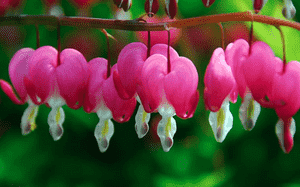
Bleeding heart (Lamprocapnos spectabilis)
Also known as: Lady-in-a-bath, Bleeding heart Flower
The bleeding heart (Lamprocapnos spectabilis) is a flowering plant in the poppy family, native to Siberia, China, Korea, and Japan. Often known as the Japanese bleeding heart, it thrives as an ornamental plant, preferring moist soil and ample sunlight.
Attributes of Bleeding heart
Images of Bleeding heart
Quickly Identify Bleeding heart
Scientific Classification of Bleeding heart
Planting and Growing of Bleeding heart
 How to Water Bleeding heart?
 What Are the Sunlight Requirements for Bleeding heart?
 What Is the Ideal Temperature Range for Bleeding heart?
 What Soil is Best for Bleeding heart?
 How to Fertilize Bleeding heart?
 How to Prune Bleeding heart?
 How to Propagate Bleeding heart plant?
 How to Repot Bleeding heart plant?
Toxicity of Bleeding heart
Is Bleeding heart toxic to humans?
Bleeding hearts can exhibit mild toxicity upon contact and moderate to severe toxicity when ingested. Every part of this plant is infused with a variety of isoquinolone alkaloids. For individuals who touch the plant, these compounds can lead to mild contact dermatitis, presenting symptoms like redness, itchiness, and skin swelling. If ingested, these same compounds can lead to severe illness, potentially resulting in symptoms such as vomiting, diarrhea, lethargy, convulsions, and impaired breathing. Despite their hazardous nature, bleeding hearts are favored as ornamental plants, prompting gardeners to exercise caution and wear gloves during handling. Fortunately, the plant has nearly no edible look-alikes, making incidents of human ingestion quite rare.
Is Bleeding heart toxic to cat?
The bleeding heart plant poses a toxicity risk to cats. If a cat inadvertently consumes any part of the bleeding heart, it can lead to poisoning since all portions of this plant are harmful. Following ingestion, cats may display symptoms of physical discomfort and distress. To reduce these hazards, cat owners must ensure that bleeding heart is stored securely away from their pets and remain alert for any abnormal behavior. Should there be a suspicion that a cat has ingested bleeding heart, it is crucial to obtain immediate veterinary assistance to safeguard the feline's health and well-being.
Is Bleeding heart toxic to dog?
Bleeding heart is recognized as a toxic species harmful to dogs. If dogs consume any portion of this plant, they risk poisoning, as every part is deemed toxic. Ingesting even minor quantities of bleeding heart can lead to various symptoms, which may encompass vomiting, diarrhea, excessive drooling, lethargy, and irregular heart rate. Therefore, it is essential for dog owners to remain watchful and restrict their pets from entering areas where bleeding heart grows to prevent accidental ingestion. Should a dog ingest any part of the bleeding heart plant, it is vital to pursue immediate veterinary assistance to safeguard the pet's health.



