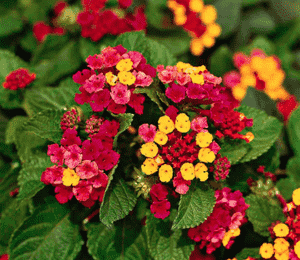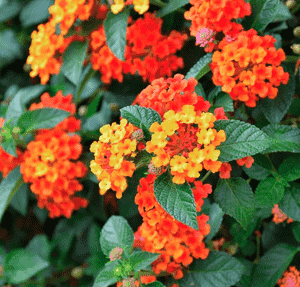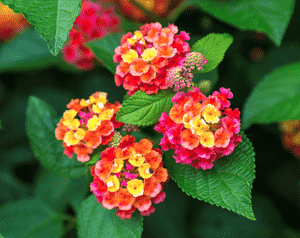
Common lantana(Lantana camara)

Common lantana (Lantana camara)

Also known as: Yellow sage, Umbelanterna

Lantana camara, commonly known as common lantana, thrives in tropical climates. It was introduced to Europe by the Dutch. This plant is considered an invasive weed that significantly diminishes biodiversity. Moreover, it poses a threat to livestock due to its toxicity and negatively impacts agricultural productivity.

Attributes of Common lantana

Lifespan
Perennial
Plant Type
Shrub
Plant Height
1 m to 2 m
Spread
1.8 m
Leaf Color
Green
Flower Size
1.5 cm to 2.5 cm
Flower Color
Yellow Red Orange Pink White Purple Lavender Gold

PlantJoy - Identify plants with a snap

Identify and diagnose plants, get toxicity alerts, and explore safety guides for all types of fungi.

Try for Free

Images of Common lantana

Common lantana(Lantana camara)

Quickly Identify Common lantana

1
Oppositely arranged, coarse-toothed leaves emitting strong fragrance when crushed.
2
Spherical clusters of multi-colored tubular flowers, 1-2 inches (2.5-5 cm) in size.
3
Berry-like drupe fruit transitioning from green to orange, red, then metallic blue or purple-black.
4
Spiny, square stems covered in bristly hairs, maturing with scattered hooked prickles.
5
Versatile shrub from 1-6 feet (30-180 cm) tall, with sprawling growth form and dense foliage.

Scientific Classification of Common lantana

Phylum
Vascular plants
Class
Dicotyledons
Order
Mints plantains olives and allies
Family
Verbena
Genus
Shrub verbenas
Species
Common lantana

Planting and Growing of Common lantana

Care Difficulty
Easy
Watering Schedule
Every 4 days
Sunlight Requirements
Full sun
Sunshine Duration
6-10 hours
Ideal Temperature
68-86℉
Soil Type
Potting Mix, Peat Mix
Soil pH
6.5-7.5
Fertilizer Type
Balanced
Pruning Season
Spring, Summer
Pruning Area
Branches, Leaves
Pruning Frequency
2 times a year
Repotting Season
Spring
Pot Type
Plastic, Ceramic

water icon How to Water Common lantana?

Lantana camara prefers thorough but infrequent watering. Ensure the soil is dry up to 1-2 inches deep before proceeding to water with approximately 250 ml. This prevents root rot while keeping the plant nourished.
What are the symptoms of an underwatered Common lantana?
What should I do if my Common lantana is not getting enough water?
What are the symptoms of an overwatered Common lantana?
How to save an overwatered Common lantana?

sunlight icon What Are the Sunlight Requirements for Common lantana?

Sunlight Requirements: Full sun, Partial sun
Duration of light: 6 to 8 hours
Lantana camara thrives best in full sun or partial sun environments. Ideal light promotes vibrant foliage and abundant blooming, crucial for healthy plant growth and sustainability.
What is the ideal lighting duration?
What type of sunlight quality is best?
How to achieve optimal lighting?

temperature icon What Is the Ideal Temperature Range for Common lantana?

Ideal Temperature: 68 ~ 86℉
For optimal growth and flowering of Lantana camara, the ideal temperature range is between 68°F and 86°F. This range provides the necessary warmth that supports vigorous growth and continuous blooming cycles. Within these temperatures, the plant can maintain its metabolic functions efficiently and absorb nutrients effectively, ensuring healthy foliage and abundant flowers.

soil icon What Soil is Best for Common lantana?

Soil type: Sandy soil, Loam, Sandy loam
Soil PH: 6.5 ~ 7.5
Lantana camara thrives in well-draining soil to prevent root rot. Ensuring the soil is loose helps with air circulation and water infiltration, promoting healthier roots and vibrant plant growth. While Lantana camara isn't demanding, it prefers soil with moderate fertility. A balanced amount of nutrients supports its prolific blooming without excessive growth of foliage. Lantana camara can tolerate slightly alkaline conditions, making it adaptable to various environments. This adaptability allows it to flourish in regions with higher soil pH levels.

fertilize icon How to Fertilize Common lantana?

Fertilizer type: Balanced
Lantana camara prefers a balanced fertilization approach. Use a 10-10-10 water-soluble fertilizer at half strength, applying 1/2 to 1 cup per plant during the active growing season. Be sure to dilute appropriately to prevent over-fertilization.

prune icon How to Prune Common lantana?

Pruning Time: Spring, Summer, Autumn
Always use sharp pruning shears to make clean cuts on Lantana camara. This minimizes damage to the plant and helps prevent the spread of diseases. Start by removing any dead or damaged branches. This not only tidies up the plant but also directs nutrients to healthy parts, promoting vigorous flowering and growth. Lantana camara can grow quite bushy. Prune back overgrown branches to maintain a desired shape and size. This helps in promoting a dense and balanced appearance. After pruning, water the plant well to help it recover and to promote new growth. Consider feeding with a balanced fertilizer to give it a nutrient boost.

propagate icon How to Propagate Common lantana plant?

Propagate Time: Early summer, Summer, Early spring
1
Collect Lantana camara seeds from ripe berries. Allow the berries to dry, then gently crush them to release the seeds. Ensure seeds are clean and free of pulp.
2
Select healthy, non-flowering stems for cuttings. Trim each cutting just below a node, ensuring each is about 4-6 inches long. Remove the leaves from the lower half of the cutting.
3
Choose a low-growing stem and make a cut or small incision at a node. Secure this portion under the soil with a pin or stone, allowing it to root while still attached to the mother plant.

repot icon How to Repot Common lantana plant?

Repotting frequency: Every 2-3 years
1
Lantana camara should be repotted when you notice the roots growing out of the drainage holes, or if the plant appears stunted or is wilting despite adequate watering. These are clear signs it has outgrown its current pot and requires more space for its roots to develop.
2
Select a pot that is one size larger than the current one, ensuring it has adequate drainage holes. Choosing the right pot helps in avoiding waterlogging, which can lead to root rot. A pot with good drainage also promotes healthy root growth, ensuring your Lantana camara thrives.
3
Use a well-draining potting mix, such as a combination of peat, perlite, and pine bark. This blend ensures the roots have access to oxygen and minimizes the risk of waterlogged soil, providing a perfect balance for Lantana camara to grow vigorously and bloom profusely.

PlantJoy - Identify plants with a snap

Find the best spots for them to optimize their health, simply using your phone.

Try for Free

Toxicity of Common lantana

Is Common lantana toxic to humans?

All sections of common lantana are poisonous if consumed, which encompasses the leaves, stem, flowers, and fully ripened berries. Making contact with the leaves may also result in dermatitis (skin irritation). The main sign of consuming this plant is severe hemorrhagic diarrhea. Long-term exposure to common lantana could result in constipation. Additional poisoning symptoms include elevated heart rate, respiratory difficulties, jaundice, inflammation of the conjunctiva, and liver failure. Children are particularly susceptible to this plant due to unintentional ingestion, as their lower body weight renders them more prone to its toxic effects.

Is Common lantana toxic to cat?

Commonly found in gardens, the common lantana (Lantana camara) possesses moderate toxicity because of its elevated concentrations of pentacyclic triterpenoids. When ingested by cats, this plant can lead to symptoms such as vomiting, difficulty breathing, or diarrhea. Although liver failure can occur, it is predominantly seen in livestock rather than in domestic pets. It is advisable to consult a veterinarian if you notice your cat consuming any part of this plant.

Is Common lantana toxic to dog?

Lantana is highly toxic to dogs and ingestion can lead to fatal consequences. Symptoms may not appear immediately, so it's important to contact a veterinarian if you suspect your dog has nibbled on this plant. Although all parts of the lantana plant are poisonous, the berries pose the greatest risk. Initial signs may include weakness and a reduced appetite; however, within 24 hours, liver damage might ensue, accompanied by bloody diarrhea and indications of jaundice.

Identify toxic plants for your safety

Learn which plants are harmful to you and your pets, and make informed choices for a safer home!

Try for Free
WARNING
The judgment on toxicity and danger is for reference only. We DO NOT GUARANTEE any accuracy of such judgment. Therefore, you SHALL NOT rely on such judgment. It is IMPORTANT TO SEEK PROFESSIONAL ADVICE in advance when necessary.