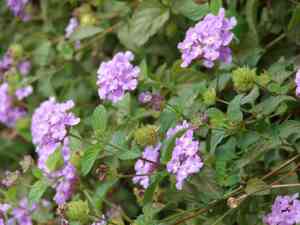
Trailing lantana (Lantana montevidensis)
Also known as: Trailing shrubverbena, Creeping lantana, Purple Lantana , Pole-Cat Geranium
Certainly! When incorporating trailing lantana into your garden or landscape, here are some key points and precautions to keep in mind:
### Key Points:
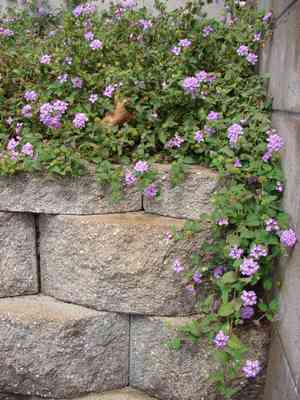
1. **Aesthetic Appeal:** Trailing lantana boasts vibrant clusters of flowers in shades like purple, lavender, white, or yellow, adding a splash of color to any setting.
2. **Wildlife Attraction:** The flowers are highly attractive to pollinators such as bees and butterflies.
3. **Aroma:** The plant emits a strong fragrance, which can be pleasant but might also be overwhelming for some.
### Precautions:
1. **Skin Irritation:** Handling the plant may cause skin irritation, so wearing gloves is recommended.
2. **Toxicity:** Both the leaves and berries are toxic if ingested, posing a risk to children and pets.
3. **Invasive Potential:** In certain regions, trailing lantana can become invasive, so it's important to manage its growth.
4. **Maintenance:** Regular pruning can help control its spread and encourage blooming.
5. **Water Requirements:** Once established, it's drought-tolerant but should not be overwatered to prevent root rot.
By taking these factors into account, you can enjoy the beauty and benefits of trailing lantana while minimizing any potential downsides.
Attributes of Trailing lantana
Images of Trailing lantana
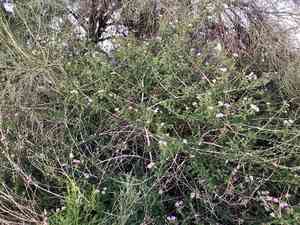
Quickly Identify Trailing lantana
Scientific Classification of Trailing lantana
Planting and Growing of Trailing lantana
 How to Water Trailing lantana?
 What Are the Sunlight Requirements for Trailing lantana?
 What Is the Ideal Temperature Range for Trailing lantana?
 What Soil is Best for Trailing lantana?
 How to Fertilize Trailing lantana?
 How to Prune Trailing lantana?
 How to Propagate Trailing lantana plant?
 How to Repot Trailing lantana plant?
Toxicity of Trailing lantana
Is Trailing lantana toxic to humans?
Trailing lantana possesses several highly undesirable chemical defenses that are classified as pentacyclic triterpenoids. These harmful substances are present in the fruit—particularly in the unripe ones—seeds, stems, and leaves of the plant. Contact with the leaves may result in skin rashes. Ingestion of trailing lantana can severely impact the digestive system, leading to symptoms such as stomach discomfort, vomiting, diarrhea, pupil dilation, and respiratory difficulties. It is crucial to keep children and individuals with cognitive impairments safe from trailing lantana; this can be achieved by fencing it off, placing it out of reach, or completely removing it.
Is Trailing lantana toxic to cat?
Trailing lantana is known to be toxic to cats, posing a significant risk if any part of the plant is ingested. Given the likelihood of cats accidentally consuming the trailing lantana, vigilance is essential, as the hazards are present not only in the leaves but also in the fruits, seeds, stems, and sap. Even mere contact with the sap can be detrimental. If a cat happens to ingest any part of trailing lantana, it might experience symptoms of distress, which should prompt a swift visit to the veterinarian. Quick intervention at a veterinary facility is vital to address any harmful health consequences that may occur following exposure.
Is Trailing lantana toxic to dog?
Trailing lantana is recognized as toxic to dogs. Canines may inadvertently consume various parts of the plant, including its fruits, leaves, seeds, stems, or may encounter its sap or juice. After contact with trailing lantana, dogs can show symptoms such as gastrointestinal disturbances, vomiting, diarrhea, lethargy, and in severe instances, liver injury or neurological effects. It's essential for dog owners to remain alert and prevent their pets from accessing trailing lantana. If there is a suspicion that a dog has ingested trailing lantana and is experiencing poisoning, prompt veterinary attention is vital to address the symptoms and safeguard the pet's health.



