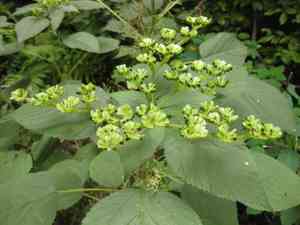
Canadian wood nettle(Laportea canadensis)

Canadian wood nettle (Laportea canadensis)

Also known as: Wood nettle

Canadian wood nettle typically reaches a height of 30 to 150 cm and often grows in small clusters. Despite its stinging hairs, it is edible. The young shoots and leaves can be cooked, similar to spinach, by steaming or boiling. Its flavor is often compared to asparagus.

Attributes of Canadian wood nettle

Lifespan
Perennial
Plant Type
Herb
Plant Height
30 cm to 1.5 m
Spread
30 cm to 45 cm
Leaf Color
Green
Flower Size
2.5 cm
Flower Color
Green Yellow

PlantJoy - Identify plants with a snap

Identify and diagnose plants, get toxicity alerts, and explore safety guides for all types of fungi.

Try for Free

Images of Canadian wood nettle

Canadian wood nettle(Laportea canadensis)

Quickly Identify Canadian wood nettle

1
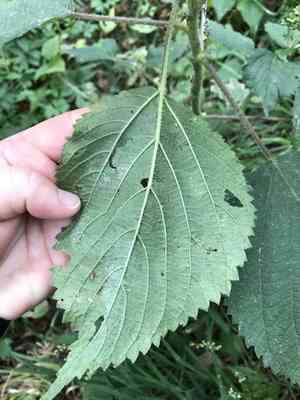
Stem with white stinging hairs for slight roughness.
2
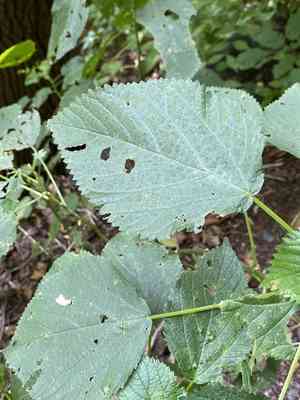
Large, coarse-toothed, ovate leaves with heart-shaped base.
3
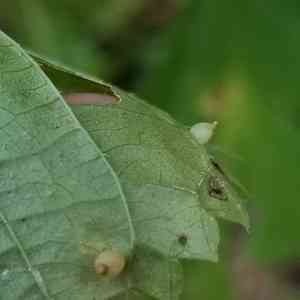
Small, glossy black achene fruits less than 0.1 inches (2.5 mm).
4
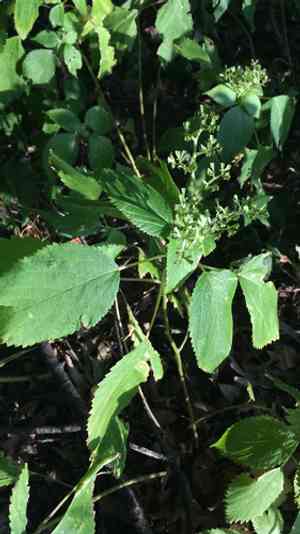
Robust stem reaching 3 to 6 feet (90 to 180 cm) tall.
5
Inconspicuous male and female flowers less than 1/8 inch (3 mm) across.

Scientific Classification of Canadian wood nettle

Phylum
Vascular plants
Class
Dicotyledons
Order
Rosales
Family
Nettle
Genus
Woodnettles
Species
Canadian wood nettle

Planting and Growing of Canadian wood nettle

Care Difficulty
Easy
Watering Schedule
Every 4 days
Sunlight Requirements
Partial sun
Sunshine Duration
4-8 hours
Ideal Temperature
60-75℉
Soil Type
Potting Mix, Peat Mix
Soil pH
6.5-7.5
Fertilizer Type
Balanced
Pruning Season
Spring, Summer
Pruning Area
Branches, Leaves
Pruning Frequency
2 times a year
Repotting Season
Spring
Pot Type
Plastic, Ceramic

water icon How to Water Canadian wood nettle?

Laportea canadensis requires a sufficient but moderate amount of water. Opt to water until the soil is evenly moist, yet not saturated. Imagine a lightly wrung sponge—moist but not dripping. This ensures that the plant has adequate hydration without the risk of root rot.
What are the symptoms of an underwatered Canadian wood nettle?
What should I do if my Canadian wood nettle is not getting enough water?
What are the symptoms of an overwatered Canadian wood nettle?
How to save an overwatered Canadian wood nettle?

sunlight icon What Are the Sunlight Requirements for Canadian wood nettle?

Sunlight Requirements: Partial sun, Full shade
Duration of light: 2 to 4 hours daily
Laportea canadensis ideally grows in partial sun, benefitting from 2 to 4 hours of filtered sunlight. This condition supports healthy growth and prevents the adverse effects of too much or too little light.
What is the ideal light condition for Laportea canadensis?
How can I ensure Laportea canadensis gets its ideal lighting?
What benefits come from ideal lighting for Laportea canadensis?

temperature icon What Is the Ideal Temperature Range for Canadian wood nettle?

Ideal Temperature: 60 ~ 75℉
Laportea canadensis grows best in a temperature range between 60°F and 75°F. These temperatures provide the ideal conditions for photosynthesis and nutrient uptake, ensuring robust growth and healthy foliage.

soil icon What Soil is Best for Canadian wood nettle?

Soil type: Loam, Sandy loam, Peat soil
Soil PH: 6.5 ~ 7.5
Laportea canadensis thrives in consistently moist soil. Ensuring the soil retains moisture helps prevent wilting and promotes healthy, lush growth, particularly during dry spells. This plant demands nutrient-rich soil for optimal development. Incorporating organic matter like compost can significantly enhance soil fertility, thus supporting vigorous vegetative growth. While it prefers moist conditions, good drainage is crucial to prevent waterlogging. Soils with good percolation enable roots to access required oxygen, thus preventing root rot.

fertilize icon How to Fertilize Canadian wood nettle?

Fertilizer type: Balanced
For Laportea canadensis, a modest amount of fertilizer is ideal. Use approximately 1/4 to 1/2 teaspoon of a balanced liquid fertilizer diluted to half strength per gallon of water during the growing season. This ensures the plant receives enough nutrients without causing potential harm.

prune icon How to Prune Canadian wood nettle?

Pruning Time: Spring, Summer
Start by identifying any dead or damaged stems as they are the primary targets for removal. Use sharp, sterilized pruning shears to prevent any infection spread. Trim these sections close to the main stem, ensuring a clean cut to help new growth develop effectively. Laportea canadensis benefits from regular pruning to maintain its shape and encourage denser foliage. When shaping Laportea canadensis, focus on creating a balanced look. Trim branches that grow out of proportion or cross each other. By cutting just above a node, you stimulate new growth in a particular direction, effectively managing the plant's overall structure. Shaping helps in improving airflow through the plant, reducing the likelihood of fungal diseases.

propagate icon How to Propagate Canadian wood nettle plant?

Propagate Time: Early spring, Late spring
1
Gather seeds from mature plants in the autumn. Once collected, store them in a cool, dry place until you're ready to plant in early spring. Ensure the seeds are fully dried to prevent mold.
2
Use a well-draining potting mix to fill seed trays or pots. The soil should be kept moist but not waterlogged. Proper preparation at this stage is crucial for seed germination.
3
Sow seeds on the surface of the soil and cover them lightly. Water gently to avoid displacing the seeds, using a spray bottle to keep the soil moist but not soaked.

repot icon How to Repot Canadian wood nettle plant?

Repotting frequency: Every 2-3 years
1
Laportea canadensis should be repotted when you notice its roots extending through drainage holes or circling excessively within the pot. These are clear indications that the current pot size is restricting its growth. Additionally, if you observe the soil compacting or losing nutrients, it's time to provide fresh, rich soil for optimum plant health.
2
Select a pot that is 1-2 inches larger in diameter than its current pot, ensuring good drainage with adequate holes. A slightly larger pot will encourage healthy root expansion without overwhelming the plant, allowing it to focus energy on producing vibrant foliage rather than struggling to stabilize in an excessively large space.
3
Opt for a rich, well-draining soil mix that simulates its natural woodland habitat. This type of soil retains moisture while preventing waterlogging, which is crucial in avoiding root rot. Incorporating organic matter like compost can enhance soil fertility and support robust growth.

PlantJoy - Identify plants with a snap

Find the best spots for them to optimize their health, simply using your phone.

Try for Free

Toxicity of Canadian wood nettle

Is Canadian wood nettle toxic to humans?

Accidental contact with Canadian wood nettle is the most common cause of poisoning related to this plant. Every part of the plant harbors toxic compounds that may induce mild contact dermatitis. Notably, touching the tiny stinging hairs found on the leaves and stems can result in severe burning, itching, or stinging sensations that typically subside within an hour. These hairs may also embed barbs in the skin, leading to a red and blistering rash that could persist for several days. Canadian wood nettle is predominantly found in open forests across North America.

Identify toxic plants for your safety

Learn which plants are harmful to you and your pets, and make informed choices for a safer home!

Try for Free
WARNING
The judgment on toxicity and danger is for reference only. We DO NOT GUARANTEE any accuracy of such judgment. Therefore, you SHALL NOT rely on such judgment. It is IMPORTANT TO SEEK PROFESSIONAL ADVICE in advance when necessary.
More About Toxic Techniques