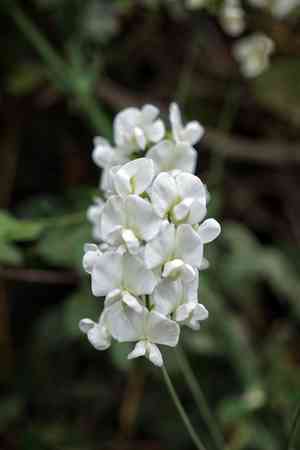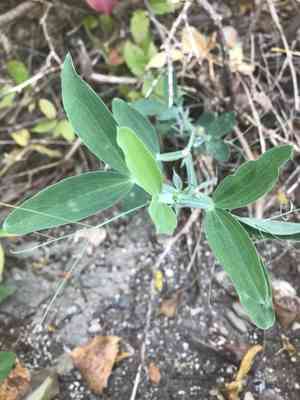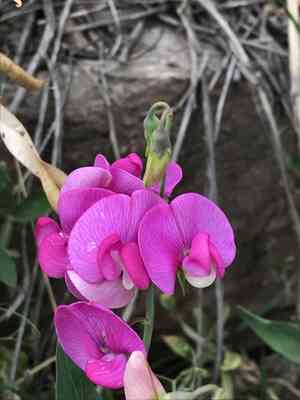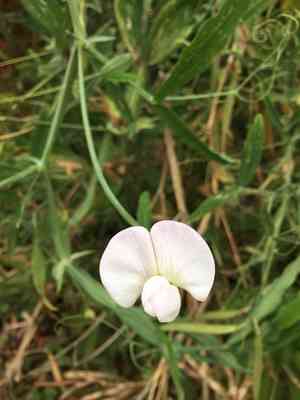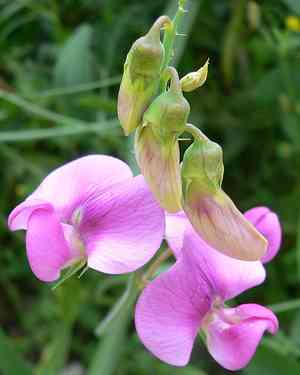
Perennial pea(Lathyrus latifolius)

Perennial pea (Lathyrus latifolius)

Also known as: Everlasting pea

Avoid eating perennial pea (Lathyrus latifolius) as it is toxic and not meant for consumption. Ingesting significant amounts can lead to poisoning. Despite its attractive lavender flowers, it is often considered an invasive weed by gardeners due to its tendency to spread and crowd out other plants.

Attributes of Perennial pea

Lifespan
Perennial
Plant Type
Vine, Herb
Plant Height
3 m
Spread
90 cm to 1.8 m
Leaf Color
Green Blue Gray Silver
Flower Size
2.5 cm
Flower Color
Pink White Purple

PlantJoy - Identify plants with a snap

Identify and diagnose plants, get toxicity alerts, and explore safety guides for all types of fungi.

Try for Free

Images of Perennial pea

Perennial pea(Lathyrus latifolius)

Quickly Identify Perennial pea

1
Ternately compound leaves with a 3-branched tendril at the third leaflet.
2
Pea-like flowers in varied colors, borne in clusters on elongated peduncles.
3
Distinctive legume fruit, flattened pod with fleshy, green seeds inside.
4
Vibrant green stems with leafy wings, either pubescent or glabrous.
5
Alternate, pinnately divided leaves with blue-green color and persistent stipules.

Scientific Classification of Perennial pea

Phylum
Vascular plants
Class
Dicotyledons
Order
Fabales
Family
Legume
Genus
Peavines
Species
Perennial pea

Planting and Growing of Perennial pea

Care Difficulty
Easy
Watering Schedule
Every 3 days
Sunlight Requirements
Full sun
Sunshine Duration
4-10 hours
Ideal Temperature
60-70℉
Soil Type
Potting Mix, Peat Mix
Soil pH
6.5-7.5
Fertilizer Type
Balanced
Pruning Season
Spring, Summer
Pruning Area
Branches, Leaves
Pruning Frequency
2 times a year
Repotting Season
Spring
Pot Type
Plastic, Ceramic

water icon How to Water Perennial pea?

The perennial sweet pea plant, Lathyrus latifolius, requires water generously but not excessively. Watering should aim to keep the soil consistently moist, without being waterlogged. A good measure is approximately 500 milliliters per watering session, ensuring the soil feels damp to the touch, but not soggy. The plant appreciates well-draining soil to prevent root rot.
What are the symptoms of an underwatered Perennial pea?
What should I do if my Perennial pea is not getting enough water?
What are the symptoms of an overwatered Perennial pea?
How to save an overwatered Perennial pea?
More About Watering Techniques

sunlight icon What Are the Sunlight Requirements for Perennial pea?

Sunlight Requirements: Full sun, Partial sun
Duration of light: 6 to 8 hours
Partial sun to full sun is ideal for Lathyrus latifolius, encouraging plentiful blooms and robust growth. Proper lighting enhances the plant’s beauty and attracts pollinators, fundamental for its reproduction cycle.
What is the best location for Lathyrus latifolius?
How can you ensure Lathyrus latifolius receives ideal sunlight?
Why is adequate sunlight crucial for Lathyrus latifolius?
More About Sunlight Requirements Techniques

temperature icon What Is the Ideal Temperature Range for Perennial pea?

Ideal Temperature: 60 ~ 70℉
The ideal temperature range for growing Lathyrus latifolius is between 60°F and 70°F. Within this range, the plant will thrive, showcasing optimal growth and flowering potential. Maintaining these temperatures ensures that the metabolic and physiological processes of the plant function correctly, promoting healthy leaf development and vibrant blooms that are characteristic of a well-maintained perennial sweet pea.

soil icon What Soil is Best for Perennial pea?

Soil type: Loam, Sandy loam
Soil PH: 6.5 ~ 7.5
Lathyrus latifolius thrives best in well-drained soil. Proper drainage prevents waterlogging and root rot, ensuring that the plant remains healthy and vigorous. Well-drained soil also promotes the efficient uptake of nutrients necessary for lush growth. While drainage is crucial, maintaining adequate moisture levels is equally important for Lathyrus latifolius. Moist soil supports constant growth and flowering by ensuring a steady supply of water to the roots, especially during dry periods. Soils rich in organic matter provide the nutrients required for robust growth. Incorporating compost or well-rotted manure improves soil fertility and structure, fostering a healthy environment for this perennial climber. More About Soil

fertilize icon How to Fertilize Perennial pea?

Fertilizer type: Balanced
The perennial sweet pea, known scientifically as Lathyrus latifolius, thrives with moderate fertilization. For liquid fertilizers, use approximately one-third the suggested amount on the label to avoid over-fertilizing. For solid fertilizers, a light scattering around the root zone should be sufficient. Correct application provides the essential nutrients without overwhelming the plant. More About Fertilizing Techniques

prune icon How to Prune Perennial pea?

Pruning Time: Spring, Summer, Autumn, Winter
Begin by assessing your Lathyrus latifolius for any brown or wilted stems or leaves. These should be trimmed first, cutting them back to a point of healthy growth to revitalize the plant. After removing the dead or damaged parts, consider shaping the plant to encourage a tidy and compact form. Gently trim overgrown tendrils and errant stems to maintain its elegant cascading appearance. Consistently remove spent flowers by trimming just above a pair of healthy leaves or buds. This encourages more prolific flowering and prolongs the blooming season, enhancing the plant's visual appeal. More About Pruning Techniques

propagate icon How to Propagate Perennial pea plant?

Propagate Time: Spring, Early Summer
1
Use a well-draining seed mix containing peat and perlite. Fill the seed tray with this mix, ensuring it's lightly moist before planting the seeds.
2
Sow seeds on the surface of the seed mix, then cover them with a thin layer of soil. This mimics their natural covering and helps with successful germination.
3
Select healthy stems and cut sections about 4-6 inches long. Remove leaves from the bottom half to reduce moisture loss and plant them in moist soil to root.
More About Propagating Techniques

repot icon How to Repot Perennial pea plant?

Repotting frequency: Every 2-3 years
1
The signals indicating Lathyrus latifolius needs repotting include roots growing through the drainage holes, slowed growth despite proper care, or the plant drying out faster than usual. Any of these signs in spring or summer is a good time to repot, allowing the plant to establish before the less active autumn and winter periods.
2
Select a pot that is 1-2 inches larger in diameter than the current one to give your Lathyrus latifolius room to grow. Ensure it has adequate drainage holes to avoid waterlogging, which can be detrimental to plant roots. The ideal pot material should offer both stability and breathability, like terracotta or unglazed ceramic.
3
Opt for a well-draining loamy soil mix to provide the perfect balance of moisture retention and airflow, supporting Lathyrus latifolius to thrive. Amend this base with some perlite or coarse sand to enhance drainage, promoting a healthy root system less susceptible to rot.

PlantJoy - Identify plants with a snap

Find the best spots for them to optimize their health, simply using your phone.

Try for Free

Toxicity of Perennial pea

Is Perennial pea toxic to humans?

The seeds and seed pods of the perennial pea pose a toxic risk to humans upon consumption. Poisoning is most likely to result from the unintended ingestion of substantial amounts of these peas. While its toxicity is regarded as relatively low, ingesting significant quantities of perennial pea can prove fatal or result in serious illness. Symptoms of poisoning may encompass paralysis, a reduced and weak pulse, shallow breathing, convulsions, tremors, and seizures.

Is Perennial pea toxic to cat?

The perennial pea exhibits a moderate to high level of toxicity when ingested. Symptoms can manifest after a few days and may include pacing, tremors, and head pressing. In cases of significant consumption, it can lead to fatal outcomes. The mature seeds generally contain the highest toxin concentration, and grazing animals are most likely to ingest dangerous amounts. If you suspect that your cat has consumed this plant, it is advisable to seek advice from your veterinarian.

Is Perennial pea toxic to dog?

Perennial peas are extremely poisonous to dogs, and ingestion usually necessitates urgent veterinary intervention. Every part of this plant harbors a toxin that impacts the muscular and nervous systems. Mild symptoms of perennial pea poisoning can include diarrhea, vomiting, restlessness, and fatigue. In severe cases, it may lead to tremors, seizures, and potentially fatal outcomes—often, these critical situations arise from continuous consumption of the plant over an extended duration.

Identify toxic plants for your safety

Learn which plants are harmful to you and your pets, and make informed choices for a safer home!

Try for Free
WARNING
The judgment on toxicity and danger is for reference only. We DO NOT GUARANTEE any accuracy of such judgment. Therefore, you SHALL NOT rely on such judgment. It is IMPORTANT TO SEEK PROFESSIONAL ADVICE in advance when necessary.
More About Toxic Techniques