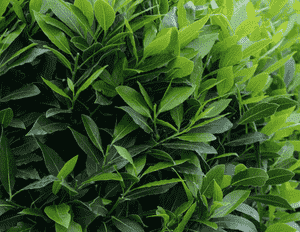
Bay laurel(Laurus nobilis)

Bay laurel (Laurus nobilis)

Also known as: Grecian laurel, Bay tree

Bay leaves, derived from the bay laurel tree, are a popular seasoning in Mediterranean cuisine. These aromatic leaves are often added whole during cooking to infuse dishes with their distinct flavor and are usually taken out before serving. Additionally, dried and ground bay leaves are frequently incorporated into soups and stews as a flavorful seasoning.

Attributes of Bay laurel

Lifespan
Perennial
Plant Type
Shrub, Tree
Plant Height
7 m to 18 m
Spread
3.5 m to 12 m
Leaf Color
Green Yellow
Flower Size
1 cm
Flower Color
Yellow Green White

PlantJoy - Identify plants with a snap

Identify and diagnose plants, get toxicity alerts, and explore safety guides for all types of fungi.

Try for Free

Images of Bay laurel

Bay laurel(Laurus nobilis)

Quickly Identify Bay laurel

1
Simple, ovate leaves with blue-green to gray-green colors, emitting fragrance when crushed.
2
Dioecious plant with inconspicuous yellowish-white to greenish-yellow flowers in leaf axils.
3
Small, egg-shaped berries transitioning from black to dark purple, persisting after falling.
4
Moderate-sized evergreen shrub or small tree, reaching 10-25 feet (3-7.6 meters) in height.
5
Clusters of modest 0.2-inch (5 mm) flowers with subtle fragrance bloom from March to May.

Scientific Classification of Bay laurel

Phylum
Vascular plants
Class
Dicotyledons
Order
Laurels, spicebushes and allies
Family
Laurel
Genus
Laurus
Species
Bay laurel

Planting and Growing of Bay laurel

Care Difficulty
Easy
Watering Schedule
Every 3 days
Sunlight Requirements
Full sun
Sunshine Duration
4-8 hours
Ideal Temperature
60-75℉
Soil Type
Potting Mix, Peat Mix
Soil pH
6.5-7.5
Fertilizer Type
Balanced
Pruning Season
Spring, Summer
Pruning Area
Branches, Leaves
Pruning Frequency
2 times a year
Repotting Season
Spring
Pot Type
Plastic, Ceramic

water icon How to Water Bay laurel?

For Laurus nobilis, the watering amount should be around 500 ml per session. It's important to ensure the soil is evenly moist but not soggy. Water to the point where excess begins to drain out of the bottom of the pot, which prevents root rot and ensures the roots are sufficiently hydrated.
What are the symptoms of an underwatered Bay laurel?
What should I do if my Bay laurel is not getting enough water?
What are the symptoms of an overwatered Bay laurel?
How to save an overwatered Bay laurel?

sunlight icon What Are the Sunlight Requirements for Bay laurel?

Sunlight Requirements: Full sun, Partial sun
Duration of light: Four to six hours daily
Laurus nobilis flourishes under conditions offering 4 to 6 hours of daily sunlight. This balanced exposure promotes robust foliage, enhances aromatic quality of the leaves, and helps maintain the plant’s natural form and vigor.
How much sunlight does Laurus nobilis need?
What if full sun is not achievable?
Is shade ever beneficial for Laurus nobilis?

temperature icon What Is the Ideal Temperature Range for Bay laurel?

Ideal Temperature: 60 ~ 75℉
Laurus nobilis thrives best in temperatures ranging from 60°F to 75°F. This range allows for robust growth, as these conditions mimic the plant’s native Mediterranean environment. During these temperatures, the metabolism of the plant functions optimally, supporting photosynthesis, nutrient uptake, and overall vigor.

soil icon What Soil is Best for Bay laurel?

Soil type: Loam, Sandy loam
Soil PH: 6.5 ~ 7.5
Laurus nobilis thrives best in well-drained soil, which prevents waterlogging that can lead to root rot. By ensuring efficient drainage, the roots receive adequate oxygen, promoting healthy growth and vibrant leaves. Plants benefit greatly from soil abundant in organic matter, as it enhances nutrient availability and soil structure. This provides a balanced environment for Laurus nobilis, ensuring steady growth and resistance against diseases. Maintaining moderate moisture levels is crucial for Laurus nobilis, preventing dehydration while avoiding oversaturation. This balance is key to sustaining the plant's natural oil production, vital for its aromatic leaves.

fertilize icon How to Fertilize Bay laurel?

Fertilizer type: Balanced
For the Laurus nobilis, apply a balanced liquid fertilizer (such as a 10-10-10 formulation) at a quarter strength when using liquid fertilizers. When applying slow-release granular fertilizers, use approximately 30 grams per plant.

prune icon How to Prune Bay laurel?

Pruning Time: Spring, Summer, Autumn, Winter
Laurus nobilis can be pruned in any season, but light pruning throughout spring, summer, autumn, and winter ensures constant development. Use a pair of bypass pruners for creating precise cuts, adjusting the plant's size and volume with each session. Identify branches that are growing out of bounds or those that disrupt the plant's symmetry. Prune these selectively, ensuring cuts are made just above a leaf node to promote regrowth. This strategic approach enhances aesthetics and strengthens the plant's structure. As you prune, perform a health check on the plant. Look for signs of pests, disease, or stress. Removing infested or infected branches early prevents further damage, while also giving you insight into the plant's overall condition and care needs.

propagate icon How to Propagate Bay laurel plant?

Propagate Time: Spring, Late spring, Early autumn
1
Begin by soaking Laurus nobilis seeds in warm water for 24 hours to soften the seed coat. This process enhances germination rates by allowing water to penetrate the seed more efficiently.
2
Choose healthy, semi-hardwood stems and cut about 10-15 cm in length. Remove leaves from the lower half, dip the cut end into rooting hormone, and plant it into a prepared potting mix.
3
Select a low-growing branch and bend it to the ground if possible. Make a small cut on the branch where it touches the soil, bury the wound, and secure it with a U-shaped wire or a small stone until roots develop.

repot icon How to Repot Bay laurel plant?

Repotting frequency: Every 2-3 years
1
Look for visual signs such as roots emerging from the drainage holes, or if the plant seems to dry out faster than usual. These signs indicate that the plant has outgrown its current pot and it's time for a new home. Early spring is perfect as it coincides with the plant's active growth phase, minimizing stress.
2
Select a pot that is just one size larger than the current one to avoid excessive soil moisture retention. Ensure it has sufficient drainage holes, as poor drainage can lead to root rot. Using a pot with a stable base will prevent it from tipping over as the plant grows.
3
Opt for a well-draining potting mix designed for herbs or one with a mix of sand, peat, and perlite. This combination allows for excellent drainage while retaining enough moisture for the plant's needs, promoting healthy root development and growth.

PlantJoy - Identify plants with a snap

Find the best spots for them to optimize their health, simply using your phone.

Try for Free

Toxicity of Bay laurel

Is Bay laurel toxic to humans?

While bay laurel is considered safe for human consumption, it poses a toxicity risk to both dogs and cats.

Is Bay laurel toxic to cat?

Despite being a highly regarded culinary herb for human use, bay laurel (Laurus nobilis) poses toxicity risks to cats because it contains significant amounts of eugenol. If a cat consumes the flowers or leaves, it may experience vomiting approximately thirty minutes afterwards, followed by diarrhea and a potential disinclination to eat. Consequently, these symptoms can lead to dehydration, which is a serious medical issue on its own. It is advisable to consult a veterinarian if any of these symptoms arise.

Is Bay laurel toxic to dog?

Bay laurel poses a mild to moderate level of toxicity if ingested by your dog. Symptoms may manifest as diarrhea, lethargy, vomiting, and depressive behavior. If consumed in large quantities, it has the potential to cause blockages in the gastrointestinal tract. Visiting a veterinarian is highly recommended.

Identify toxic plants for your safety

Learn which plants are harmful to you and your pets, and make informed choices for a safer home!

Try for Free
WARNING
The judgment on toxicity and danger is for reference only. We DO NOT GUARANTEE any accuracy of such judgment. Therefore, you SHALL NOT rely on such judgment. It is IMPORTANT TO SEEK PROFESSIONAL ADVICE in advance when necessary.

