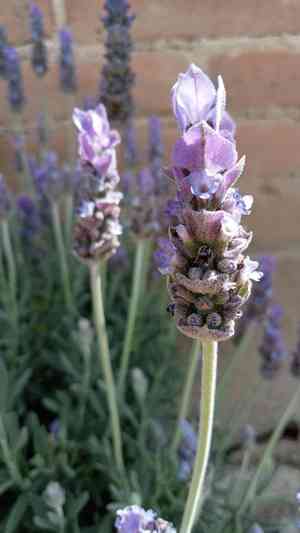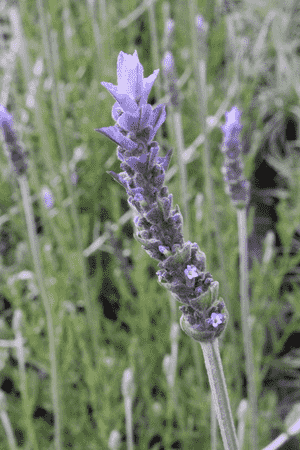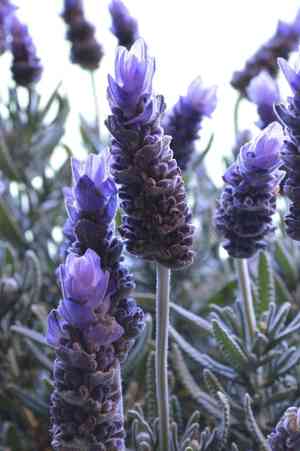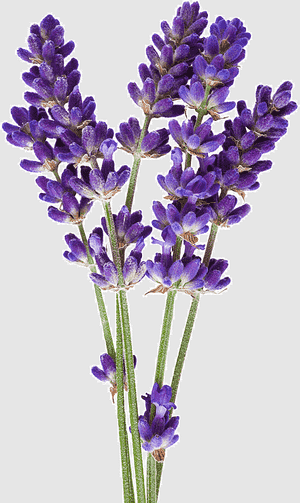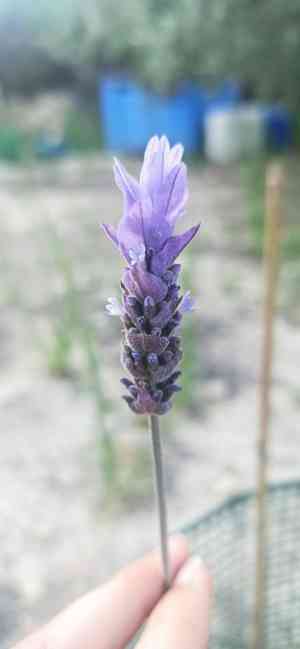
French lavender(Lavandula dentata)

French lavender (Lavandula dentata)

Also known as: Toothed lavender

French lavender (Lavandula dentata), also referred to as fringed lavender, is a tall, flowering, and fragrant plant. French lavender is native to the Mediterranean. The distinctive purple flowers of this species emit a strong, recognizable fragrance. It is often grown as an ornamental plant and is used in the production of essential oils, beauty products, candles, and household cleaning products.

Attributes of French lavender

Lifespan
Perennial
Plant Type
Herb, Shrub
Plant Height
60 cm to 1 m
Spread
1 m
Leaf Color
Green Gray
Flower Size
1 inch (2.5 cm)
Flower Color
Purple Blue Mauve

PlantJoy - Identify plants with a snap

Identify and diagnose plants, get toxicity alerts, and explore safety guides for all types of fungi.

Try for Free

Images of French lavender

French lavender(Lavandula dentata)

Quickly Identify French lavender

1
Robust herbaceous perennial reaching 3 feet (91 cm) tall and 5 feet (152 cm) wide.
2
Distinctive gray-green leaves with pronounced toothed margins.
3
Delicate pale lavender-blue blooms on short spikes, visible most of the year.
4
Thrives in full sun, adaptable to low-water conditions, and cold-hardy to 20°F (-6°C).
5
Not recommended for culinary use despite its appealing flowers.

Scientific Classification of French lavender

Phylum
Vascular plants
Class
Dicotyledons
Order
Lamiales
Family
Mint
Genus
Lavender
Species
French lavender

Planting and Growing of French lavender

Care Difficulty
Easy
Watering Schedule
Every 3 days
Sunlight Requirements
Full sun
Sunshine Duration
6-10 hours
Ideal Temperature
65-75℉
Soil Type
Potting Mix, Peat Mix
Soil pH
6.5-7.5
Fertilizer Type
Balanced
Pruning Season
Spring, Summer
Pruning Area
Branches, Leaves
Pruning Frequency
2 times a year
Repotting Season
Spring
Pot Type
Plastic, Ceramic

water icon How to Water French lavender?

Lavandula dentata prefers a well-drained soil, so it's crucial to water them deeply but infrequently. Ideally, water the plant with about 200 mL of water per session, ensuring the moisture penetrates at least several inches into the soil while remaining cautious of overwatering.
What are the symptoms of an underwatered French lavender?
What should I do if my French lavender is not getting enough water?
What are the symptoms of an overwatered French lavender?
How to save an overwatered French lavender?

sunlight icon What Are the Sunlight Requirements for French lavender?

Sunlight Requirements: Full sun, Partial sun
Duration of light: 6 to 8 hours
Lavandula dentata ideally requires full to partial sunlight, translating to 6-8 hours of sun daily. Ideal light conditions ensure steady growth, profuse blooming, and robust foliage.
Optimal Sunlight Duration
Shade Management
Sunlight Protection

temperature icon What Is the Ideal Temperature Range for French lavender?

Ideal Temperature: 65 ~ 75℉
Lavandula dentata thrives best in a warm climate. The ideal temperature range for optimal growth is between 65°F and 75°F. At these temperatures, the plant can carry out its physiological processes efficiently, leading to robust growth and vibrant blooms. It mimics the mild climate of the Mediterranean, which is native to this species.

soil icon What Soil is Best for French lavender?

Soil type: Sandy soil, Loam, Calcareous soil
Soil PH: 6.5 ~ 7.5
Lavandula dentata thrives in well-drained soil, which prevents root rot by allowing excess water to escape easily. This drainage ensures that roots have access to air, promoting healthy growth and boosting plant vitality. This plant prefers nutrient-light soil, which mimics its native Mediterranean habitat. Excessive nutrients can lead to leggy growth with fewer blooms, so a balanced nutrient profile is essential for optimal flowering. Lavandula dentata shows a preference for slightly alkaline soils. Such conditions help in nutrient availability, especially calcium and magnesium, which are crucial for robust development and lovely lavender floral displays.

fertilize icon How to Fertilize French lavender?

Fertilizer type: Balanced
For Lavandula dentata, it is important to provide a balanced amount of nutrients without overloading the soil. Generally, you should use a liquid fertilizer at one-quarter to half the recommended strength for typical houseplants. This ensures the plant receives necessary nutrients without overwhelming it, promoting healthy growth and vibrant blooms.

prune icon How to Prune French lavender?

Pruning Time: Spring, Summer, Autumn
Start by identifying and removing any dead or damaged stems. This will help direct the plant's energy towards healthier growth and reduce the risk of pests and diseases. Trim the plant into a rounded shape, removing any spindly or overly long stems. This will help maintain the desired aesthetic while encouraging a healthier growth pattern. Pinch off the tips of the stems to encourage bushier growth. This technique will result in a fuller appearance and more robust flowering.

propagate icon How to Propagate French lavender plant?

Propagate Time: Spring, Late spring, Early spring
1
Select a mature, healthy plant to take cuttings from. Make sure the plant is disease-free and displays vigorous growth to increase propagation success.
2
Using clean pruning shears, cut 4-6 inch segments from healthy, non-flowering stems. Aim to cut just below a leaf node, where roots are more likely to develop.
3
Dip the cut end of the cuttings into rooting hormone. Plant them in a well-draining potting mix, ensuring they remain upright and stable to support root development.

repot icon How to Repot French lavender plant?

Repotting frequency: Every 2-3 years
1
Lavandula dentata needs repotting when roots emerge from drainage holes, growth slows, or soil compacts. Spring or early summer, during active growth, are ideal times to repot.
2
Select a pot 1-2 inches larger in diameter than the current one, with excellent drainage holes. This allows room for growth and prevents waterlogging, promoting healthy root systems and vibrant foliage.
3
Opt for a well-draining potting mix enriched with sand or perlite. Such soil mimics its natural habitat, preventing root rot and ensuring nutrients are accessible for lush growth and fragrant blooms.

PlantJoy - Identify plants with a snap

Find the best spots for them to optimize their health, simply using your phone.

Try for Free

Toxicity of French lavender

Is French lavender toxic to cat?

French lavender presents a significant health hazard for cats. When felines consume various parts of the plant, including its flowers or leaves, whether deliberately or accidentally, they may suffer from symptoms of discomfort, illness, or pain. While the exact toxic components of French lavender are not clearly identified, the overall toxicity of the plant calls for careful attention. Cat owners must keep a close watch on their pets and inhibit any contact with French lavender. If a cat shows indications of poisoning, it is crucial to promptly obtain veterinary help to safeguard the animal's health and recovery.

Is French lavender toxic to dog?

French lavender is deemed toxic to dogs. Canines might inadvertently consume various parts of the plant, including flowers and leaves, both of which are recognized as poisonous. Should a dog ingest any portion of French lavender, it may display symptoms associated with poisoning. Such symptoms can encompass vomiting, diarrhea, lethargy, or more serious indications, contingent upon the quantity ingested and the individual dog's sensitivity levels. It is vital for dog owners to vigilantly observe their pets and prevent access to French lavender. Should a dog ingest this plant, prompt veterinary intervention is essential to address any potential health issues.

Identify toxic plants for your safety

Learn which plants are harmful to you and your pets, and make informed choices for a safer home!

Try for Free
WARNING
The judgment on toxicity and danger is for reference only. We DO NOT GUARANTEE any accuracy of such judgment. Therefore, you SHALL NOT rely on such judgment. It is IMPORTANT TO SEEK PROFESSIONAL ADVICE in advance when necessary.