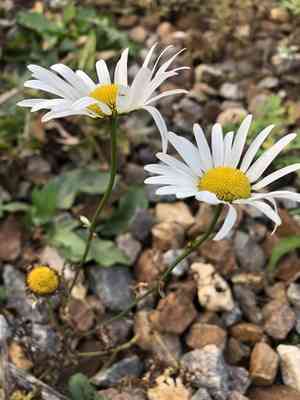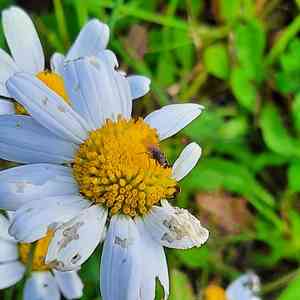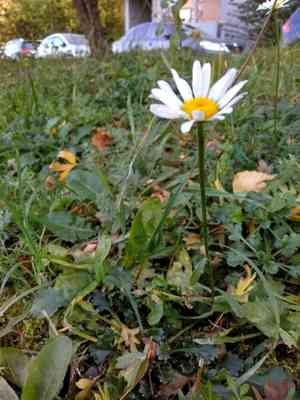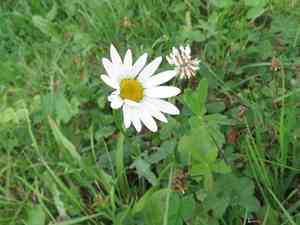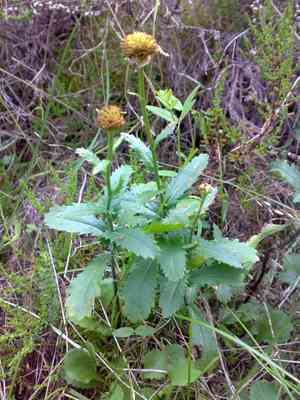
Oxeye daisy(Leucanthemum vulgare)

Oxeye daisy (Leucanthemum vulgare)

Also known as: Moon daisy, Marguerite

The oxeye daisy, or *Leucanthemum vulgare*, is a versatile perennial herb originating from Eurasia. It is often grown as an ornamental plant but can become a prevalent weed in lawns and agricultural settings. Additionally, it is regarded as an invasive species in various regions around the globe.

Attributes of Oxeye daisy

Lifespan
Perennial
Plant Type
Herb
Plant Height
15 cm to 80 cm
Spread
30 cm to 60 cm
Leaf Color
Green
Flower Size
2 cm to 6 cm
Flower Color
White Yellow

PlantJoy - Identify plants with a snap

Identify and diagnose plants, get toxicity alerts, and explore safety guides for all types of fungi.

Try for Free

Images of Oxeye daisy

Oxeye daisy(Leucanthemum vulgare)

Quickly Identify Oxeye daisy

1
Dense mat of lush green foliage
2
Bright white daisy-like flowers with yellow centers
3
Sturdy stems reaching 2 feet (60 cm) in height
4
Oblong, slightly toothed leaves providing textural backdrop
5
Capacity for spreading via rhizomes

Scientific Classification of Oxeye daisy

Phylum
Vascular plants
Class
Dicotyledons
Order
Asterales
Family
Daisy
Genus
Daisies
Species
Oxeye daisy

Planting and Growing of Oxeye daisy

Care Difficulty
Easy
Watering Schedule
Every 3 days
Sunlight Requirements
Full sun
Sunshine Duration
6-8 hours
Ideal Temperature
60-75℉
Soil Type
Potting Mix, Peat Mix
Soil pH
6.5-7.5
Fertilizer Type
Balanced
Pruning Season
Spring, Summer
Pruning Area
Branches, Leaves
Pruning Frequency
2 times a year
Repotting Season
Spring
Pot Type
Plastic, Ceramic

water icon How to Water Oxeye daisy?

Leucanthemum vulgare, commonly known as the ox-eye daisy, requires moderate watering. The key is to aim for soil that is consistently moist but never waterlogged. For optimal growth, water deeply so that around 500ml saturates the soil thoroughly, allowing moisture to reach the roots.
What are the symptoms of an underwatered Oxeye daisy?
What should I do if my Oxeye daisy is not getting enough water?
What are the symptoms of an overwatered Oxeye daisy?
How to save an overwatered Oxeye daisy?
More About Watering Techniques

sunlight icon What Are the Sunlight Requirements for Oxeye daisy?

Sunlight Requirements: Full sun, Partial sun
Duration of light: 6-8 hours
Leucanthemum vulgare thrives best in full sun to partial sun environments, ideally receiving 6 to 8 hours of sunlight daily. This consistent exposure boosts its photosynthetic rates, resulting in healthy growth and prolific blooming throughout its growing season.
What are ideal lighting conditions for Leucanthemum vulgare?
What solutions can help in providing ideal light for Leucanthemum vulgare?
What benefits does ideal light provide to Leucanthemum vulgare?
More About Sunlight Requirements Techniques

temperature icon What Is the Ideal Temperature Range for Oxeye daisy?

Ideal Temperature: 60 ~ 75℉
Leucanthemum vulgare, commonly known as the oxeye daisy, thrives best in temperatures ranging from 60°F to 75°F. This range ensures optimal photosynthetic activity and nutrient absorption. Within this range, the plant can efficiently conduct vital biological processes that promote healthy growth and vibrant blooms.

soil icon What Soil is Best for Oxeye daisy?

Soil type: Loam, Sandy loam
Soil PH: 6.5 ~ 7.5
Leucanthemum vulgare thrives in well-drained soil as it allows for proper air exchange and prevents root rot. Ensuring the soil has good drainage will promote healthier root growth and more vibrant blooms. This plant does not require overly rich soil; moderate nutrient content suffices. Over-fertilization can lead to excessive foliage growth at the expense of flowers. Balanced soil fertility supports optimal bloom production. Soil should maintain some moisture without becoming waterlogged. Moisture retention supports steady plant growth and vigorous flowering, ensuring the plant doesn't suffer from drought stress. More About Soil

fertilize icon How to Fertilize Oxeye daisy?

Fertilizer type: Balanced
For Leucanthemum vulgare, the ideal fertilization involves using a balanced 10-10-10 fertilizer. If you're using a liquid fertilizer, dilute it to half the recommended strength to avoid over-fertilization. For slow-release granules, sprinkle lightly around the base of the plant, ensuring even coverage without clumping. More About Fertilizing Techniques

prune icon How to Prune Oxeye daisy?

Pruning Time: Spring, Summer, Autumn
Regularly remove spent flowers by cutting just above the next set of leaves, keeping your flowers blooming throughout the season and enhancing the plant's appearance. In late summer or early fall, cut the plant back to about one-third of its size to prepare it for winter, promoting new and vigorous growth in the next spring. More About Pruning Techniques

propagate icon How to Propagate Oxeye daisy plant?

Propagate Time: Early spring, Late spring, Early autumn
1
Collect Leucanthemum vulgare seeds from mature flowers in late summer. Clean and dry the seeds before storing them in a cool, dry place until early spring when you’re ready to plant.
2
In early autumn, dig up an established plant and gently divide the root ball into sections using your hands or a knife. Ensure each section has a healthy root system.
3
During late spring, take cuttings from healthy stems. Trim the stems to include at least two sets of leaves and plant them in moist soil to encourage root development.
More About Propagating Techniques

repot icon How to Repot Oxeye daisy plant?

Repotting frequency: Every 2-3 years
1
Repot Leucanthemum vulgare when you notice that the roots start to grow out of the drainage holes or when the plant seems to have outgrown its current container. Spring and autumn are ideal times, as the plant is either emerging from dormancy or entering a less active phase.
2
Select a pot that is 1-2 inches larger in diameter than the current one to allow room for growth. Ensure it has ample drainage holes to prevent waterlogging and root rot, fostering a healthier plant environment.
3
Pick a well-draining potting mix that offers good aeration and allows excess water to escape easily. Such soil encourages robust root development and minimizes the risk of detrimental fungal growth.

PlantJoy - Identify plants with a snap

Find the best spots for them to optimize their health, simply using your phone.

Try for Free

Toxicity of Oxeye daisy

Is Oxeye daisy toxic to cat?

The oxeye daisy has been identified as harmful to felines. Cats often consume parts of this plant accidentally, resulting in adverse health effects. The toxic components include both the flowers and foliage of the plant. When ingested, a cat may display a range of symptoms indicating physical distress in response to the toxicity. Given that such issues can worsen rapidly, it is crucial to seek immediate veterinary attention for assessment and care if there is any concern regarding potential poisoning from the oxeye daisy.

Is Oxeye daisy toxic to dog?

The oxeye daisy is recognized as toxic to dogs. Canines might unintentionally consume various parts of the plant, including flowers and leaves, which can result in poisoning. If a dog ingests oxeye daisy, it may show concerning symptoms that require immediate attention. These symptoms may encompass gastrointestinal distress, excessive drooling, nausea, diarrhea, or more severe reactions depending on the quantity consumed and the dog's individual sensitivity. It is essential for dog owners to keep a vigilant eye on their pets and restrict their access to oxeye daisy. When ingestion is suspected, seeking swift veterinary assistance is vital to ensure the best possible outcome for the affected dog.

Identify toxic plants for your safety

Learn which plants are harmful to you and your pets, and make informed choices for a safer home!

Try for Free
WARNING
The judgment on toxicity and danger is for reference only. We DO NOT GUARANTEE any accuracy of such judgment. Therefore, you SHALL NOT rely on such judgment. It is IMPORTANT TO SEEK PROFESSIONAL ADVICE in advance when necessary.
More About Toxic Techniques