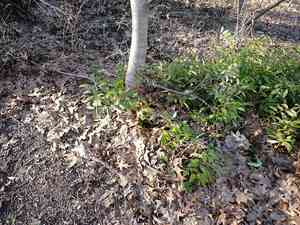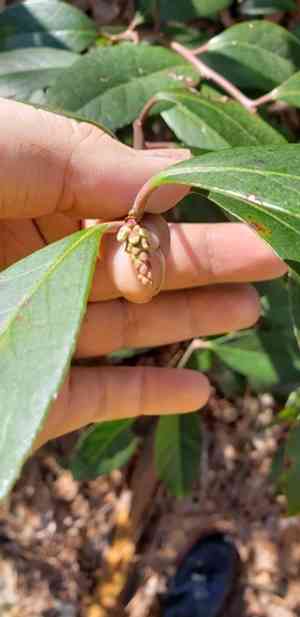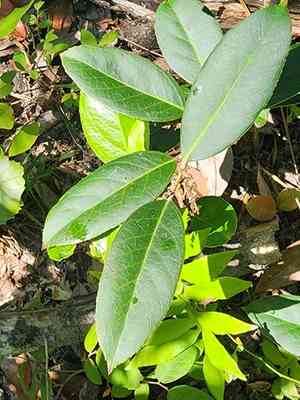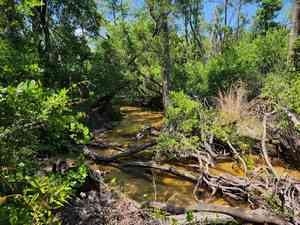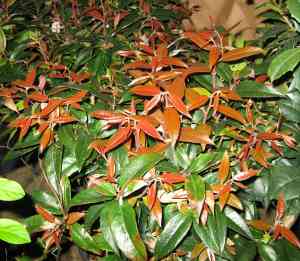
Coastal doghobble(Leucothoe axillaris)

Coastal doghobble (Leucothoe axillaris)

Also known as: Coast leucothoe, Doghobble, Maleberry, Swamp deciduous dog-laurel

The name "coastal doghobble" likely stems from the plant's tendency to entangle hunting dogs with its dense, tangled branches. The Latin name "Leucothoe axillaris" can be broken down into "leukos," meaning white, and "axillaris," referring to the axils (akin to armpits) of the plant where the white, bell-shaped flowers emerge. This evergreen shrub is known for its distinctive drooping blossoms that grow from these axillary positions.

Attributes of Coastal doghobble

Lifespan
Perennial
Plant Type
Shrub
Plant Height
2 m
Spread
1.5 m to 1.8 m
Leaf Color
Green Yellow Gold
Flower Size
1.5 mm to 2 mm
Flower Color
White

PlantJoy - Identify plants with a snap

Identify and diagnose plants, get toxicity alerts, and explore safety guides for all types of fungi.

Try for Free

Images of Coastal doghobble

Coastal doghobble(Leucothoe axillaris)

Quickly Identify Coastal doghobble

1
Lush evergreen shrub with glossy, year-round green leaves.
2
Clusters of fragrant white bell-shaped flowers from March to May.
3
Distinctive 5-lobed globular capsules as fruits in late summer to fall.
4
Leaves are leathery, alternate, and dark green with bronze winter hue.
5
New leaf growth is bronze-red, twisted, and curved for visual interest.

Scientific Classification of Coastal doghobble

Phylum
Vascular plants
Class
Dicotyledons
Order
Ericales
Family
Heath
Genus
Doghobbles
Species
Coastal doghobble

Planting and Growing of Coastal doghobble

Care Difficulty
Easy
Watering Schedule
Every 3 days
Sunlight Requirements
Partial sun
Sunshine Duration
4-8 hours
Ideal Temperature
60-75℉
Soil Type
Potting Mix, Peat Mix
Soil pH
4.5-6.5
Fertilizer Type
Balanced
Pruning Season
Spring, Summer
Pruning Area
Branches, Leaves
Pruning Frequency
2 times a year
Repotting Season
Spring
Pot Type
Plastic, Terracotta

water icon How to Water Coastal doghobble?

Leucothoe axillaris prefers consistent moisture but not soggy soil. Aim to keep the soil lightly moist to the touch. Water until the top soil layer is evenly damp but avoid having water pool at the bottom of the pot. This typically translates to about 250 ml of water per session, depending on the soil and container size, ensuring it penetrates deeply without oversaturating.
What are the symptoms of an underwatered Coastal doghobble?
What should I do if my Coastal doghobble is not getting enough water?
What are the symptoms of an overwatered Coastal doghobble?
How to save an overwatered Coastal doghobble?

sunlight icon What Are the Sunlight Requirements for Coastal doghobble?

Sunlight Requirements: Partial sun, Full shade
Duration of light: 2 to 4 hours
Leucothoe axillaris prefers partial sun to full shade, benefiting from an ideal light range of 2 to 4 hours of sunlight per day. This keeps the plant healthy, promoting rich foliage and strong growth while preventing stress from too much sun.
What is the optimal light condition for Leucothoe axillaris?
How can you achieve the ideal lighting for Leucothoe axillaris?
What are the benefits of ensuring optimal sunlight for Leucothoe axillaris?

temperature icon What Is the Ideal Temperature Range for Coastal doghobble?

Ideal Temperature: 60 ~ 75℉
The optimal temperature range for growing Leucothoe axillaris is between 60°F and 75°F. This range supports healthy growth, encouraging vibrant foliage and optimal physiological functions. Temperatures within this range allow for balanced moisture levels, preventing dehydration or moisture stress.

soil icon What Soil is Best for Coastal doghobble?

Soil type: Sandy loam, Acidic soil
Soil PH: 4.5 ~ 6.5
Leucothoe axillaris thrives best in soil that can retain moisture well without becoming waterlogged. This ensures that the roots receive a steady supply of water, promoting healthy growth and vibrant foliage. While moisture retention is important, the soil should also have good drainage to prevent root rot. This balance prevents stagnation and allows air to circulate around the roots, ensuring optimal growth conditions. A soil rich in organic matter provides essential nutrients that support the plant's overall health. This component boosts soil fertility, enhances structure, and promotes a thriving ecosystem in the root zone.

fertilize icon How to Fertilize Coastal doghobble?

Fertilizer type: Balanced
For Leucothoe axillaris, it's crucial to follow a balanced fertilizer regimen with careful attention to quantity. During the growing season, use a diluted liquid fertilizer mixed at half the recommended concentration to avoid overfeeding.

prune icon How to Prune Coastal doghobble?

Pruning Time: Spring, Summer
First, inspect the plant for any dead, diseased, or crossing branches, as these should be removed first. Identify areas where the plant is growing unevenly or too densely. Position your shears just above a leaf node or outward-facing bud, and make a clean cut at a slight angle. This method promotes new growth in the desired direction. Once the problematic branches are removed, step back and assess the shape of the plant. Trim selectively to create a balanced, natural appearance. After pruning, gather all cut branches and leaves. Clean up any debris around the plant to prevent diseases and pests from having a place to hide.

propagate icon How to Propagate Coastal doghobble plant?

Propagate Time: Spring, Late spring, Early spring
1
Use sharp pruners to cut 4-6 inch sections from a healthy parent plant. Ensure each cutting has at least two leaf nodes and remove any flowers or flower buds to direct energy towards root development.
2
Dip the cut end of the cuttings into rooting hormone to enhance root development. Be sure to shake off any excess powder to prevent rotting.
3
Insert the treated cuttings into a pot filled with moistened, well-draining potting mix. Ensure at least one leaf node is buried to allow rooting.

repot icon How to Repot Coastal doghobble plant?

Repotting frequency: Every 2-3 years
1
Leucothoe axillaris shows the need for repotting when its roots start to grow out of the drainage holes or if the plant's growth slows significantly. It's best done in spring or autumn to minimize plant stress and take advantage of the growing seasons.
2
Select a pot that is one size larger than the current one, ensuring it has drainage holes to prevent waterlogging. This allows for healthy root expansion and provides adequate space for the plant to grow, reducing the risk of root-bound conditions.
3
Opt for an acidic potting mix with good drainage, ideally containing peat and pine bark to maintain acidity and prevent root rot. This type of soil closely mimics the plant's natural environment, promoting healthier growth and vibrant foliage.

PlantJoy - Identify plants with a snap

Find the best spots for them to optimize their health, simply using your phone.

Try for Free

Toxicity of Coastal doghobble

Is Coastal doghobble toxic to humans?

Coastal doghobble poses significant risks to humans and can lead to long-lasting harm if consumed. Its leaves and flowers are laced with andromedotoxin, a highly toxic compound that can severely irritate the digestive system and mucus membranes, and in higher doses, it functions as a neurotoxin. Signs of poisoning may include excessive drooling, profuse sweating, tingling in the mouth, headaches, nasal discharge, lethargy, abdominal pain, nausea, vomiting, diarrhea, weakness, and in severe cases, paralysis if ingested in substantial quantities.

Is Coastal doghobble toxic to cat?

Coastal doghobble presents a significant danger to the health of cats, as every part of this plant can be toxic if consumed. Ingesting any portion of the plant may lead to acute or delayed symptoms of distress in felines. Pet owners should remain alert for any changes in behavior or signs of pain or illness in their cats, which could indicate the ingestion of coastal doghobble. It is essential for cat guardians to understand the substantial risks associated with coastal doghobble and to obtain prompt veterinary assistance if poisoning is suspected.

Is Coastal doghobble toxic to dog?

Coastal doghobble presents a significant toxicity threat to dogs. Ingestion of any portion of this plant can result in poisoning. Dogs might be drawn to and nibble on the leaves, stems, or other components of coastal doghobble, all of which are toxic. Symptoms of toxicity in dogs can manifest as vomiting, diarrhea, excessive salivation, weakness, seizures, and in severe cases, coma. Given the elevated toxicity associated with coastal doghobble, it is essential for dog owners to keep their pets away from this plant. If a dog is believed to have consumed any part of coastal doghobble, seeking immediate veterinary assistance is vital for the animal's health and safety.

Identify toxic plants for your safety

Learn which plants are harmful to you and your pets, and make informed choices for a safer home!

Try for Free
WARNING
The judgment on toxicity and danger is for reference only. We DO NOT GUARANTEE any accuracy of such judgment. Therefore, you SHALL NOT rely on such judgment. It is IMPORTANT TO SEEK PROFESSIONAL ADVICE in advance when necessary.