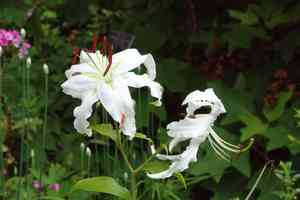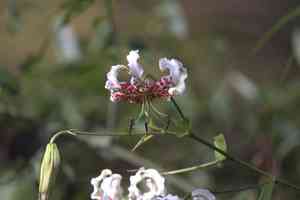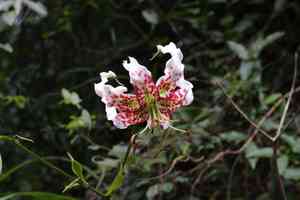
Showy lily(Lilium speciosum)

Showy lily (Lilium speciosum)

Also known as: Brilliant lily

The **Lilium speciosum**, also known as the showy lily, is a plant native to southern Japan and China. It is notable for its striking blooms during the summer to fall seasons and is often cultivated in gardens for its beautiful appearance.

Attributes of Showy lily

Lifespan
Perennial
Plant Type
Herb
Plant Height
1.8 m
Spread
30 cm
Leaf Color
Green Blue
Flower Size
13 cm to 15 cm
Flower Color
White Pink Purple

PlantJoy - Identify plants with a snap

Identify and diagnose plants, get toxicity alerts, and explore safety guides for all types of fungi.

Try for Free

Images of Showy lily

Showy lily(Lilium speciosum)

Quickly Identify Showy lily

1
Large trumpet-shaped flowers up to 6 inches (15 cm) wide.
2
Deep pink to red petals with white border and brownish-purple spots.
3
Prominent stamens with orange anthers at flower center.
4
Stature reaching 3 to 4 feet (90 to 120 cm) tall.
5
Lance-shaped leaves arranged in whorls or spirals along robust stem.

Scientific Classification of Showy lily

Phylum
Vascular plants
Class
Monocotyledons
Order
Lilies, supplejacks and allies
Family
Lily
Genus
Lilies
Species
Showy lily

Planting and Growing of Showy lily

Care Difficulty
Moderate
Watering Schedule
Every 8 days
Sunlight Requirements
Partial sun
Sunshine Duration
6-10 hours
Ideal Temperature
60-75℉
Soil Type
Potting Mix, Peat Mix
Soil pH
6-7.5
Fertilizer Type
Balanced
Pruning Season
Spring, Summer
Pruning Area
Branches, Leaves
Pruning Frequency
2 times a year
Repotting Season
Spring
Pot Type
Plastic, Ceramic

water icon How to Water Showy lily?

For Lilium speciosum, the watering amount should be such that the soil remains consistently moist, though not waterlogged. The general rule of thumb is to apply around 250 milliliters per session, ensuring that the water reaches the roots without pooling excessively. This promotes healthy root growth and prevents issues related to root rot or dehydration.
What are the symptoms of an underwatered Showy lily?
What should I do if my Showy lily is not getting enough water?
What are the symptoms of an overwatered Showy lily?
How to save an overwatered Showy lily?
More About Watering Techniques

sunlight icon What Are the Sunlight Requirements for Showy lily?

Sunlight Requirements: Partial sun
Duration of light: 3 to 4 hours
Partial sunlight is ideal for Lilium speciosum. This moderate light exposure ensures lush growth and flower development without the risks associated with too much or too little light.
What is the ideal amount of light for Lilium speciosum?
How can you achieve ideal lighting conditions for Lilium speciosum?
What benefits does Lilium speciosum gain from ideal lighting?
More About Sunlight Requirements Techniques

temperature icon What Is the Ideal Temperature Range for Showy lily?

Ideal Temperature: 60 ~ 75℉
The ideal temperature range for growing Lilium speciosum is between 60°F and 75°F. This range provides an optimal environment for photosynthesis and healthy growth, allowing the plant to maintain vibrant colors and strong structural integrity. During this temperature range, the plant's enzymatic functions and metabolic activities perform at their peak, facilitating robust flowering and development.

soil icon What Soil is Best for Showy lily?

Soil type: Loam, Sandy loam, Acidic soil
Soil PH: 6 ~ 7.5
Lilium speciosum thrives in well-drained soils, ensuring the roots do not sit in waterlogged conditions, which can lead to root rot. Proper drainage allows the roots to breathe and absorb nutrients efficiently, promoting healthy growth and vibrant blooms. This plant flourishes in nutrient-rich soils that provide essential minerals and nutrients for robust growth. Adding organic material or compost enhances soil fertility, leading to lush foliage and increased flowering. Maintaining consistently moist soil without it being overly soggy is crucial for the optimal health of Lilium speciosum. This balance prevents dehydration while avoiding the risk of fungal diseases caused by excessive moisture. More About Soil

fertilize icon How to Fertilize Showy lily?

Fertilizer type: Balanced
For Lilium speciosum, use a balanced fertilizer such as a 10-10-10 formulation. Liquid fertilizer should be applied at a concentration of half the recommended rate on the label to prevent over-fertilization. During the growth phase, around 1 tablespoon of the fertilizer diluted in a gallon of water is often sufficient. More About Fertilizing Techniques

prune icon How to Prune Showy lily?

Pruning Time: Spring, Summer
Once the blooming period is over and the foliage begins to yellow, it's time to prune. Use sharp, clean shears to cut the stems down to a height of about 6-12 inches. This trimming promotes better air circulation and prepares the plant for future growth. Through the growing season, routinely check for dead or damaged leaves. Carefully remove these by hand or using sterile pruning scissors, as this helps prevent the spread of any diseases and maintains plant health. More About Pruning Techniques

propagate icon How to Propagate Showy lily plant?

Propagate Time: Late spring, Early summer
1
Collect seeds from mature Lilium speciosum plants. Allow seed pods to dry on the plant and rupture naturally. Carefully collect and clean seeds to avoid fungal infections during storage.
2
Prepare well-draining soil for both seed and division propagation methods. For seeds, use a light and airy mix conducive to germination. For division, amend the soil with organic compost to promote healthy growth.
3
Sow seeds thinly onto a seed tray or pot filled with the prepared soil mix. Water evenly without saturating the soil. For divisions, plant the bulbs at a depth of 4 to 6 inches and water thoroughly.
More About Propagating Techniques

repot icon How to Repot Showy lily plant?

Repotting frequency: Every 2-3 years
1
Lilium speciosum should be repotted when you notice that the roots are beginning to crowd the container. This typically happens every 2 to 3 years, but if you see roots poking out from the bottom, it's a clear sign the plant needs more space. Spring and autumn are ideal due to mild temperatures and active root growth.
2
Select a pot that is 2 inches larger in diameter than the current one, with adequate drainage holes. A well-sized pot ensures room for root expansion, avoids waterlogging, and promotes healthier growth. Clay pots are ideal as they allow for better air circulation compared to plastic ones.
3
Opt for a well-draining loamy soil mix rich in organic matter. This type of soil maintains moisture without becoming waterlogged, providing essential nutrients while allowing excess water to drain away efficiently, preventing root rot.

PlantJoy - Identify plants with a snap

Find the best spots for them to optimize their health, simply using your phone.

Try for Free

Toxicity of Showy lily

Is Showy lily toxic to cat?

The showy lily is recognized as a toxic species for felines. Poisoning incidents usually occur when cats inadvertently ingest the plant, particularly the bulb, which contains the toxic elements. Contact with showy lily can cause various signs of physical distress in cats. It is essential for cat owners to observe their pets for negative reactions following consumption and to pursue prompt veterinary assistance, as such exposure may have grave health consequences. Swift and suitable treatment is critical to safeguarding the health of affected cats.

Is Showy lily toxic to dog?

The showy lily is recognized as toxic to dogs. Canines might unintentionally consume various parts of this plant, especially the bulb, which is particularly harmful. If a dog ingests any section of the showy lily, it may display symptoms such as vomiting, lethargy, decreased appetite, or even more severe reactions depending on the quantity consumed. It is essential for dog owners to keep a close watch on their pets and restrict their access to showy lily. If there is a suspicion that a dog has ingested showy lily, it is vital to seek urgent veterinary assistance to ensure the best possible outcome for the animal.

Identify toxic plants for your safety

Learn which plants are harmful to you and your pets, and make informed choices for a safer home!

Try for Free
WARNING
The judgment on toxicity and danger is for reference only. We DO NOT GUARANTEE any accuracy of such judgment. Therefore, you SHALL NOT rely on such judgment. It is IMPORTANT TO SEEK PROFESSIONAL ADVICE in advance when necessary.
More About Toxic Techniques