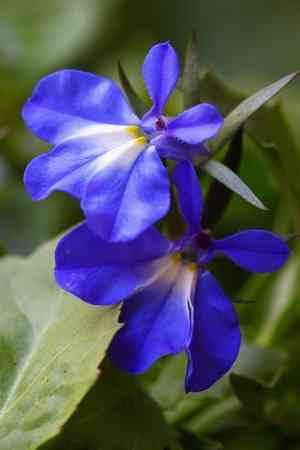
Edging lobelia(Lobelia erinus)

Edging lobelia (Lobelia erinus)

Also known as: Garden lobelia, Sapphire lobelia

Edging lobelia (Lobelia erinus), a flowering plant from South Africa, is widely appreciated for its ornamental value. It's commonly used in gardens, hanging baskets, and planters. This plant prefers temperate climates as it is sensitive to frost.

Attributes of Edging lobelia

Lifespan
Perennial, Annual
Plant Type
Herb
Plant Height
8 cm to 22 cm
Spread
10 cm to 50 cm
Leaf Color
Green
Flower Size
8 mm to 2 cm
Flower Color
Blue White Purple Pink Red Violet

PlantJoy - Identify plants with a snap

Identify and diagnose plants, get toxicity alerts, and explore safety guides for all types of fungi.

Try for Free

Images of Edging lobelia

Edging lobelia(Lobelia erinus)

Quickly Identify Edging lobelia

1
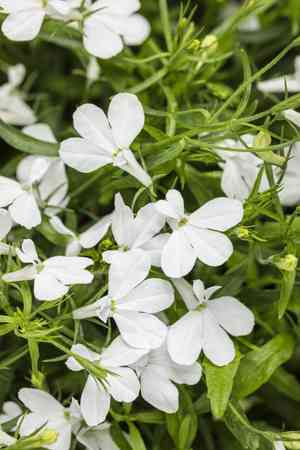
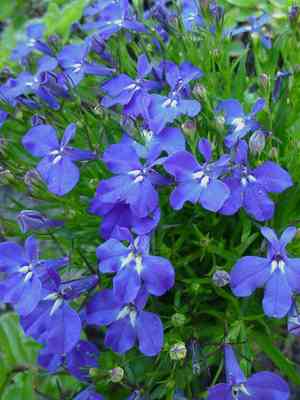
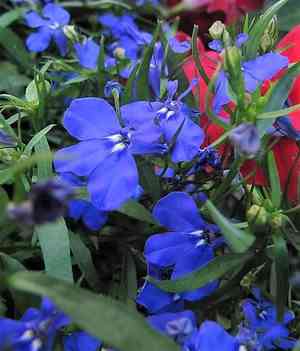
Indigo blue flowers with white throat, tubular, 5-parted, irregularly shaped, 1 inch (2.5 cm).
2
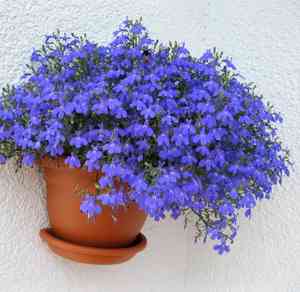
Distinctive bronze-green foliage & trailing forms, reaching 4-6 inches in height.
3
Small dehiscent capsule <0.5 inches (1.27 cm), brownish hue. Seeds are fine dust-like texture.
4
Leaves without petioles, obvate lower leaves, linear upper leaves. Bright green with serrated edges.
5
Flowers with 5 lobes, dark blue, soft blue, carmine red, or pure white blooms.

Scientific Classification of Edging lobelia

Phylum
Vascular plants
Class
Dicotyledons
Order
Asterales
Family
Bellflower
Genus
Lobelias
Species
Edging lobelia

Planting and Growing of Edging lobelia

Care Difficulty
Easy
Watering Schedule
Every 10 days
Sunlight Requirements
Full sun
Sunshine Duration
6-10 hours
Ideal Temperature
60-75℉
Soil Type
Potting Mix, Peat Mix
Soil pH
6.5-7.5
Fertilizer Type
Balanced
Pruning Season
Spring, Summer
Pruning Area
Branches, Leaves
Pruning Frequency
2 times a year
Repotting Season
Spring
Pot Type
Plastic, Ceramic

water icon How to Water Edging lobelia?

Lobelia erinus requires careful attention to watering. You should aim for the soil to be consistently moist but not soggy. 150 ml typically suffices to wet the soil evenly, reaching the roots without leaving water standing on the surface. Always check that excess water can drain away easily.
What are the symptoms of an underwatered Edging lobelia?
What should I do if my Edging lobelia is not getting enough water?
What are the symptoms of an overwatered Edging lobelia?
How to save an overwatered Edging lobelia?

sunlight icon What Are the Sunlight Requirements for Edging lobelia?

Sunlight Requirements: Full sun, Partial sun
Duration of light: 4 to 6 hours
Partial sun to full sun benefits Lobelia erinus by enhancing its flowering potential. Adequate light encourages vibrant bloom colors and sturdy growth, ensuring a healthy and appealing plant.
Optimal Location
Shade Adaptations
Supplemental Lighting

temperature icon What Is the Ideal Temperature Range for Edging lobelia?

Ideal Temperature: 60 ~ 75℉
Lobelia erinus thrives best in moderate temperatures typically found in its native environment. The ideal range is between 60°F and 75°F. This temperature range ensures optimal growth by providing a balanced environment that supports photosynthesis and overall metabolic activities. Maintaining such temperatures is crucial to achieving healthy foliage and vibrant blooms.

soil icon What Soil is Best for Edging lobelia?

Soil type: Sandy loam, Loam
Soil PH: 6.5 ~ 7.5
Lobelia erinus thrives in well-drained soil as it prevents water from stagnating around the roots and reduces the risk of root rot, ensuring the plant's overall health and growth. This plant benefits from nutrient-rich soil, as the abundance of nutrients supports robust flowering and foliage growth, enhancing the plant's aesthetic appeal. Maintaining consistent moisture is crucial for Lobelia erinus, as it ensures the plant doesn't dry out, preserving its lush and vibrant appearance.

fertilize icon How to Fertilize Edging lobelia?

Fertilizer type: Balanced
Lobelia erinus enjoys moderate feeding; too much can harm. Use a balanced, water-soluble fertilizer mixed at half the recommended strength. For slow-release options, follow package instructions, but generally, a small handful per square foot suffices. Ensure even distribution to avoid root burn.

prune icon How to Prune Edging lobelia?

Pruning Time: Spring, Summer, Autumn
Begin your pruning routine by deadheading spent flowers. Gently pinch or snip off the faded blooms right above the nearest set of healthy leaves. This will redirect the plant's energy towards producing new flowers instead of seed production. Inspect the plant for any long, overgrown stems that look out of place. Use your scissors to cut these stems back to the base of the plant or just above a leaf node. This keeps the plant neat and tidy, promoting better air circulation and light penetration.

propagate icon How to Propagate Edging lobelia plant?

Propagate Time: Spring, Early spring, Late spring
1
Fill seed trays with a light seed-starting mix. Sow Lobelia erinus seeds on the surface, as they require light for germination. Lightly press them into the soil but do not cover them. Maintain light moisture and warmth.
2
Select healthy, non-flowering shoots from the parent plant. Use pruning shears to cut 3-4 inch sections just below a leaf node. Remove lower leaves and dip the cut end in rooting hormone.
3
Insert the treated cuttings into pots filled with moistened potting mix or sand. Ensure the nodes are buried, as this is where roots will form. Cover with plastic or a humidity dome to retain moisture.

repot icon How to Repot Edging lobelia plant?

Repotting frequency: Annually
1
Lobelia erinus should be repotted when you observe that the roots are protruding from the drainage holes or circling at the bottom of the pot. Another indicator is when the plant's growth seems stunted despite proper care and adequate watering. Spring and summer are the best times, as the plant is actively growing and can recover more quickly from the repotting process.
2
Select a pot that is just one size larger than the current one to prevent excessive soil moisture, which can lead to root rot. A pot with drainage holes is essential to ensure any excess water can escape, providing an optimal environment for Lobelia erinus to thrive.
3
Choose a well-draining, loamy soil mix to provide optimal aeration and moisture retention. A proper soil mix prevents the roots from becoming waterlogged, promoting healthier plant growth and reducing the chances of root diseases.

PlantJoy - Identify plants with a snap

Find the best spots for them to optimize their health, simply using your phone.

Try for Free

Toxicity of Edging lobelia

Is Edging lobelia toxic to cat?

Edging lobelia presents a moderate toxicity risk to cats. Toxicity arises when a cat consumes any portion of the plant, since all of its parts are harmful. After ingestion, affected cats may show signs of physical distress or sickness, signaling potential poisoning. Pet owners must be attentive and restrict access to edging lobelia to protect their cats. If there is suspicion that a cat has ingested edging lobelia and is displaying symptoms of poisoning, it is vital to seek prompt veterinary assistance.

Is Edging lobelia toxic to dog?

Edging lobelia is recognized as possessing moderate toxicity for dogs. This plant can poison dogs if they consume any portion of it, as every part is deemed toxic. Following ingestion, a dog might show symptoms including gastrointestinal disturbances, increased salivation, vomiting, diarrhea, or more serious reactions depending on the quantity ingested. It is essential for dog owners to keep a vigilant eye on their pets and restrict their access to edging lobelia. If there is a suspicion that a dog has been poisoned by edging lobelia, seeking immediate veterinary assistance is crucial to secure the best possible outcome for the animal.

Identify toxic plants for your safety

Learn which plants are harmful to you and your pets, and make informed choices for a safer home!

Try for Free
WARNING
The judgment on toxicity and danger is for reference only. We DO NOT GUARANTEE any accuracy of such judgment. Therefore, you SHALL NOT rely on such judgment. It is IMPORTANT TO SEEK PROFESSIONAL ADVICE in advance when necessary.