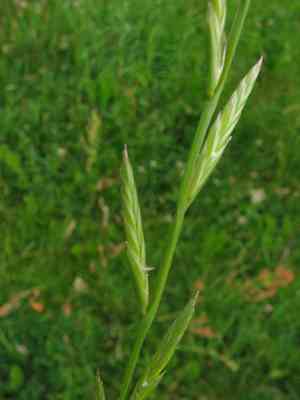
Italian ryegrass (Lolium multiflorum)
Also known as: Darnel ryegrass, Bearded ryegrass
Italian ryegrass is a hardy, fast-growing annual grass favored by farmers and ranchers for its ability to act as a cover crop, control erosion, and provide nutritious feed. It thrives in sunny conditions and prefers cool, moist climates with well-drained soil, making it suitable for irrigated fields. However, it can easily spread into unintended grain fields and is considered an invasive weed in many regions.
In This Article
Attributes of Italian ryegrass
Lifespan
Annual, Biennial, Perennial
Plant Type
Herb
Plant Height
61 cm to 91 cm
Spread
Not applicable
Leaf Color
Green
Flower Size
8 cm to 15 cm
Flower Color
Green White Yellow Purple Brown
Images of Italian ryegrass
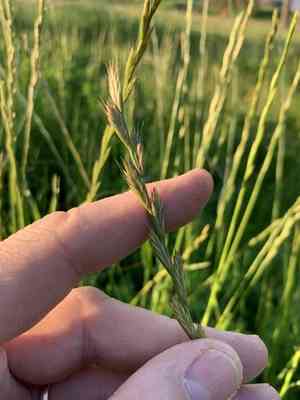
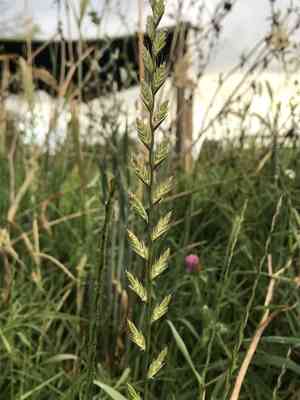
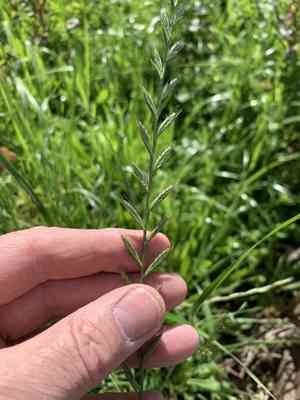
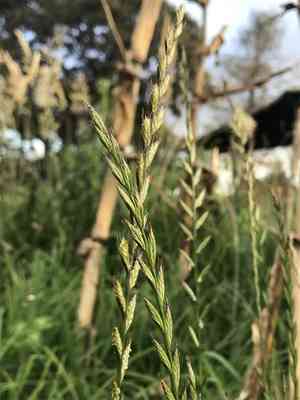
Quickly Identify Italian ryegrass
1
Tufted, upright growth habit reaching 1-3 feet (30-90 cm).
2
Leaf blade flat, tapering to a pointed tip, around 1/4 inch (6 mm) wide.
3
Inflorescence spike with zigzag appearance, spikelets awnless and edgewise to rachis.
4
Flowers in spike with 5-10 greenish florets, lacking petals, blooming early to mid-summer.
5
Narrow leaves 2-3 feet (60-90 cm) long, bright green, ridged upper surface, smooth glossy lower surface.
Scientific Classification of Italian ryegrass
Phylum
Vascular plants
Class
Monocotyledons
Order
Poales
Family
Grass
Genus
Ryegrasses
Species
Italian ryegrass
Planting and Growing of Italian ryegrass
Care Difficulty
Easy
Watering Schedule
Every 8 days
Sunlight Requirements
Full sun
Sunshine Duration
6-10 hours
Ideal Temperature
59-77℉
Soil Type
Potting Mix, Peat Mix
Soil pH
6-7.5
Fertilizer Type
Balanced
Pruning Season
Spring, Summer
Pruning Area
Branches, Leaves
Pruning Frequency
2 times a year
Repotting Season
Spring
Pot Type
Plastic, Ceramic
 How to Water Italian ryegrass?
When watering Lolium multiflorum, aim to moisten the soil to a depth of 15-20 cm. This approach allows the water to reach the root zone without pooling, which is essential for optimal growth.
What are the symptoms of an underwatered Italian ryegrass?
›
What should I do if my Italian ryegrass is not getting enough water?
›
What are the symptoms of an overwatered Italian ryegrass?
›
How to save an overwatered Italian ryegrass?
›
 What Are the Sunlight Requirements for Italian ryegrass?
Lolium multiflorum thrives best in full sun environments. Ideal light encourages robust growth and vibrant green color, enhances carbohydrate production for energy, and builds resistance against environmental stressors.
More About Sunlight Requirements Techniques→
What kind of sunlight is best for Lolium multiflorum?
›
How can I ensure my Lolium multiflorum gets the right amount of light?
›
What are the benefits of providing ideal lighting conditions?
›
 What Is the Ideal Temperature Range for Italian ryegrass?
The ideal temperature range for Lolium multiflorum is typically between 59°F and 77°F. This range maintains optimal growth since it provides a balanced climate that is neither too hot nor too cold, allowing the plant to efficiently carry out photosynthesis and other vital biological processes.
 What Soil is Best for Italian ryegrass?
Lolium multiflorum thrives in well-drained soil as it prevents waterlogging, which can lead to root diseases. This is essential for maintaining the health and vigor of the plant, ensuring optimal growth and productivity. Rich in nutrients, the soil should provide adequate nitrogen, phosphorus, and potassium. These elements support lush foliage and robust growth, helping the plant achieve its full potential in agricultural and ornamental settings. While drainage is crucial, the soil should also retain enough moisture to maintain consistent growth. This balance ensures that the plant remains hydrated without the risk of fungal infections.
 How to Fertilize Italian ryegrass?
Lolium multiflorum, commonly known as Italian ryegrass, thrives with a balanced application of nutrients. It is advisable to apply about 2-3 pounds of nitrogen per 1,000 square feet per growing season. This amount ensures robust growth and helps maintain its vibrant green color. Proper measurement is key to avoid under or over-fertilization.
 How to Prune Italian ryegrass?
Before pruning, inspect the lawn for any signs of disease or damage. Addressing these issues prior to pruning ensures a healthy environment for the grass to flourish. Prune monthly, focusing on maintaining an even height across the lawn. This encourages strong root development and a dense, attractive turf, ensuring better resilience against weeds and pests.
More About Pruning Techniques→
 How to Propagate Italian ryegrass plant?
1
Fill a seed tray with a mix of potting soil and sand. The soil should be light and well-drained to promote quick germination and prevent root rot. Firm the soil gently and water it lightly before sowing seeds.
2
Evenly distribute the Lolium multiflorum seeds across the surface of the soil. Seeds should be positioned manually or using a seed spreader to ensure no overlapping. Lightly press or mist to settle them.
3
Place the seed tray in a location with plenty of indirect light and a consistent temperature around 18-22°C (64-72°F). Regularly check and maintain moisture by misting the topsoil gently with a spray bottle.
 How to Repot Italian ryegrass plant?
1
Look for signs such as roots protruding from the drainage holes, the plant wilting quicker than usual after watering, or stunted growth. These indicators suggest it's time to repot your Lolium multiflorum to ensure it has enough space and nutrients to thrive. Ideally, repot during the spring or autumn months when the plant is not in its peak growing phase.
2
Select a pot that's 2-3 inches larger in diameter than the current one, with excellent drainage holes to allow excess water to escape. It's crucial because Lolium multiflorum thrives in well-draining conditions, preventing root rot and promoting healthy root development. A ceramic or plastic pot works equally well, but ensure it provides room for adequate growth.
3
Opt for a well-draining loamy soil mix to ensure good aeration and water retention balance. Such soil prevents waterlogging, a common issue that can lead to root rot in Lolium multiflorum. The loamy structure accommodates plant growth, allowing roots to spread and access nutrients efficiently.
Toxicity
ingestion of large amounts
WARNING
The judgment on toxicity and danger is for reference only. We DO NOT GUARANTEE any accuracy of such judgment. Therefore, you SHALL NOT rely on such judgment. It is IMPORTANT TO SEEK PROFESSIONAL ADVICE in advance when necessary.



