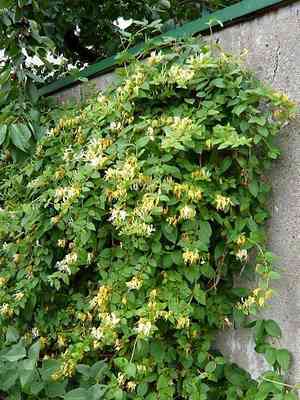
Japanese honeysuckle(Lonicera japonica)

Japanese honeysuckle (Lonicera japonica)

Also known as: Honeysuckle vine

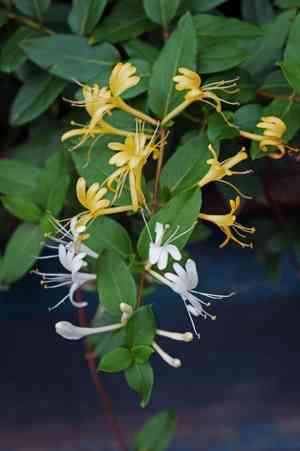
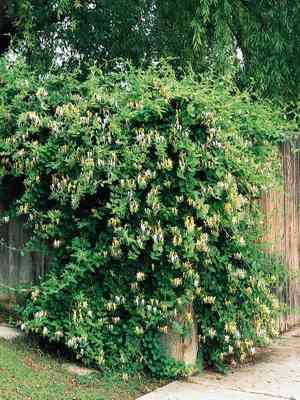
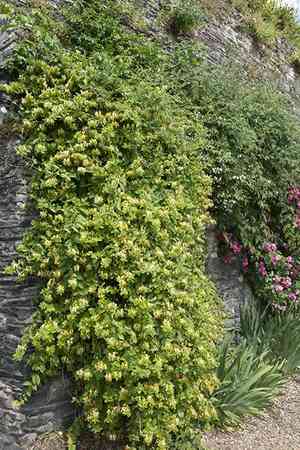
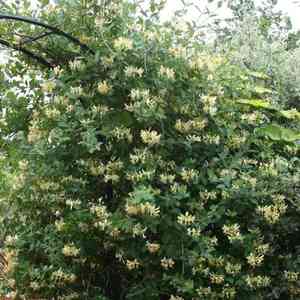
Japanese honeysuckle (*Lonicera japonica*) is a climbing vine originating from East Asia. It produces white to yellow flowers that release a sweet fragrance, attracting pollinators like honeybees. While some parts of the plant can be toxic to humans, it is popular in landscaping for use as groundcover due to its rapid growth and ability to suppress weeds, thereby enhancing soil quality.

Attributes of Japanese honeysuckle

Lifespan
Perennial
Plant Type
Vine
Plant Height
2 m to 9 m
Spread
90 cm to 1.8 m
Leaf Color
Green
Flower Size
2 cm to 6 cm
Flower Color
White Yellow Pink Purple

PlantJoy - Identify plants with a snap

Identify and diagnose plants, get toxicity alerts, and explore safety guides for all types of fungi.

Try for Free

Images of Japanese honeysuckle

Japanese honeysuckle(Lonicera japonica)

Quickly Identify Japanese honeysuckle

1
Tubular flowers transition from white to yellow, emitting a potent sweet fragrance (1-1.5 inches).
2
Opposite oval leaves (1.5-3 inches) with smooth texture and reticulate veins.
3
Berries start green, turning red, then dark blue-black, containing distinctive oval seeds with pronounced ridges.
4
Reddish stem with fuzzy texture in youth, aging to woody with peeling bark.
5
Slender trunk with peeling bark in long strips, lightly textured, reaching no more than 2 inches.

Scientific Classification of Japanese honeysuckle

Phylum
Vascular plants
Class
Dicotyledons
Order
Honeysuckles, moschatels and allies
Family
Honeysuckle
Genus
Honeysuckles
Species
Japanese honeysuckle

Planting and Growing of Japanese honeysuckle

Care Difficulty
Easy
Watering Schedule
Every 2 days
Sunlight Requirements
Full sun
Sunshine Duration
6-10 hours
Ideal Temperature
60-75℉
Soil Type
Potting Mix, Peat Mix
Soil pH
5.5-8
Fertilizer Type
Balanced
Pruning Season
Spring, Summer
Pruning Area
Branches, Leaves
Pruning Frequency
2 times a year
Repotting Season
Spring
Pot Type
Plastic, Ceramic

water icon How to Water Japanese honeysuckle?

Lonicera japonica thrives when the soil is kept consistently moist but not waterlogged. Aim to water until the soil is evenly moist to a depth of about 2 inches (approximately 500 mL per watering). Ensure good drainage to prevent root rot while providing sufficient moisture for the plant.
What are the symptoms of an underwatered Japanese honeysuckle?
What should I do if my Japanese honeysuckle is not getting enough water?
What are the symptoms of an overwatered Japanese honeysuckle?
How to save an overwatered Japanese honeysuckle?
More About Watering Techniques

sunlight icon What Are the Sunlight Requirements for Japanese honeysuckle?

Sunlight Requirements: Full sun, Partial sun
Duration of light: 4-8 hours daily
Lonicera japonica thrives in partial to full sun conditions. Achieving ideal light levels encourages healthy growth, robust foliage, and a more vigorous bloom cycle, enhancing the plant's overall vitality.
Optimal Sunlight Exposure
Utilizing Natural Shade
Artificial Lighting Adjustments
More About Sunlight Requirements Techniques

temperature icon What Is the Ideal Temperature Range for Japanese honeysuckle?

Ideal Temperature: 60 ~ 75℉
Lonicera japonica, commonly known as Japanese honeysuckle, thrives in temperatures ranging from 60°F to 75°F. Within this range, the metabolic processes of the plant function optimally, supporting vigorous growth, vibrant blooms, and healthy foliage.

soil icon What Soil is Best for Japanese honeysuckle?

Soil type: Loam, Sandy loam, Sand soil
Soil PH: 5.5 ~ 8
Lonicera japonica thrives in well-draining soil rich in organic matter. This enables the plant to access essential nutrients, promoting healthy growth and abundant flowering. The soil should maintain adequate moisture without waterlogging. This balance helps the plant stay hydrated while preventing root rot, crucial for its vigorous spreading nature. A well-aerated soil structure prevents compaction, which is crucial for root expansion and robust nutrient uptake, supporting Lonicera japonica's lush foliage and thriving development. More About Soil

fertilize icon How to Fertilize Japanese honeysuckle?

Fertilizer type: Balanced
For Lonicera japonica, apply a balanced liquid fertilizer at half of the recommended strength every two weeks during the growing season. Over-fertilization can lead to excessive foliage growth with fewer flowers, so it's important to maintain moderation. More About Fertilizing Techniques

prune icon How to Prune Japanese honeysuckle?

Pruning Time: Spring, Summer, Autumn, Winter
Before you begin pruning Lonicera japonica, ensure you have clean, sharp pruning shears to make precise cuts. Begin by identifying the main stems and aim to remove any dead or damaged branches to encourage robust new growth. Focus on thinning out crowded areas to increase air circulation, which helps to prevent fungal diseases. Cut back vigorously growing shoots by a third to promote bushier growth and maintain a desirable shape. To maximize flowering, prune back after the bloom cycle if you're maintaining Lonicera japonica for ornamental purposes. Removing spent flowers can also encourage a second bloom in favorable conditions. More About Pruning Techniques

propagate icon How to Propagate Japanese honeysuckle plant?

Propagate Time: Spring, Early summer, Early autumn
1
Collect seeds from mature Lonicera japonica plants after they have dropped in late summer. Sow them in a well-draining soil mix, lightly covering them as they require some light to germinate. Keep the soil consistently moist but not waterlogged.
2
In spring, take semi-hardwood cuttings from healthy, mature plants. Cut below a node, about 10-15 cm long. Remove the lower leaves, dip the cut end in rooting hormone, and plant in a well-aerated medium.
3
In early spring, select a low-growing branch and bend it to the ground. Wound a section of the stem, cover it with soil, and anchor it down. Roots will develop at the wounded site within several months, after which the new plant can be separated.
More About Propagating Techniques

repot icon How to Repot Japanese honeysuckle plant?

Repotting frequency: Every 1-2 years
1
Look for indications such as roots growing out of the bottom of the pot or noticeably slow growth. It's often a sign that your Lonicera japonica needs more space and nutrients, making spring and summer ideal times as active growth promotes better acclimatization.
2
The pot should be just one size larger than the current one. Ensure it has ample drainage holes to prevent waterlogging, which can be detrimental to Lonicera japonica's roots. A slightly larger pot encourages healthier root development while reducing wasted nutrients.
3
Opt for well-draining garden soil with added organic matter. This type of soil allows for good aeration and root penetration, preventing issues like root rot and facilitating nutrient uptake. The improved drainage helps maintain proper moisture levels, critical for healthy growth.

PlantJoy - Identify plants with a snap

Find the best spots for them to optimize their health, simply using your phone.

Try for Free

Toxicity of Japanese honeysuckle

Is Japanese honeysuckle toxic to humans?

Japanese honeysuckle can pose significant toxicity risks to humans when large amounts of its fruits are consumed. Symptoms associated with poisoning from these fruits may include vomiting, diarrhea, dilated pupils, cold sweating, increased heart rate, convulsions, respiratory distress, and even loss of consciousness. The risk of poisoning is particularly high in cases of unintentional ingestion by both children and adults, as the plant's sweet-tasting flowers can be tempting and edible.

Is Japanese honeysuckle toxic to cat?

Japanese honeysuckle poses a risk of toxicity to cats. Felines might unintentionally consume various parts of the japanese honeysuckle plant, including its fruits, leaves, or sap, which could result in poisoning. After exposure to this plant, a cat may display signs of physical discomfort. Although specific symptoms are not enumerated, any unusual behavior or indications of illness should be regarded with concern. Pet owners need to be vigilant and observe their pets for any signs of distress and should seek veterinary assistance immediately if they suspect poisoning from japanese honeysuckle, as timely intervention can be essential for the health and recovery of the affected cat.

Is Japanese honeysuckle toxic to dog?

The Japanese honeysuckle is regarded as a toxic plant for dogs. If dogs consume this plant inadvertently, they can suffer from poisoning. The hazardous components of Japanese honeysuckle encompass the fruits, leaves, and the sap or juice. Upon ingestion of any of these parts, a dog may display signs of poisoning, which can include gastrointestinal upset, respiratory distress, or other alarming clinical symptoms. It is essential for dog owners to keep a close watch on their pets and to restrict their access to Japanese honeysuckle. Should a dog consume Japanese honeysuckle, seeking immediate veterinary assistance is vital for effective management of the poisoning.

Identify toxic plants for your safety

Learn which plants are harmful to you and your pets, and make informed choices for a safer home!

Try for Free
WARNING
The judgment on toxicity and danger is for reference only. We DO NOT GUARANTEE any accuracy of such judgment. Therefore, you SHALL NOT rely on such judgment. It is IMPORTANT TO SEEK PROFESSIONAL ADVICE in advance when necessary.
More About Toxic Techniques