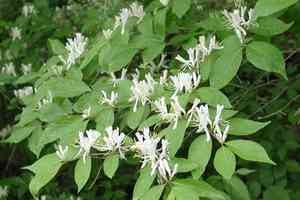
Amur honeysuckle(Lonicera maackii)

Amur honeysuckle (Lonicera maackii)

Also known as: Late honeysuckle

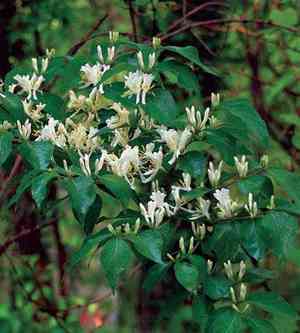
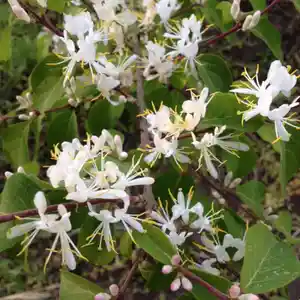
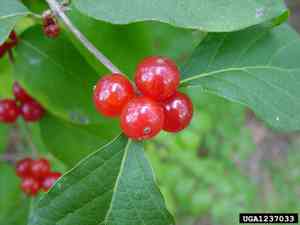
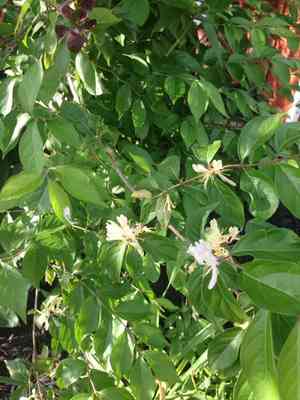
Amur honeysuckle (Lonicera maackii) is a perennial shrub with dense branching, dark green foliage, fragrant white flowers, and attractive red berries enjoyed by birds, which help disperse its seeds. Originally from East Asia, it was once popular for landscaping, wildlife habitat, and erosion control. However, its invasive tendencies have led to it being discouraged for planting. It aggressively outcompetes native vegetation, forming thick canopies that block sunlight, reducing native plant diversity and altering local ecosystems.

Attributes of Amur honeysuckle

Lifespan
Perennial
Plant Type
Shrub
Plant Height
6 m
Spread
3 m to 4.5 m
Leaf Color
Green
Flower Size
2.5 cm
Flower Color
White Yellow

PlantJoy - Identify plants with a snap

Identify and diagnose plants, get toxicity alerts, and explore safety guides for all types of fungi.

Try for Free

Images of Amur honeysuckle

Amur honeysuckle(Lonicera maackii)

Quickly Identify Amur honeysuckle

1
Deciduous shrub growing up to 15 feet (4.5 m) tall with a round, bushy appearance.
2
Fragrant, creamy white tube-shaped flowers about 2 inches (5 cm) long in spring.
3
Bright red to blackish berries that maintain spherical shape and dark red color.
4
Oppositely arranged leaves with dark green upper surface and lighter underside, 2-3 inches (5-8 cm) long.
5
Hollow stem with white or tan pith, 1-2 inches (2.5-5 cm) in diameter, and dense branching pattern.

Scientific Classification of Amur honeysuckle

Phylum
Vascular plants
Class
Dicotyledons
Order
Honeysuckles, moschatels and allies
Family
Honeysuckle
Genus
Honeysuckles
Species
Amur honeysuckle

Planting and Growing of Amur honeysuckle

Care Difficulty
Easy
Watering Schedule
Every 4 days
Sunlight Requirements
Full sun
Sunshine Duration
4-8 hours
Ideal Temperature
60-75℉
Soil Type
Potting Mix, Peat Mix
Soil pH
6.5-7.5
Fertilizer Type
Balanced
Pruning Season
Spring, Summer
Pruning Area
Branches, Leaves
Pruning Frequency
2 times a year
Repotting Season
Spring
Pot Type
Plastic, Ceramic

water icon How to Water Amur honeysuckle?

Lonicera maackii requires consistent watering, so aim to provide about 500 ml each time you water. The goal is to keep the soil evenly moist without becoming waterlogged. Water until the moisture penetrates the soil down to the root zone.
What are the symptoms of an underwatered Amur honeysuckle?
What should I do if my Amur honeysuckle is not getting enough water?
What are the symptoms of an overwatered Amur honeysuckle?
How to save an overwatered Amur honeysuckle?
More About Watering Techniques

sunlight icon What Are the Sunlight Requirements for Amur honeysuckle?

Sunlight Requirements: Full sun, Partial sun
Duration of light: 4-6 hours
Lonicera maackii grows best in full to partial sun conditions. Adequate light supports vibrant foliage and robust growth, ensuring healthy development and resilience against pests and diseases.
Daily Sun Exposure
Balancing Shade
Mitigating Light Variability
More About Sunlight Requirements Techniques

temperature icon What Is the Ideal Temperature Range for Amur honeysuckle?

Ideal Temperature: 60 ~ 75℉
Lonicera maackii thrives best within a temperature range of 60°F to 75°F. This range supports healthy growth and flowering because it simulates the mild, temperate climate conditions to which this species is naturally adapted.

soil icon What Soil is Best for Amur honeysuckle?

Soil type: Loam, Sandy loam, Clay soil
Soil PH: 6.5 ~ 7.5
Lonicera maackii thrives in well-drained soil that allows water to flow through effortlessly, preventing root rot and encouraging robust growth by ensuring roots are not waterlogged. A soil rich in organic matter is essential for Lonicera maackii, providing the necessary nutrients for lush foliage and vibrant blooms. This can be achieved by incorporating compost or well-aged manure. While good drainage is key, the soil should also have some moisture-retaining properties to keep the roots hydrated without becoming soggy, balancing the plant's need for both air and water. More About Soil

fertilize icon How to Fertilize Amur honeysuckle?

Fertilizer type: Balanced
For Lonicera maackii, the recommended fertilizer amount varies according to the plant's size. Generally, apply about 0.5 ounces of a balanced 10-10-10 fertilizer per foot of plant height. Avoid over-fertilization, as this can harm the plant. More About Fertilizing Techniques

prune icon How to Prune Amur honeysuckle?

Pruning Time: Spring, Autumn
Begin by removing any dead or diseased branches with sharp, clean pruners. Focus on thinning out dense areas to improve air circulation and shape the plant. Aim to create a balanced, open structure that encourages healthy growth. Lonicera maackii can be quite invasive, so look for shoots that are growing outward aggressively. Trim these back to maintain its size and prevent it from overtaking garden spaces. Always cut just above a leaf node to promote new growth. More About Pruning Techniques

propagate icon How to Propagate Amur honeysuckle plant?

Propagate Time: Early spring, Late spring
1
Collect seeds from ripe Lonicera maackii berries in late autumn. Ensure they are free from debris and viable for better germination results.
2
Take semi-hardwood cuttings in early spring when the plant is actively growing. Each cutting should be approximately 6 inches long with several leaf nodes.
3
Stratify collected seeds by placing them in moist sand and keeping them refrigerated for about 90 days. This cold treatment breaks seed dormancy and promotes germination.
More About Propagating Techniques

repot icon How to Repot Amur honeysuckle plant?

Repotting frequency: Every 2-3 years
1
Lonicera maackii, or Amur Honeysuckle, shows signs of needing repotting when roots start emerging through drainage holes or growth seems stunted. These indications typically appear every couple of years, especially if the plant is confined in a pot. Opt for spring or autumn to repot so the plant has optimal conditions to establish itself before extreme weather.
2
Select a pot that's only one size larger than the existing one; this prevents excess soil that can retain water and cause root rot. Materials like clay or terracotta are excellent as they allow better airflow to the roots, promoting healthier growth. Ensure the pot has sufficient drainage holes to prevent waterlogging.
3
The best soil for Amur Honeysuckle is one that is well-draining, such as a loamy mix. This type of soil retains enough moisture without becoming waterlogged, providing a balanced environment for the roots. Incorporate organic matter to improve nutrient content and structure, fostering robust growth.

PlantJoy - Identify plants with a snap

Find the best spots for them to optimize their health, simply using your phone.

Try for Free

Toxicity of Amur honeysuckle

Is Amur honeysuckle toxic to cat?

Amur honeysuckle possesses a mild level of toxicity to cats, with particular risks arising from the consumption of large quantities of the plant. The greatest danger is linked to the fruits, which could lead to various negative health effects in cats if eaten excessively. Although the exact toxic substances are not specified, it is vital for pet owners to observe any signs of discomfort or illness in their pets, as these may suggest possible poisoning. Cat owners should closely monitor their pets and swiftly seek veterinary assistance if they suspect their cat has ingested any parts of amur honeysuckle, thus safeguarding the health and safety of their feline companions.

Is Amur honeysuckle toxic to dog?

Amur honeysuckle carries a mild toxicity risk for dogs, particularly when they consume its fruits in excessive amounts. If dogs ingest substantial quantities of these toxic components, they may show signs of poisoning. Although the exact toxic agents are not specified, dog owners should remain alert for any indications of distress or irregular behavior following consumption. Common symptoms may involve gastrointestinal issues such as vomiting and diarrhea, alongside potential lethargy or more severe reactions depending on the amount ingested and the individual dog's sensitivity. It is essential for pet owners to oversee their dogs' access to amur honeysuckle, particularly during the fruiting season when the risk is greater. If a dog does consume parts of amur honeysuckle and displays symptoms of poisoning, immediate veterinary care is crucial for ensuring swift and appropriate treatment.

Identify toxic plants for your safety

Learn which plants are harmful to you and your pets, and make informed choices for a safer home!

Try for Free
WARNING
The judgment on toxicity and danger is for reference only. We DO NOT GUARANTEE any accuracy of such judgment. Therefore, you SHALL NOT rely on such judgment. It is IMPORTANT TO SEEK PROFESSIONAL ADVICE in advance when necessary.
More About Toxic Techniques