European honeysuckle(Lonicera periclymenum)

European honeysuckle (Lonicera periclymenum)

Also known as: Woodbine, Common honeysuckle

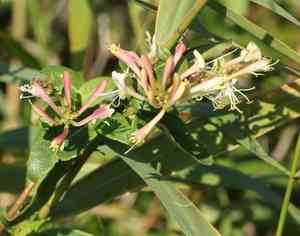
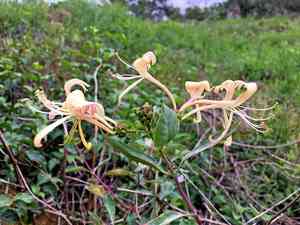
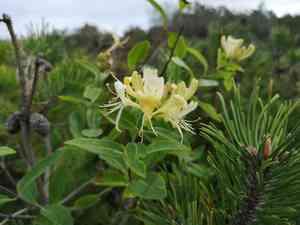
The European honeysuckle (Lonicera periclymenum) is indigenous to regions including Europe, North Africa, and Turkey. When the flowers first bloom, they are white or pale cream in color, and as they age, they transition to yellow. These flowers are highly fragrant during the night, drawing in moths and bees for pollination.

Attributes of European honeysuckle

Lifespan
Perennial
Plant Type
Vine
Plant Height
7 m
Spread
90 cm to 1.2 m
Leaf Color
Green
Flower Size
2.5 cm to 8 cm
Flower Color
White Yellow Pink Cream Purple Red

PlantJoy - Identify plants with a snap

Identify and diagnose plants, get toxicity alerts, and explore safety guides for all types of fungi.

Try for Free

Images of European honeysuckle

European honeysuckle(Lonicera periclymenum)

Quickly Identify European honeysuckle

1
Twining stems up to 20 feet (6 meters) long.
2
Highly fragrant cream or pinkish tubular flowers.
3
Distinct deep red berries around 0.25 inches (6 mm) in diameter.
4
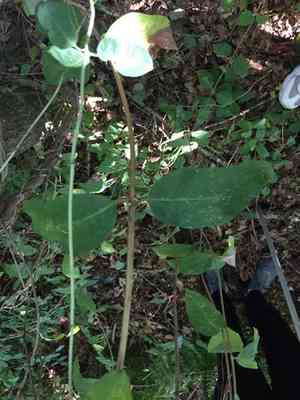
Dark green oval leaves with prominent central vein.
5
Glabrous, slender stems with brown to red coloration.

Scientific Classification of European honeysuckle

Phylum
Vascular plants
Class
Dicotyledons
Order
Dipsacales
Family
Honeysuckle
Genus
Honeysuckles
Species
European honeysuckle

Planting and Growing of European honeysuckle

Care Difficulty
Easy
Watering Schedule
Every 3 days
Sunlight Requirements
Full sun
Sunshine Duration
4-6 hours
Ideal Temperature
60-75℉
Soil Type
Potting Mix, Peat Mix
Soil pH
6.5-7.5
Fertilizer Type
Balanced
Pruning Season
Spring, Summer
Pruning Area
Branches, Leaves
Pruning Frequency
2 times a year
Repotting Season
Spring
Pot Type
Plastic, Ceramic

water icon How to Water European honeysuckle?

When watering Lonicera periclymenum, aim to soak the soil thoroughly without waterlogging. You should see just a little water beginning to seep from the bottom of the pot if it's in a container. This ensures that the root system receives adequate moisture while maintaining proper soil aeration.
What are the symptoms of an underwatered European honeysuckle?
What should I do if my European honeysuckle is not getting enough water?
What are the symptoms of an overwatered European honeysuckle?
How to save an overwatered European honeysuckle?
More About Watering Techniques

sunlight icon What Are the Sunlight Requirements for European honeysuckle?

Sunlight Requirements: Full sun, Partial sun
Duration of light: 4 to 6 hours
Lonicera periclymenum prefers a mix of full sun to partial sun conditions which supports robust growth and bountiful flowering.
What is the best lighting environment for Lonicera periclymenum?
How can I ensure my plant gets enough light in different seasons?
What are the benefits of ideal lighting for this plant?
More About Sunlight Requirements Techniques

temperature icon What Is the Ideal Temperature Range for European honeysuckle?

Ideal Temperature: 60 ~ 75℉
The ideal temperature range for Lonicera periclymenum, commonly known as honeysuckle, is between 60°F and 75°F. Within this range, the plant can photosynthesize efficiently, ensuring optimal growth. These temperatures allow for proper moisture retention and prevent stress-induced wilting. By maintaining this range, you can reduce the risks of disease and support vibrant foliage and bloom production.

soil icon What Soil is Best for European honeysuckle?

Soil type: Loam, Sandy loam, Acidic soil
Soil PH: 6.5 ~ 7.5
Lonicera periclymenum thrives best in well-drained soil to ensure roots do not sit in water and rot. Proper drainage allows for balanced moisture levels which are crucial for healthy plant growth. The plant benefits significantly from nutrient-rich soil. This is crucial as it supplies the essential nutrients required for vigorous growth, robust flowering, and pest resistance. A good amount of organic matter enhances the soil structure and fertility, thereby promoting microbial activity. This organic content also supports moisture retention and food supply for the plant. More About Soil

fertilize icon How to Fertilize European honeysuckle?

Fertilizer type: Balanced
Lonicera periclymenum, commonly known as Honeysuckle, thrives best with a balanced fertilizer. Use an all-purpose fertilizer with an NPK ratio of around 10-10-10. For liquid fertilizers, apply approximately 1 gallon per plant, mixing it as per the label instructions. Ensure that the soil is adequately moist before applying the fertilizer to prevent root burn. More About Fertilizing Techniques

prune icon How to Prune European honeysuckle?

Pruning Time: Spring, Summer
Always ensure your pruning shears are sharp and sterilized. Dull tools can cause damage to the plant, and unclean ones may spread diseases. Look for any branches with discolored or shriveled bark, typically dark brown or gray. These should be pruned back to where healthy wood starts. Carefully trim back any overgrown branches to maintain a tidy, compact shape. Follow the natural form of the plant for the best results. When trimming back branches, always cut just above a pair of healthy leaves or buds. This encourages new growth in the desired direction. More About Pruning Techniques

propagate icon How to Propagate European honeysuckle plant?

Propagate Time: Spring, Early spring
1
Select healthy stems from the plant and use sharp pruning shears to cut 10-15 cm sections. Remove the lower leaves to create a clear stem for planting.
2
Dip the cut end of each stem into a rooting hormone powder. Shake off any excess powder to avoid fungal infections.
3
Insert the treated cuttings into pots filled with a mixture of sand and peat. Ensure the potting mix is moist but not waterlogged.
More About Propagating Techniques

repot icon How to Repot European honeysuckle plant?

Repotting frequency: Every 2-3 years
1
Look for signs like roots coming out of drainage holes or slow growth indicating it's time to repot Lonicera periclymenum. Spring and early summer are ideal times as the plant enters a period of active growth, allowing it to establish well in its new pot.
2
Select a pot that is 1-2 inches larger in diameter than the current one, with good drainage holes. A slightly larger pot prevents waterlogging and provides ample space for root expansion, promoting healthier growth and preventing root rot.
3
Opt for a well-draining mix enriched with organic matter like compost. The presence of humus ensures good drainage while retaining essential moisture and nutrients, providing an ideal growing environment for Lonicera periclymenum.

PlantJoy - Identify plants with a snap

Find the best spots for them to optimize their health, simply using your phone.

Try for Free

Toxicity of European honeysuckle

Is European honeysuckle toxic to humans?

European honeysuckle produces vibrant red berries that are saturated with the plant's alluring sweet fragrance; however, they are extremely unpleasant in taste. Consuming a sufficient quantity of these berries, more so than other parts of the plant, can lead to significant digestive issues. The entire plant contains bitter-tasting saponins, with a particularly high concentration found in the berries. Ingesting an adequate amount of berries can trigger the typical human response to saponins, which includes nausea, abdominal pain, vomiting, and diarrhea. Usually, only supportive care is necessary, but if someone exhibits severe symptoms or if a small child is affected, it is crucial to contact your physician or a poison control center. These berries pose a notable risk to small children due to their sweet aroma and eye-catching color. If you have young children and cultivate European honeysuckle in your garden, ensure it is fenced off to prevent access or consider removing it entirely.

Is European honeysuckle toxic to cat?

European honeysuckle is recognized as toxic to cats. Poisoning typically happens when felines inadvertently consume certain parts of the plant, particularly the fruits. Following ingestion, cats may exhibit signs of physical discomfort that require urgent veterinary care. Given the potential severity of the effects on cat health, it is essential for pet owners to remain alert in restricting access to European honeysuckle and to quickly pursue medical assistance at a veterinary clinic if exposure occurs.

Is European honeysuckle toxic to dog?

European honeysuckle is known to be toxic to dogs. The plant can lead to poisoning, particularly if a dog consumes its fruits, which are identified as the toxic components of european honeysuckle. If a dog accidentally eats these fruits, it may display various symptoms, including vomiting, diarrhea, abdominal discomfort, and other indications of distress. It is vital for dog owners to keep a close watch on their pets and restrict their access to european honeysuckle, especially during the fruiting season when the likelihood of ingestion increases. Should a dog ingest any part of european honeysuckle, immediate veterinary assistance is crucial to ensure timely treatment and minimize any negative health impacts.

Identify toxic plants for your safety

Learn which plants are harmful to you and your pets, and make informed choices for a safer home!

Try for Free
WARNING
The judgment on toxicity and danger is for reference only. We DO NOT GUARANTEE any accuracy of such judgment. Therefore, you SHALL NOT rely on such judgment. It is IMPORTANT TO SEEK PROFESSIONAL ADVICE in advance when necessary.
More About Toxic Techniques