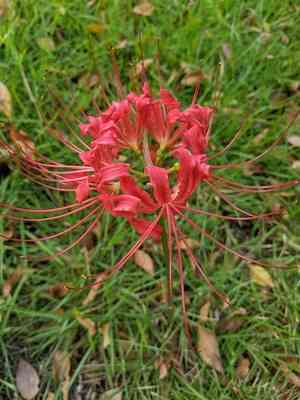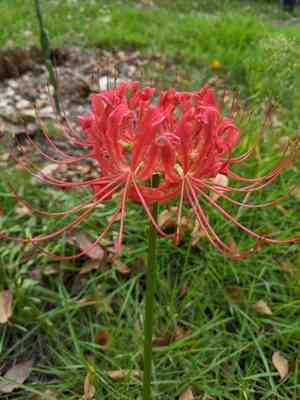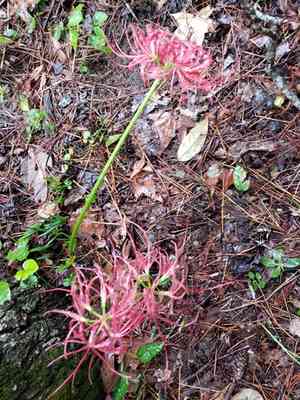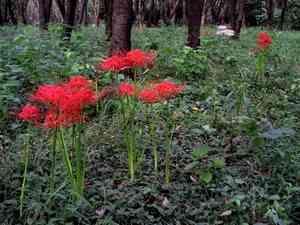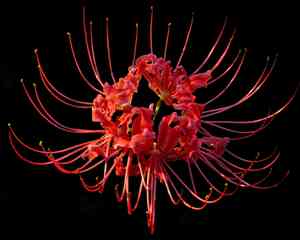
Red Spider lily(Lycoris radiata)

Red Spider lily (Lycoris radiata)

Also known as: Spider Lily, Red magic lily, Equinox flower

The red Spider Lily, a vibrant summer bloom found throughout Asia, is often associated with final farewells. Despite its lively appearance, it is believed to symbolize permanent partings, with legends suggesting it appears when people part ways forever. Additionally, ancient Buddhist texts mention the Lycoris radiata as a flower used to guide souls through the cycle of rebirth.

Attributes of Red Spider lily

Lifespan
Perennial
Plant Type
Herb
Plant Height
30 cm
Spread
30 cm
Leaf Color
Green
Flower Size
8 cm to 15 cm
Flower Color
Red White

PlantJoy - Identify plants with a snap

Identify and diagnose plants, get toxicity alerts, and explore safety guides for all types of fungi.

Try for Free

Images of Red Spider lily

Red Spider lily(Lycoris radiata)

Quickly Identify Red Spider lily

1
Bright red tubular flowers on leafless stems (2-3 feet/60-90 cm tall)
2
Flowers with recurved petals resembling wheel spokes and protruding stamens
3
Distinctive rosette of basal, strap-like leaves (12-24 inches/30-60 cm long, 0.4-0.6 inches/1-1.5 cm wide)
4
Leaves remain vibrant green through winter and exhibit parallel vein pattern
5
Nodding red flowers with reflexed and wavy lobes, each with prominent spider-like stamens

Scientific Classification of Red Spider lily

Phylum
Vascular plants
Class
Monocotyledons
Order
Asparagus and allies
Family
Amaryllis
Genus
Spider Lilies
Species
Red Spider lily

Planting and Growing of Red Spider lily

Care Difficulty
Easy
Watering Schedule
Every 2 days
Sunlight Requirements
Partial sun
Sunshine Duration
6-10 hours
Ideal Temperature
60-75℉
Soil Type
Potting Mix, Peat Mix
Soil pH
6-7
Fertilizer Type
Balanced
Pruning Season
Spring, Summer
Pruning Area
Branches, Leaves
Pruning Frequency
2 times a year
Repotting Season
Spring
Pot Type
Terracotta, Plastic

water icon How to Water Red Spider lily?

For the Lycoris radiata, it is essential to water the plant moderately. Ensure the water soaks the soil thoroughly without waterlogging it. Aim for the soil to be moist to the touch, approximately 200 ml of water each time.
What are the symptoms of an underwatered Red Spider lily?
What should I do if my Red Spider lily is not getting enough water?
What are the symptoms of an overwatered Red Spider lily?
How to save an overwatered Red Spider lily?

sunlight icon What Are the Sunlight Requirements for Red Spider lily?

Sunlight Requirements: Partial sun
Duration of light: 4 to 6 hours
Lycoris radiata prefers partial sun conditions. It benefits from a balanced light exposure ensuring robust growth and vibrant flowers. Ideal lighting conditions enhance its natural beauty and stimulate photosynthesis.
What is the best lighting environment for Lycoris radiata?
How can I achieve the ideal lighting for Lycoris radiata?
What are the benefits of providing Lycoris radiata with ideal lighting?

temperature icon What Is the Ideal Temperature Range for Red Spider lily?

Ideal Temperature: 60 ~ 75℉
The ideal temperature range for the growth of Lycoris radiata is between 60°F and 75°F. This range provides the optimal conditions for the plant's metabolic processes and aids in healthy foliage and vibrant flower production. Maintaining consistent temperatures within this range helps prevent stress and ensures robust growth.

soil icon What Soil is Best for Red Spider lily?

Soil type: Loam, Sandy loam
Soil PH: 6 ~ 7
Lycoris radiata thrives in well-drained soil, which ensures that roots do not sit in water, preventing root rot. A slightly sandy loam is ideal as it offers the right balance by allowing excess water to escape while retaining enough moisture for the plant's growth. While the plant is not extremely fussy, it does benefit from nutrient-rich soil. This means adding organic matter like compost can significantly enhance growth and bloom by providing essential nutrients and improving soil structure. Lycoris radiata prefers moderate to rich fertility levels. Overly rich soil might lead to more foliage at the expense of flowers. A balance of nutrients supports healthy foliage and encourages vibrant, beautiful blooms.

fertilize icon How to Fertilize Red Spider lily?

Fertilizer type: Balanced
For Lycoris radiata, the amount of fertilizer should be modest. Use a balanced liquid fertilizer such as 10-10-10 or 20-20-20 at a diluted rate of half-strength per session. This ensures that the plant receives adequate nutrients without overwhelming its roots.

prune icon How to Prune Red Spider lily?

Pruning Time: Autumn
Gather a pair of sharp, clean pruning shears to ensure precise cuts. Sterilize the shears with rubbing alcohol to prevent disease transmission. Wear gloves to protect your hands from any potential irritation from the plant's sap. Begin by identifying and removing any browned or dead leaves. Cut these leaves back to the base near the bulb. This prevents any potential disease and allows the plant to focus its energy on new, healthy growth. Once the Lycoris radiata has finished blooming, trim the flower stems down to the base. This supports the bulb in storing energy for the next year's bloom, rather than expending energy on spent flowers.

propagate icon How to Propagate Red Spider lily plant?

Propagate Time: Autumn, Late autumn
1
Select a well-drained area in your garden that receives partial to full sunlight. Prepare the soil by loosening it and mixing in organic matter to improve drainage and fertility.
2
Carefully dig around and then under the Lycoris radiata clumps to lift them from the ground. Handle the bulbs gently to avoid damaging them, which could affect their growth potential.
3
Once lifted, gently separate the bulbs by hand. Each bulb should have a good amount of healthy roots attached. If necessary, use sterilized pruning shears to cut apart any bulbs that are close together.

repot icon How to Repot Red Spider lily plant?

Repotting frequency: Every 2-3 years
1
Repotting should be done when the plant appears crowded in its pot, roots begin circling the base, or the soil no longer drains well. These signs indicate that it's time for your Lycoris radiata to have a new home, ensuring it can continue to thrive.
2
Select a pot that is slightly larger than the current one, with ample drainage holes to prevent waterlogging. A ceramic or terracotta pot is ideal as it provides stability and allows the soil to dry out between waterings, crucial for the wellbeing of Lycoris radiata.
3
Opt for a well-draining, sandy loam soil that mimics the natural habitat of Lycoris radiata. This type of soil ensures that excess water drains quickly, preventing root rot and providing a stable environment for the plant to establish its roots post-repotting.

PlantJoy - Identify plants with a snap

Find the best spots for them to optimize their health, simply using your phone.

Try for Free

Toxicity of Red Spider lily

Is Red Spider lily toxic to humans?

The Red Spider Lily is considered toxic to humans if ingested, but its toxicity level is relatively low. This plant contains the toxic alkaloid lycorine in all its parts, although the highest concentration is found in the bulb, which makes it the most dangerous part to eat. Consumption may lead to symptoms like vomiting, diarrhea, abdominal cramps, shivering, and nausea. For the plant to be safe for consumption, the toxins need to be leached out first. Additionally, the Red Spider Lily does not appear to cause skin irritation upon direct contact, nor does it induce toxicity through airborne allergies.

Is Red Spider lily toxic to cat?

The Red Spider Lily poses a toxic threat to felines. A prevalent risk arises from inadvertent consumption by cats, which can happen if they nibble on or swallow any portion of the plant. Such interactions may result in a range of symptoms indicating physical distress or discomfort. Since every part of the Red Spider Lily is poisonous, it is crucial to keep them away from pets. If there are concerns that a cat has been exposed to the Red Spider Lily, prompt action is essential, and one should seek veterinary assistance immediately to manage any possible poisoning.

Is Red Spider lily toxic to dog?

The Red Spider lily is a highly toxic plant for dogs, representing a significant threat to their well-being. If dogs inadvertently ingest any portion of this plant, they can suffer poisoning, as every part is deemed harmful. Signs of poisoning in dogs may encompass vomiting, diarrhea, abdominal discomfort, excessive salivation, fatigue, and in severe instances, convulsions or even fatality. It is essential for dog owners to restrict their pets' access to the Red Spider lily and to vigilantly supervise them when they are in proximity to this plant. Should there be any suspicion that a dog has consumed Red Spider lily, seeking immediate veterinary care is vital for swift treatment and to enhance the chances of recovery.

Identify toxic plants for your safety

Learn which plants are harmful to you and your pets, and make informed choices for a safer home!

Try for Free
WARNING
The judgment on toxicity and danger is for reference only. We DO NOT GUARANTEE any accuracy of such judgment. Therefore, you SHALL NOT rely on such judgment. It is IMPORTANT TO SEEK PROFESSIONAL ADVICE in advance when necessary.