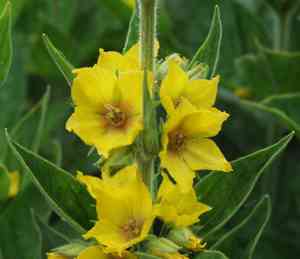
Large yellow loosestrife (Lysimachia punctata)
Also known as: Spotted loosestrife
Yellow Loosestrife (*Lysimachia punctata*) is a hardy wildflower originating from Central Europe and Asia Minor. It is deer-resistant and highly appealing to bees. This plant features vibrant yellow blooms on sturdy, upright stems and flourishes from spring to fall.
In This Article
Attributes of Large yellow loosestrife
Lifespan
Perennial, Annual
Plant Type
Herb
Plant Height
15 cm to 1 m
Spread
30 cm to 45 cm
Leaf Color
Green
Flower Size
2.5 cm
Flower Color
Yellow
Images of Large yellow loosestrife
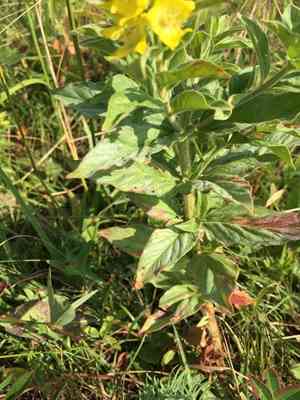
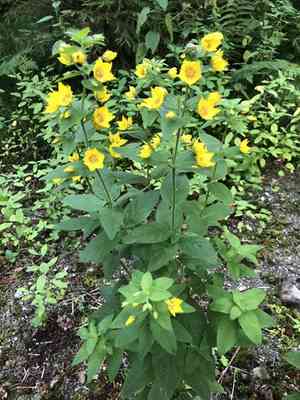
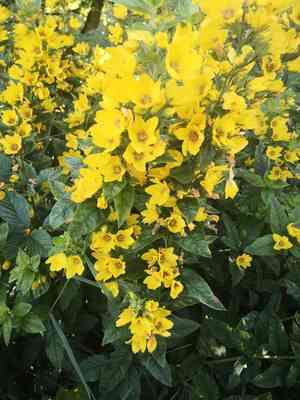
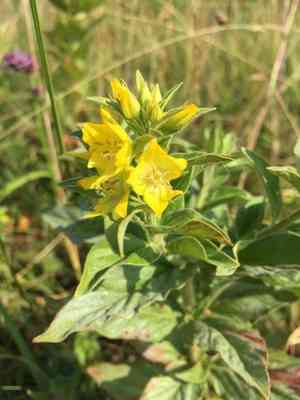
Quickly Identify Large yellow loosestrife
1
Robust, erect stature, reaching 3 feet (91 cm) height.
2
Whorled leaves, lance to ovate-shaped, deep green.
3
Yellow cup-shaped flowers with orange-red center, blooms May-September.
4
Distinctive vein pattern on smooth-textured leaves.
5
Flowers have fine hairs on petals and bloom on spikes.
Scientific Classification of Large yellow loosestrife
Phylum
Vascular plants
Class
Dicotyledons
Order
Ericales
Family
Primrose
Genus
Loosestrifes
Species
Large yellow loosestrife
Planting and Growing of Large yellow loosestrife
Care Difficulty
Easy
Watering Schedule
Every 4 days
Sunlight Requirements
Full sun
Sunshine Duration
6-10 hours
Ideal Temperature
60-75℉
Soil Type
Potting Mix, Peat Mix
Soil pH
6.5-7.5
Fertilizer Type
Balanced
Pruning Season
Spring, Summer
Pruning Area
Branches, Leaves
Pruning Frequency
Once a year
Repotting Season
Spring
Pot Type
Plastic, Ceramic
 How to Water Large yellow loosestrife?
For Lysimachia punctata, ensure water reaches 500 ml per session to allow moisture to penetrate the soil deeply, encouraging the roots to stretch downwards. The soil should feel damp to touch but never soggy, facilitating a healthy balance of hydration.
More About Watering Techniques→
What are the symptoms of an underwatered Large yellow loosestrife?
›
What should I do if my Large yellow loosestrife is not getting enough water?
›
What are the symptoms of an overwatered Large yellow loosestrife?
›
How to save an overwatered Large yellow loosestrife?
›
 What Are the Sunlight Requirements for Large yellow loosestrife?
Lysimachia punctata thrives in a range that includes full sun to partial sun with 4 to 8 hours of light daily. This balance ensures robust growth and prevents stress conditions.
More About Sunlight Requirements Techniques→
How much sunlight does Lysimachia punctata need?
›
What kind of sunlight conditions are best?
›
How does ideal lighting benefit the plant?
›
 What Is the Ideal Temperature Range for Large yellow loosestrife?
For optimal growth of Lysimachia punctata, maintaining a temperature range between 60°F and 75°F is crucial. This range allows the plant to perform physiological functions effectively, including photosynthesis and nutrient uptake, promoting healthy foliage and vibrant flowers. These conditions likely mimic the plant's native environment, ensuring robust growth and development.
 What Soil is Best for Large yellow loosestrife?
Lysimachia punctata thrives in well-drained soil, which ensures that its roots do not sit in waterlogged conditions. This allows for a healthy root system, preventing root rot and promoting vigorous growth. The plant flourishes in soil enriched with organic matter, providing essential nutrients that support lush foliage and vibrant blooms. Compost or well-rotted manure can enhance soil fertility, stimulating abundant flowering. While drainage is vital, the soil should also retain enough moisture to sustain the plant's needs between watering. A balance between drainage and moisture retention ensures steady growth and reduces the need for frequent watering.
More About Soil→
 How to Fertilize Large yellow loosestrife?
Lysimachia punctata appreciates a well-measured amount of fertilizer. During the growing season, apply liquid fertilizer every two weeks, using half the recommended dose on the package. For slow-release granules, apply them twice a year, in early spring and mid-summer, following the package instructions for dosage.
More About Fertilizing Techniques→
 How to Prune Large yellow loosestrife?
Start by removing any dead, damaged, or diseased stems. This will not only improve the plant's appearance but also prevent the spread of diseases and allow more light and air to reach healthy parts. Trim back the stems to the desired height, usually about one-third of the plant's height. This will encourage the plant to become bushier and produce more blooms. Shape the plant by trimming overgrown areas to maintain an aesthetically pleasing form. Be mindful to maintain a balance so that the plant does not become lopsided or too dense in particular areas.
More About Pruning Techniques→
 How to Propagate Large yellow loosestrife plant?
1
Before taking cuttings or divisions, water the plant thoroughly. This ensures that the plant is well-hydrated, which can help improve the success rate of new root formation. Choose healthy, disease-free sections for propagation.
2
Use sterilized pruning shears to take cuttings from young, healthy stems. Each cutting should be about 4-6 inches long and have at least two nodes. Remove the lower leaves and dip the base in rooting hormone to encourage root development.
3
Place the cuttings into a potting mix, ensuring good contact between the cut base and the soil. Water the soil lightly, ensuring it's moist but not waterlogged. Cover the pot with a plastic bag to maintain humidity and place it in indirect sunlight.
 How to Repot Large yellow loosestrife plant?
1
Look for signs like roots creeping out of the drainage holes, soil that dries out too quickly, or stunted growth. These indicators suggest that Lysimachia punctata needs more space to flourish and is overdue for repotting, ideally during Spring or Autumn.
2
Select a pot that is 1-2 inches larger than the current one, providing more growing room. Ensure it has good drainage holes to prevent waterlogging, which can lead to root rot. A slightly larger size encourages healthy growth, providing space for roots to expand.
3
Use a well-draining potting mix rich in organic matter to support the plant's health. A good mix retains necessary moisture but prevents water from sitting, ensuring that the roots get sufficient air and nutrients for optimal growth.
Learn More About Large yellow loosestrife Diseases
Anthracnose
Bacterial Leaf Spot
Bacterial Soft Rot
Bacterial Wilt
Chemical Injury
Damping-off
Downy Mildew
Drought Stress
Fusarium Wilt
Gray Mold
Leaf Spot
Mosaic
Nutrient Deficiency
Nutrient Toxicity
Powdery Mildew
Root Rot
Root-knot Nematode
Rusts
Sooty Mold
Spider Mites
Temperature Stress
Thrips Damage
White Mold



