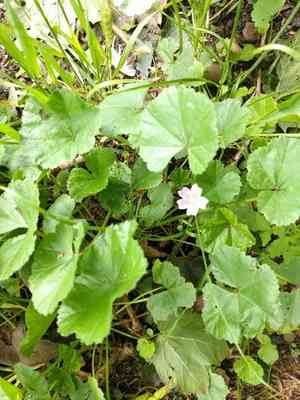
Common mallow (Malva neglecta)
Also known as: Mallow, Roundleaf mallow, Buttonweed
The common burdock (Arctium minus) hails from Eurasia and is recognized as an invasive species in North America. It thrives in disturbed soils, forming extensive taproot systems that are difficult to eradicate. The seeds of common burdock can remain viable in the soil for many years. Once the seed coat is broken and exposed to moisture, germination can occur. Featuring large, heart-shaped leaves, it is sometimes confused with other broadleaf weeds, but its unique burrs distinguish it.
In This Article
Attributes of Common mallow
Lifespan
Annual, Perennial, Biennial
Plant Type
Herb
Plant Height
60 cm
Spread
45 cm to 60 cm
Leaf Color
Green Silver
Flower Size
6 mm to 1.3 cm
Flower Color
White Pink Purple
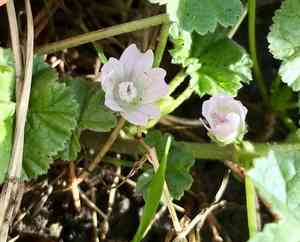
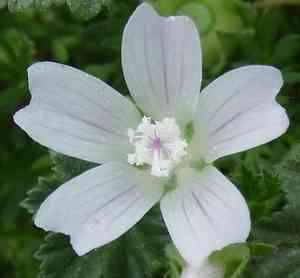
Images of Common mallow
Quickly Identify Common mallow
1
Circular to kidney-shaped leaves, 2-3 inches (5-7.5 cm) across with shallow lobes.
2
Delicate flowers with 5 light pink to white petals and a darker center.
3
Prostrate or decumbent growth, reaching up to 2 feet (60 cm) in height.
4
Small, round 'cheese' fruits, resembling flattened pods with 10-12 seeds.
5
Distinctive leaf texture: fuzzy, gray-green, with scalloped or toothed edges.
Scientific Classification of Common mallow
Phylum
Vascular plants
Class
Dicotyledons
Order
Malvales
Family
Mallow
Genus
Mallow
Species
Common mallow
Planting and Growing of Common mallow
Care Difficulty
Easy
Watering Schedule
Every 2 days
Sunlight Requirements
Full sun
Sunshine Duration
6-10 hours
Ideal Temperature
60-75℉
Soil Type
Potting Mix, Peat Mix
Soil pH
6.5-7.5
Fertilizer Type
Balanced
Pruning Season
Spring, Summer
Pruning Area
Branches, Leaves
Pruning Frequency
2 times a year
Repotting Season
Spring
Pot Type
Terracotta, Plastic
 How to Water Common mallow?
Ensure that the Malva neglecta soil remains evenly moist but not waterlogged. Water the plant until the water penetrates deeply into the roots, ideally about 250 milliliters per session. This helps to promote deep root growth and prevent shallow rooting issues.
What are the symptoms of an underwatered Common mallow?
›
What should I do if my Common mallow is not getting enough water?
›
What are the symptoms of an overwatered Common mallow?
›
How to save an overwatered Common mallow?
›
 What Are the Sunlight Requirements for Common mallow?
Malva neglecta thrives best with an ideal light range of partial to full sun exposure. Optimal light results in vigorous growth, vibrant blooms, and enhances its natural defense mechanisms against pests and diseases.
What type of sunlight is best for Malva neglecta?
›
How can you provide the ideal lighting for Malva neglecta?
›
What are the benefits of providing ideal lighting conditions?
›
 What Is the Ideal Temperature Range for Common mallow?
Malva neglecta thrives best in a temperature range of 60 to 75 degrees Fahrenheit. This range ensures optimal photosynthesis and nutrient uptake, maximizing growth and flower production.
 What Soil is Best for Common mallow?
Malva neglecta thrives in well-drained soil, preventing root rot by allowing excess water to escape, thus keeping the root system healthy and avoiding waterlogged conditions. This plant prefers soil rich in moderate nutrient levels, enabling robust growth and ensuring the plant has all the necessary minerals for optimal health. Soil enhanced with organic matter boosts Malva neglecta's growth by improving soil structure, increasing nutrient availability, and enhancing water retention.
 How to Fertilize Common mallow?
For Malva neglecta, applying a balanced, water-soluble fertilizer at half the recommended strength is ideal. This plant doesn't demand heavy feeding; thus, a diluted concentration helps prevent nutrient overdose.
 How to Prune Common mallow?
Begin by identifying old, damaged, or diseased stems. Trim these back to their base or healthy growth to encourage new, vigorous growth. This keeps your plant tidy and healthy, promoting lush vegetation. Shape the plant by trimming stray or overly long stems. Cut back to a leaf node, ensuring the direction of the new growth will enhance the desired shape. This helps maintain an aesthetic appeal and encourages bushier growth. Deadheading or removing spent blooms is crucial for Malva neglecta. This diverts energy from seed production to developing new buds, prolonging the flowering period and keeping the plant thriving with vibrant blossoms.
 How to Propagate Common mallow plant?
1
Before sowing, soak the seeds in warm water for 12-24 hours. This softens the seed coat and improves germination rates. After soaking, plant seeds about 1/4 inch deep in moistened soil.
2
Select a healthy, mature stem and use pruning shears to cut a 4-6 inch section. Ensure the cutting has at least two nodes, as this is where the new roots will develop. Strip the lower leaves before planting.
3
Divide the plant by gently separating the root clumps. Ensure each division has roots attached. Replant each division promptly to prevent desiccation, keeping the soil consistently moist until established.
 How to Repot Common mallow plant?
1
Malva neglecta needs repotting when roots begin circling the bottom of the pot or when drainage is poor. Another sign is when the plant's growth rate significantly slows down, indicating limited space for root expansion.
2
Select a pot that is one to two inches larger in diameter than the current one. This prevents overwatering by not allowing too much extra soil to hold excess moisture, which could lead to root rot, while providing enough space for new root growth.
3
Opt for a well-draining potting mix, preferably with a mix of perlite or sand. This choice ensures that the plant has adequate drainage, allowing excess water to flow through, thus preventing root rot and promoting healthy growth.
Learn More About Common mallow Diseases
Anthracnose
Bacterial Leaf Spot
Bacterial Soft Rot
Damping-off
Downy Mildew
Drought Stress
Fusarium Wilt
Gray Mold
Leaf Curl
Leaf Spot
Mosaic
Nutrient Deficiency
Nutrient Toxicity
Powdery Mildew
Root Rot
Root-knot Nematode
Rusts
Sooty Mold
Spider Mites
Temperature Stress
Thrips Damage
White Mold
Chemical Injury


