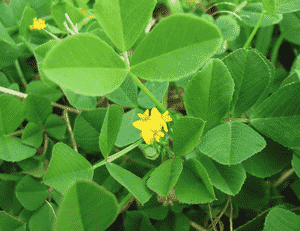
Bur clover(Medicago polymorpha)

Bur clover (Medicago polymorpha)

Also known as: Toothed medick, Toothed bur clover, California burclover, Bur medick

Bur clover, also known as Medicago polymorpha, burr medic, or creeping burr, offers several agricultural benefits. As a legume, it enriches the soil by fixing atmospheric nitrogen, thereby reducing the need for chemical fertilizers. It also improves soil structure and boosts organic matter, which enhances water retention and aeration, making it an excellent green mulch. Additionally, bur clover serves as nutritious forage for livestock, especially sheep, and can act as emergency forage if other crops fail. It also helps control soil erosion with its dense growth.

However, bur clover comes with its risks. It has the potential to become invasive, outcompeting other crops and native plants. Its burrs can stick to animals and machinery, leading to unintended spread and infestation. There is also the risk of allelopathy, where it may release chemicals that inhibit the growth of other plants, potentially affecting crop yields. Lastly, the burrs can cause discomfort or injury to livestock if they get stuck in their fur or are ingested. Balancing these benefits and risks is crucial for effective agricultural management.

Attributes of Bur clover

Lifespan
Annual, Perennial
Plant Type
Herb
Plant Height
15 cm to 30 cm
Spread
15 cm to 23 cm
Leaf Color
Green
Flower Size
2.5 cm
Flower Color
Yellow Gold

PlantJoy - Identify plants with a snap

Identify and diagnose plants, get toxicity alerts, and explore safety guides for all types of fungi.

Try for Free

Images of Bur clover

Bur clover(Medicago polymorpha)

Quickly Identify Bur clover

1
Prostrate growth habit, forming dense mats on the ground.
2
Trifoliate leaf arrangement with toothed leaflets, characteristic of the bean family.
3
Small, yellow flowers and spiny, coiled seedpods for reproduction.
4
Mutualistic partnership aiding nitrogen fixation with Sinorhizobium medicae.
5
Distinctive prickly pods, grey to black, coiled like a snail shell for seed dispersal.

Scientific Classification of Bur clover

Phylum
Vascular plants
Class
Dicotyledons
Order
Legumes, milkworts and allies
Family
Legume
Genus
Medicks
Species
Bur clover

Planting and Growing of Bur clover

Care Difficulty
Easy
Watering Schedule
Every 4 days
Sunlight Requirements
Partial sun
Sunshine Duration
10-12 hours
Ideal Temperature
60-75℉
Soil Type
Potting Mix, Peat Mix
Soil pH
6.5-7.5
Fertilizer Type
Balanced
Pruning Season
Spring, Summer
Pruning Area
Branches, Leaves
Pruning Frequency
2 times a year
Repotting Season
Spring
Pot Type
Plastic, Ceramic

water icon How to Water Bur clover?

For Medicago polymorpha, watering should ensure the soil is evenly moist. However, be careful not to overwater, as this can lead to root rot. A good approach is to water 200 ml per occasion, soaking the soil thoroughly but allowing the top layer to dry between waterings.
What are the symptoms of an underwatered Bur clover?
What should I do if my Bur clover is not getting enough water?
What are the symptoms of an overwatered Bur clover?
How to save an overwatered Bur clover?

sunlight icon What Are the Sunlight Requirements for Bur clover?

Sunlight Requirements: Partial sun
Duration of light: 3 to 6 hours
Medicago polymorpha thrives in partial light conditions. Ideal exposure enhances photosynthesis, promoting vibrant growth and greater disease resistance, ensuring plant robustness and vitality.
Optimal Hours of Sunlight
Positioning Solutions
Benefits of Ideal Lighting
More About Sunlight Requirements Techniques

temperature icon What Is the Ideal Temperature Range for Bur clover?

Ideal Temperature: 60 ~ 75℉
The optimal temperature range for Medicago polymorpha is between 60°F and 75°F. In this range, the plant will achieve optimal growth and health. These temperatures support ideal metabolic rates and enzymatic activities, promoting robust foliage development and healthy root systems. Monitoring and maintaining this temperature range ensures the plant develops without stress and maximizes its potential yield.

soil icon What Soil is Best for Bur clover?

Soil type: Sandy soil, Loam, Clay soil, Calcareous soil
Soil PH: 6.5 ~ 7.5
Medicago polymorpha thrives best in well-draining soils, as this prevents waterlogging and encourages strong root development. Ensuring proper drainage can significantly reduce the risk of root rot and promotes healthier plant growth overall. This plant appreciates a nutrient-rich soil which provides essential elements like nitrogen, phosphorus, and potassium, vital for its growth. Such a soil profile supports vigorous growth, enhancing the plant's ability to fix nitrogen efficiently, an important trait for legumes. A moderate amount of organic matter in the soil helps retain moisture while improving soil structure. Organic matter supports beneficial microbial activity, further enhancing soil fertility and promoting robust plant health and productivity.

fertilize icon How to Fertilize Bur clover?

Fertilizer type: Balanced
Medicago polymorpha, commonly known as bur clover, thrives with moderate fertilization. It's essential not to over-fertilize, as it's a legume and capable of fixing nitrogen in the soil naturally. Use half the amount recommended for general-purpose fertilizers—about 25 grams per square meter.

prune icon How to Prune Bur clover?

Pruning Time: Spring, Summer
Start by removing any dead or damaged stems as these can harbor pests. Cut the plant back by about one-third of its original size to promote bushier growth. Always make pruning cuts at a slight angle to prevent water accumulation, which can cause decay. Focus on trimming back older growth to encourage the production of new shoots. This not only revitalizes the plant but also improves its overall foliage density, keeping the plant lush and vibrant. More About Pruning Techniques

propagate icon How to Propagate Bur clover plant?

Propagate Time: Spring, Early spring, Late spring
1
Collect seeds from mature Medicago polymorpha plants in the late summer when the seed pods have turned brown. Ensure the seeds are fully dry before storing them in a cool, dry place until spring planting.
2
In early spring, prepare the seed tray with potting mix and sow the Medicago polymorpha seeds about 1/4 inch deep. Lightly cover with soil and water thoroughly to settle the soil and start the germination process.
3
Maintain the seed tray in a warm, sunny area. Germination should occur within two to three weeks. Once the seedlings have developed a few true leaves, they can be carefully transplanted to pots or garden beds.
More About Propagating Techniques

repot icon How to Repot Bur clover plant?

Repotting frequency: Every 2 years
1
Repot Medicago polymorpha when you notice roots coming out from the drainage holes or the plant has become root-bound. An evident drop in growth rate and wilting can also be prompts. The best time for repotting is during its active growing season, ideally in spring or autumn, to help the plant recover more quickly.
2
Select a pot that's one size larger with good drainage holes. Terracotta pots are a fantastic choice as they allow evaporative cooling and prevent root rot by providing excellent breathability. Choosing the right pot helps manage root growth and maintains the plant's health by avoiding waterlogging.
3
Medicago polymorpha thrives in a well-draining potting mix, ideally with a mix containing loam, sand, and organic matter like compost. This soil type promotes proper aeration and prevents water logging, reducing the risk of root rot while offering necessary nutrients to support healthy growth.

PlantJoy - Identify plants with a snap

Find the best spots for them to optimize their health, simply using your phone.

Try for Free
