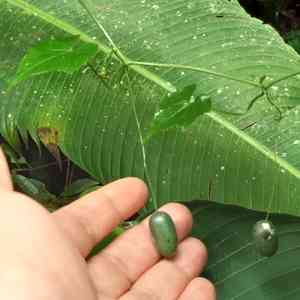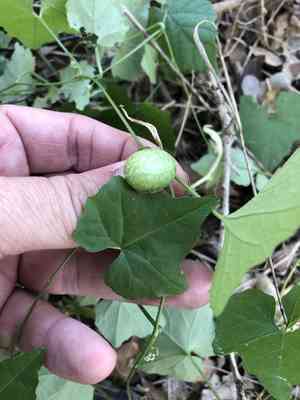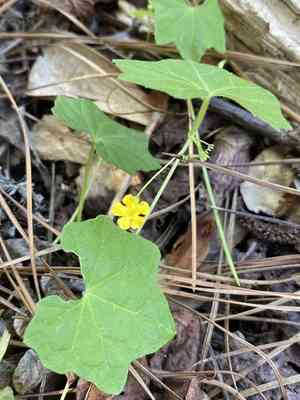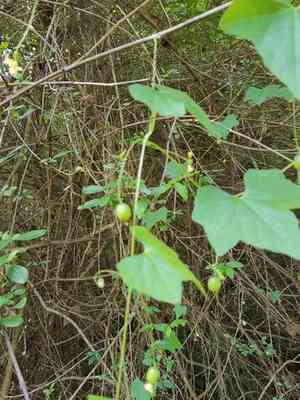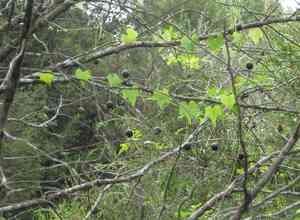
Creeping cucumber(Melothria pendula)

Creeping cucumber (Melothria pendula)

Also known as: Meloncito

Creeping cucumber (Melothria pendula) is a vine known for its spreading growth habit. It features heart-shaped leaves and small, yellow flowers. The unripe fruit looks like miniature watermelons and is edible when green. As the fruit ripens, it turns dark purple to black and becomes bitter, often considered inedible due to its purgative properties.

Attributes of Creeping cucumber

Lifespan
Perennial, Annual
Plant Type
Vine, Herb
Plant Height
15 cm to 20 cm
Spread
3.5 m to 4.5 m
Leaf Color
Green
Flower Size
1 mm to 2 mm
Flower Color
Yellow White

PlantJoy - Identify plants with a snap

Identify and diagnose plants, get toxicity alerts, and explore safety guides for all types of fungi.

Try for Free

Images of Creeping cucumber

Creeping cucumber(Melothria pendula)

Quickly Identify Creeping cucumber

1
Vine-like growth with attached tendrils aiding climbing behavior.
2
Alternating leaves with 3-5 lobes and palmate vein arrangement.
3
Solitary axillary flowers composed of 5 yellow segments.
4
Small fruits resembling berries, green or black, with white seeds.
5
Distinctive miniature watermelon-like fruits transitioning from dark green to black.

Scientific Classification of Creeping cucumber

Phylum
Vascular plants
Class
Dicotyledons
Order
Cucurbitales
Family
Gourd
Genus
Melothria
Species
Creeping cucumber

Planting and Growing of Creeping cucumber

Care Difficulty
Easy
Watering Schedule
Every 2 days
Sunlight Requirements
Partial sun
Sunshine Duration
6-10 hours
Ideal Temperature
68-86℉
Soil Type
Potting Mix, Peat Mix
Soil pH
6.5-7.5
Fertilizer Type
Balanced
Pruning Season
Spring, Summer
Pruning Area
Branches, Leaves
Pruning Frequency
2 times a year
Repotting Season
Spring
Pot Type
Plastic, Ceramic

water icon How to Water Creeping cucumber?

Melothria pendula prefers moist soil but not overly saturated. Watering should ensure that the soil remains consistently moist without allowing standing water to accumulate. Aim for approximately 500 milliliters per session, enough to moisten the soil thoroughly but avoid waterlogging.
What are the symptoms of an underwatered Creeping cucumber?
What should I do if my Creeping cucumber is not getting enough water?
What are the symptoms of an overwatered Creeping cucumber?
How to save an overwatered Creeping cucumber?

sunlight icon What Are the Sunlight Requirements for Creeping cucumber?

Sunlight Requirements: Partial sun
Duration of light: 4 to 6 hours daily
Melothria pendula thrives in partial sun conditions, where balanced light promotes vigorous growth and health. Adequate light exposure also supports optimal flowering and fruiting, contributing to the overall vitality of the plant.
What is the best location for Melothria pendula?
How can I replicate ideal light conditions indoors?
What are the benefits of optimal lighting for Melothria pendula?

temperature icon What Is the Ideal Temperature Range for Creeping cucumber?

Ideal Temperature: 68 ~ 86℉
Melothria pendula thrives best within the temperature range of 68°F to 86°F. This range ensures optimal growth and fruit production, providing the warmth needed for metabolic processes and photosynthesis. Keeping the temperature consistent within this range will help the plant flourish without undue stress or stunted growth.

soil icon What Soil is Best for Creeping cucumber?

Soil type: Loam, Sandy loam, Clay soil
Soil PH: 6.5 ~ 7.5
Ensures that excess water flows away, preventing root rot. Good drainage in the soil improves the plant's growth and overall health. Provides essential minerals and nutrients which support the plant’s vigorous growth and fruit production. Ensures a robust plant structure. Maintains a balance between retaining sufficient moisture and allowing air to circulate; this prevents fungal diseases and promotes healthy root systems.

fertilize icon How to Fertilize Creeping cucumber?

Fertilizer type: Balanced
For Melothria pendula, a balanced fertilizer with an N-P-K ratio of 10-10-10 is generally adequate. Use liquid fertilizer in a concentration of half of the recommended strength on the packaging. For solid slow-release fertilizers, follow the manufacturer's instructions but aim to provide around 3 grams per pot annually, spread over a few applications.

prune icon How to Prune Creeping cucumber?

Pruning Time: Spring, Summer, Autumn, Winter
Start by sterilizing your pruning scissors with alcohol or hot water to prevent disease spread. Begin with the removal of dead or damaged vines, cutting them back to the base or where they meet a healthy vine. Next, trim any excessively long vines to maintain the desired length, cutting just above a leaf node to encourage branching. If the plant looks too dense, thin out some of the interior vines to improve air circulation. For enhancing fruit production, identify and prune back older or less productive vines to focus the plant's energy on the newer, more vigorous growth. This technique not only boosts fruit yield but also keeps the plant looking vibrant and lush.

propagate icon How to Propagate Creeping cucumber plant?

Propagate Time: Spring,Early summer
1
Harvest seeds from mature fruits in late summer. Clean the seeds thoroughly to remove any pulp, and allow them to dry before planting for optimal germination.
2
Use a well-draining potting mix, such as a mixture of peat and perlite, to provide the right environment for seeds or cuttings. The soil should be sterile to minimize the risk of disease.
3
Select a healthy stem and cut a 4-6 inch section just below a node. Remove any leaves from the lower part of the cutting, dip it in rooting hormone, and plant it in moist soil.

repot icon How to Repot Creeping cucumber plant?

Repotting frequency: Annual or when needed
1
Melothria pendula should be repotted when its roots outgrow the current pot or if the soil becomes compacted, affecting drainage. Key signals include roots emerging from the drainage holes and slow growth. Ideally, repotting should be done during the active growing seasons of spring or summer.
2
Select a pot that is slightly larger than the previous one, with good drainage holes. A slightly larger pot allows room for root growth and prevents waterlogging, thus minimizing the risk of root rot. The material can be plastic or terracotta, depending on your home environment's humidity and temperature.
3
Opt for a well-draining potting mix enriched with organic matter. The ideal blend allows moisture retention while ensuring excess water drains away, providing roots with an airy environment. Such soil promotes healthy root growth and maximizes nutrient uptake.

PlantJoy - Identify plants with a snap

Find the best spots for them to optimize their health, simply using your phone.

Try for Free

Toxicity of Creeping cucumber

Is Creeping cucumber toxic to humans?

Creeping cucumber can exhibit toxicity if consumed during a specific growth phase. Ingesting the plant leads to mild effects. Both the fruits and seeds are regarded as toxic, particularly the fully ripe fruits. Consuming these fully ripe fruits, which act as laxatives, usually results in diarrhea and dehydration. Foragers might encounter and consume creeping cucumber as a wild edible when it is ripe, unaware of the potential hazards associated with eating the fruit at that stage. Additionally, some may confuse the dark fruits with another edible wild food.

Is Creeping cucumber toxic to cat?

Creeping cucumber presents a slight toxicity hazard for cats. This risk is primarily encountered when felines ingest substantial quantities of the plant, since all its parts are toxic to them. Symptoms indicating toxicity may include various signs of physical distress or sickness. Pet owners should remain vigilant for any alterations in their cat's behavior or health and promptly consult a veterinarian to guarantee appropriate treatment and recovery.

Is Creeping cucumber toxic to dog?

Creeping cucumber presents a mild toxicity concern for dogs. While not extremely toxic, consuming it in substantial amounts can result in poisoning. Dogs may find various parts of the creeping cucumber appealing and might ingest them, as all components of the plant are deemed toxic. Symptoms of creeping cucumber poisoning may include gastrointestinal disturbances like vomiting or diarrhea, lethargy, and other mild indications of illness. It is imperative for dog owners to observe their pets closely and prevent them from eating creeping cucumber, particularly in large quantities. Should there be any suspicion that a dog has ingested creeping cucumber and experienced poisoning, it is vital to seek prompt veterinary assistance to ensure appropriate treatment and management of symptoms.

Identify toxic plants for your safety

Learn which plants are harmful to you and your pets, and make informed choices for a safer home!

Try for Free
WARNING
The judgment on toxicity and danger is for reference only. We DO NOT GUARANTEE any accuracy of such judgment. Therefore, you SHALL NOT rely on such judgment. It is IMPORTANT TO SEEK PROFESSIONAL ADVICE in advance when necessary.